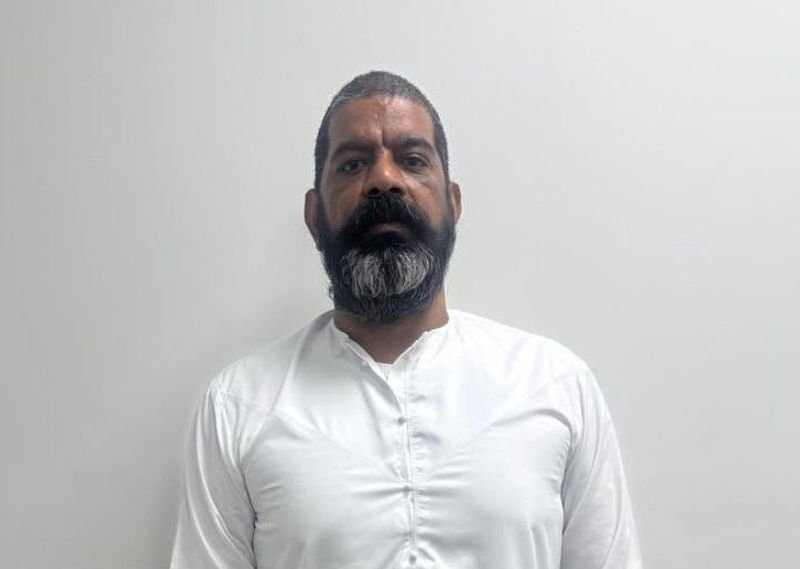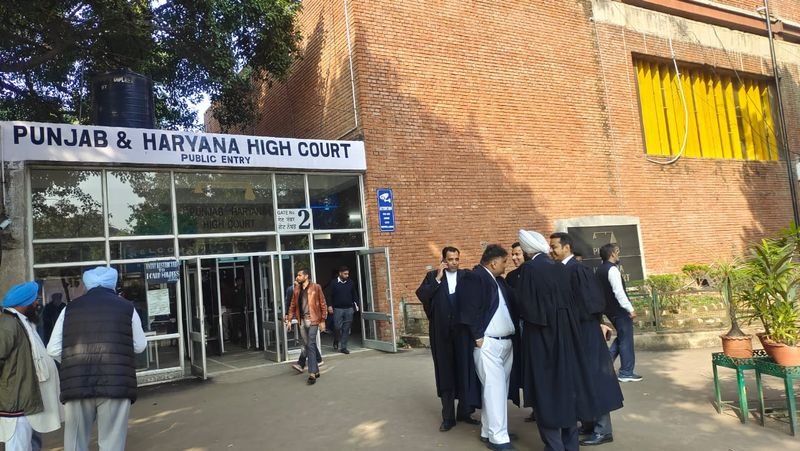

The Punjab and Haryana High Court has held that courts must expedite the trial where the quantity of drugs involved is more than 10 times the commercial quantity. The ruling came as a Division Bench turned down the bail petition of dismissed Punjab Police Sub-Inspector Sarabjit Singh in a drugs case. He was accused of actively associating with the organised drug trafficking syndicate headed by Jagdish Singh, alias Bhola, and other co-accused.Taking up the matter, the Bench of Justice Anoop Chitkara and Justice Harmeet Singh Deol, at the same time, directed that the trial be expedited on “one of the top priorities”. The Bench also made it clear that revocation of bail granted to a co-accused could be one of the steps to ensure “real Justice” to all, where he was instrumental in delaying the proceedings while on bail.“When the quantity of drugs is more than 10 times the commercial quantity, the Courts must expedite the trials, and if any of the co-accused, who is on bail, delays the trial, in order to render real justice to all, one of the steps is to revoke the bail granted to the co-accused, who is instrumental in the delay,” the Bench ruled.The Court was dealing with a case involving commercial quantity of contraband, thereby attracting the rigours of Section 37 of the NDPS Act. The Bench recorded that the petitioner was required to satisfy the twin conditions prescribed under the provision.The Bench, in its detailed order, referred to a reply filed by a Deputy Superintendent of Police. Among other things, it said the petitioner had been posted as a Sub-Inspector in the Punjab Police and was subsequently dismissed from service. The State alleged that he was actively associated with the syndicate headed by Bhola and other accused, and was formally arrested in the case on February 9, 2022.“The investigation found the petitioner’s involvement and that he had abused his official position as a police officer to facilitate the activities of the organised drug trafficking syndicate. It also came to the investigation that the petitioner would wear his official police uniform to ensure that the vehicles transporting narcotic drugs and psychotropic substances crossed the police nakas (barricades) and checkpoints without interception, and, as such, was providing protection to the members of the syndicate and to the transportation of the drugs,” the Bench observed on the basis of the reply.The Court observed that the petitioner was also seeking bail on the ground of parity with a co-accused tried separately and acquitted by Mohali Special Judge on February 13, 2019. The Bench, however, held that the principle of parity could apply only where the cases were identical or similar.The Bench found a material distinction between the two cases. The co-accused was tried and acquitted, whereas the petitioner had absconded and was declared a proclaimed person. Moreover, the allegations against the petitioner involved misuse of his position as a police officer to facilitate transportation of massive quantities of narcotic substances.“In the reply, it has been mentioned that the present petitioner was entrusted with the duty of enforcing law and order and preventing offenses; as such, the evidence to that effect has to be considered, and the petitioner is not entitled to acquittal on parity with the co-accused,” the Bench observed.The Bench also held that the petitioner’s alleged role was substantially more serious. “The petitioner is placed on a much higher pedestal for the reason that he was facilitating the transportation of massive quantities of drugs by ensuring that the vehicles were not intercepted, and at that time he would wear his official uniform.”The Court consequently held that the allegations and material collected did not entitle the petitioner to bail on the basis of the acquittal of the co-accused. “The allegations and the evidence collected so far, as mentioned in the reply, make the petitioner’s role extremely serious; as such, he is not entitled to bail on parity with the co-accused.”The Bench also considered the petitioner’s plea of prolonged custody and delayed trial. As per the custody certificate dated August 31, he had remained in custody in the present FIR for four years, six months and 13 days.The Court acknowledged that the period was substantial, but held that prolonged custody had to be assessed in the context of the gravity of the offence, the quantity of contraband, the petitioner’s alleged role and his status as a proclaimed person.“Undeniably, the custody of four years, six months and 13 days is not short, but it must be assessed in light of the gravity of the offense, the quantity of contraband involved in the present case, and the petitioner’s role as a police officer.”The Court also noted the magnitude of the case by observing that it was “one of the biggest cases in the State of Punjab”, and that the maximum sentence that could be imposed was 20 years. In the circumstances, it held that the petitioner was not entitled to bail on the ground of prolonged pre-trial custody “at this stage”.At the same time, the Bench recognised the constitutional significance of personal liberty and delay in conclusion of trial. It observed that delay was an important factor in deciding bail, though not the sole consideration. “Personal liberty is a very precious fundamental right and it should be curtailed only when it becomes imperative according to the peculiar facts and circumstances of the case.”