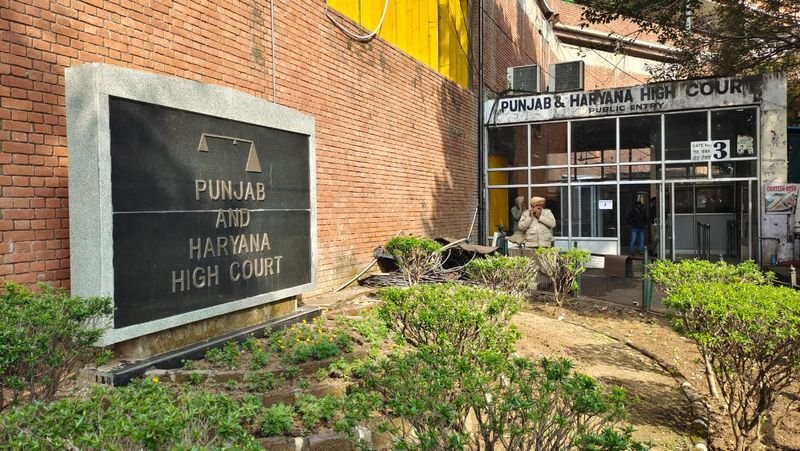

More than four years after the Supreme Court came out with a judgment radically reforming bail jurisprudence and arrest procedures in the country, the Punjab and Haryana High Court has directed the DGPs and Chief Secretaries of Punjab, Haryana, and UT Chandigarh to file affidavits on its implementation.They have been asked to explain how the directions contained in the judgment on the procedure to be followed under Section 41 and 41A of the CrPc –– serving as a crucial safeguard against arbitrary and mechanical arrests –– have been complied with in “its true letter and spirit”. Justice Sudeepti Sharma has directed them to attach the formats being used for Section 41A notices and acknowledgements.Section 41A is a legal shield against unnecessary or arbitrary police arrests. It dictates that the police cannot automatically arrest a person for any crime where the maximum punishment is seven years or less. Instead, they are legally required to issue a formal “Notice of Appearance” to come and cooperate with the investigation.In technical terms, Section 41-A provides for a police notice requiring a person to appear before the investigating officer — when there are reasonable grounds to question him — to ascertain facts and circumstances relating to an investigation. The procedure referred to by the court also provides for recording the person’s appearance and issuing an acknowledgement. The directions came after senior advocate Ankur Mittal, the court-appointed amicus curiae, drew the court’s attention to a 2018 Delhi High Court judgment which had laid down a detailed procedure for the working of Section 41-A. The procedure includes requirements relating to the issuance and service of notices, appearance before the investigating officer, acknowledgements and maintenance of records. Justice Sharma’s bench was also informed that the Delhi Police subsequently issued standing order to comply with the procedure. The bench observed that the Supreme Court, in the case of “Satender Kumar Antil versus CBI and another” took note of the Delhi High Court procedure and the Delhi Police standing order and directed all state governments and Union territories to facilitate standing orders for the procedure to be followed under Sections 41 and 41-A.Justice Sharma observed that the Supreme Court’s directions were clear and required all states and Union territories to facilitate such standing orders. The bench, accordingly, asked Punjab, Haryana and Chandigarh to state specifically how the directions have been complied with. The affidavits were required to be filed two days before the next hearing, with copies supplied in advance to the amicus curiae. The court said failure to comply would invite an appropriate order. The matter has been adjourned to September 16.