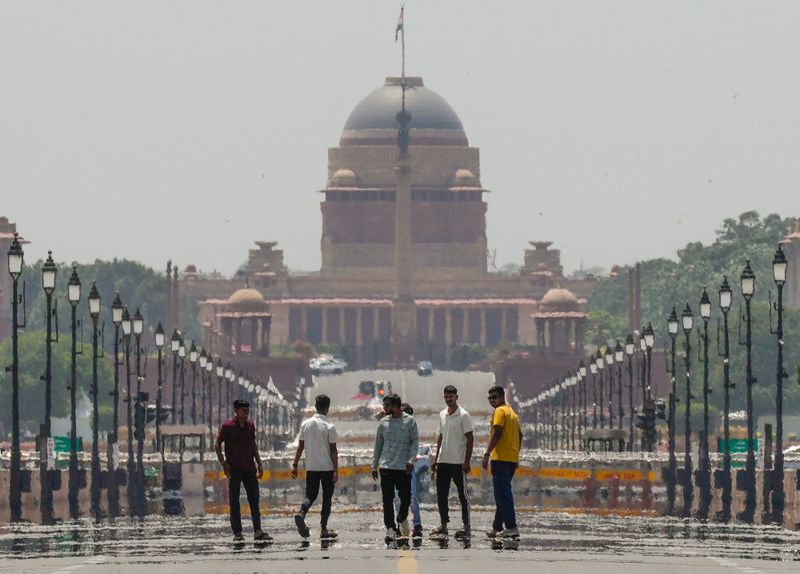

A new research by the India Meteorological Department (IMD) and Institute of Climate Studies has explored how the El Nino–Southern Oscillation (ENSO) influences extreme temperature events across India and intensifies heatwave conditions during El Nino years.The researchers analysed data of 59 years (1961-2020). Severe heatwaves were more prominent (longest and hottest) in El Nino years. The ENSO severely dictates extreme temperatures in India. During El Nino, India experiences significantly higher maximum temperatures, longer-lasting heatwaves and an increased frequency of extreme hot days.The heatwaves during 1963, 1965, 1966, 1969, 1972, 1982, 1983, 1987, 1991, 1992, 1997, 1998, 2002, 2010, 2015, 2016 and 2019 (17 years) satisfied the El-Nino criteria.Of 17 El Nino years, 11 years had a maximum duration of heatwave days which was more than 15 days.During April, May and June, presence of the sun causes an increase in the temperatures over India with maximum over central, northwest and northern parts. “The increase in the temperatures is also caused by the advection of warmer air from the desert region to these areas due to changes in wind patterns over the region. This leads to formation of climatological heat low pressure areas over the region and associated rising motion helps in transfer of the heat from low to upper levels sometimes resulting in strong convective activity,” the research said.From December to February, the sun is in the Southern hemisphere, which brings down the temperature. The Western disturbances also cause substantial amounts of snow/ rainfall in the hilly areas and adjoining plains of the region. The core heatwave zone covers states of Punjab, Himachal Pradesh, Uttarakhand, Delhi, Haryana, Rajasthan, Uttar Pradesh, Gujarat, Madhya Pradesh, Chhattisgarh, Bihar, Jharkhand, West Bengal, Orissa and Telangana and meteorological subdivisions of Marathwada, Vidarbha, Madhya Pradesh, Maharashtra and coastal Andhra Pradesh.