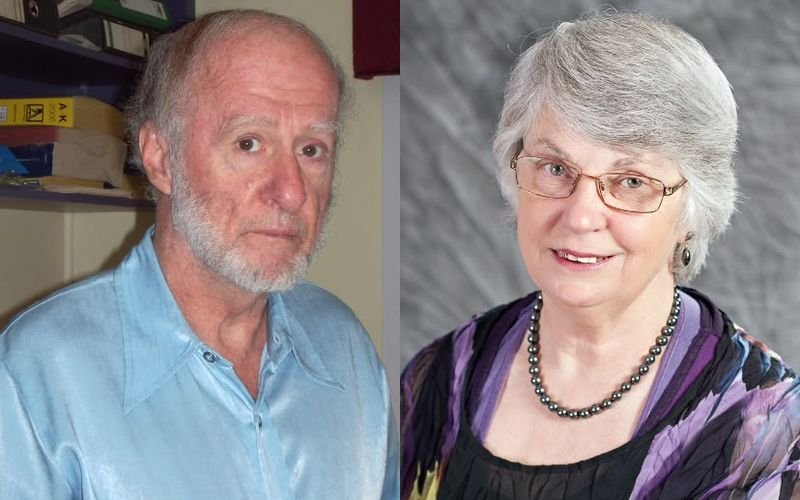

More than a century after the first known arrival of Sri Guru Granth Sahib in Australia, two historians have pieced together how the Sikh holy scripture reached the country in 1920, where it was kept and how it was carried across the Victorian countryside.After more than 15 years of research, Len Kenna, about 85, and Crystal Jordan, about 80, say they have documented the journey and the first known Akhand Path in Australia, held in 1920 and captured in photographs.Their findings feature in their latest book, Siva Singh Benalla, launched recently at the Tomorrow Today Foundation in Benalla, Victoria. The couple have spent decades researching and documenting the history of Sikhs and other Indians in Australia.“We have established when, where and how it arrived, where it was kept and how it was housed,” Crystal told The Tribune in an email response.At the centre of the story is Siva Singh, a hawker and farmer who lived in the Benalla district from around 1897 until his death in 1955, aged 84. He also served as a priest for the Sikh community, holding prayers and conducting cremations across north-eastern Victoria. He transported the Guru Granth Sahib in a horse-drawn wagon.A local farmer preserved the wagon after Siva Singh’s death. It is now being conserved for permanent display in Benalla.“We are now preserving this holy wagon, which will be placed on permanent display in Benalla once the preservation work is complete,” Crystal said.The Benalla Council has also approved a memorial in a central park to honour Siva Singh and commemorate the first reading of the Guru Granth Sahib in Australia.A journey that began in 1985The couple’s effort to recover the history of Indians in Australia began around 1985, when little had been documented about their lives and contributions.For Len, the interest went back to his childhood in Hamilton, Victoria. A Sikh hawker regularly visited his family home. His mother bought goods from the visitor and washed his turbans. In return, the hawker cooked the evening meal and shared stories of India with the family.Crystal’s connection came through her family. Her father was born in Bareilly, Uttar Pradesh, in 1912, where her grandfather, George Davis, served with the 4th Worcestershire Regiment. When Len began researching Indian history in Australia and realised how much remained undocumented, he asked her to join him.“We initially thought our research would lead to a single book,” she said.Len studied Australian history at La Trobe University, while Crystal, an artist, illustrates their books and creates miniature sculptures of Sikhs.Their research was painstaking. With no internet or mobile phones in the early years, Len worked on an electric typewriter, while the couple travelled to archives across Australia and to the British Library in England to examine East India Company records.Their findings initially met scepticism.“When we first began publishing our findings and speaking on radio and at public functions, our accounts were met with disbelief,” Crystal said.The couple responded by organising what they describe as Australia’s first Indian photographic exhibition of its kind.In 2000, Multicultural Victoria commissioned them to write the history. Their stated aim was to challenge racism and help newly arrived Indians feel more at home in Australia.In 2012, four Victorian gurdwaras helped establish the Australian Indian Historical Society, with Kenna and Jordan as directors. The society also seeks to bring this history into school education.Their publications include the five-volume series Are Indians an Ethnic Minority? and Sikh History in Australia, published in English and Punjabi in 2019. Len also wrote It Happened in Heywood, a play about a young Sikh hawker who died in Victoria.Bringing Pooran Singh’s ashes homeIn 2010, the historians located the ashes of Pooran Singh in Warrnambool, Victoria. They took them to his ancestral village, Uppal Bhopa, in Punjab, before the ashes were immersed in the Ganga at Haridwar. They also organised a photographic exhibition in the village.“We loved the colours, food and people, and found the visit both interesting and exciting,” Crystal said.She documented the journey in a diary illustrated with pen drawings and watercolours.Much of the couple’s work has been self-funded. At one point, they used their retirement savings to purchase the First World War medals of Private Ganessa Singh, an Indian-Australian Anzac, to ensure the medals returned to Australia.Challenging established historyTheir research extends beyond Sikh migration and religious traditions to broader questions about Indians’ role in Australia’s development.The couple say the first Sikhs arrived in 1844, when Dabee Singh and his wife were brought to Queensland along with 23 other Indians. They argue that Sikhs began making a more significant impact only after the 1880s. They also dispute the claim that cremation was illegal in Australia.“Our research has shown that India contributed almost as much as Britain to Australia’s development,” Crystal said.She cited the early settlement’s reliance on supplies from India, saying Governor Hunter purchased goods there when the settlement faced starvation because they were cheaper and arrived sooner than shipments from England.The historians also contend that Indian sailors who survived a shipwreck in 1797 explored parts of Bass Strait before George Bass. According to their account, 17 sailors left the wrecked Sydney Cove in a longboat but were shipwrecked again on Ninety Mile Beach. Fourteen died during the subsequent journey north, while three survived.The couple are campaigning for the sailors to receive formal recognition.A legacy for future generationsDespite Australia’s history of racial discrimination, the historians say their work has largely received a positive response.“No—quite the opposite,” Crystal said when asked whether they had faced hostility.Residents in rural areas, she said, were fascinated by their findings and shared photographs and stories of Sikh and other Indian hawkers who once visited their farms. Some hawkers had even named Australians as executors of their wills.The Indian community, too, has supported their work, including helping move a hawker’s wagon and rallying behind an exhibition at Victoria’s Parliament House.Their latest research focuses on men who migrated from Mirpur in Kashmir before 1901. Descendants of early Indian migrants continue to contact them from around the world.The couple now hope to find a permanent home for their collections in a Victorian museum, ensuring that the history they have spent decades recovering remains accessible to future generations.