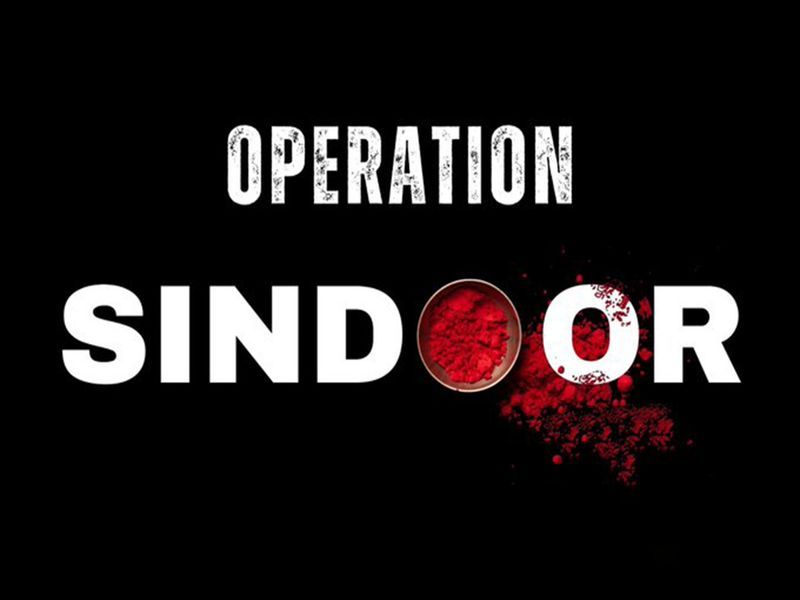

The most jarring diplomatic moment of 2025 unfolded during Operation Sindoor, when India launched calibrated military strikes on terror infrastructure deep inside Pakistan following the Pahalgam attack that left 26 civilians dead.While New Delhi maintained that its actions were precise, proportionate, and non-escalatory, the crisis exposed an uncomfortable reality — the limits of India’s strategic alignment with Washington.As India marks one year of Operation Sindoor, the battlefield gains remain evident. But diplomatically, the effort to isolate Pakistan ran into an unexpected obstacle — not across the border, but across the Atlantic.Three days after India launched targeted strikes inside Pakistan, on May 9, 2025, US Vice President JD Vance called Prime Minister Narendra Modi, warning of a possible large-scale retaliation from Islamabad.Modi made it clear that any such attack would be met with a firm response. That night, Pakistan launched an attack which was foiled by Indian forces, followed by what officials later described as a “devastating” counterstrike.With the situation escalating rapidly, Pakistan began seeking a ceasefire. India agreed to consider it only after receiving clear signals through diplomatic channels, and insisted that a formal request be routed through the DGMO mechanism — which was eventually done.However, even before the ceasefire was formally announced, US President Donald Trump, who had been most likely informed about the ceasefire from Pakistani side, moved swiftly to claim credit.Through a series of posts, Trump announced that the United States had brokered a ceasefire between India and Pakistan. In the months that followed, he repeatedly asserted that his administration had “stopped a war” between the two nuclear-armed neighbours.In New Delhi, the claims were viewed as inaccurate and diplomatically unhelpful. Indian officials maintained that the ceasefire was strictly bilateral. External Affairs Minister S. Jaishankar later told Parliament there was “no linkage” with the US in the decision, and no direct engagement between Modi and Trump during the critical period.Yet, Trump’s repeated assertions — amplified globally — had a tangible effect: they somehow reshaped the narrative. For India, Operation Sindoor was not just a military response; it was also an attempt to further isolate Pakistan internationally as a state that shelters and supports terror groups. That narrative, built over years, began to blur as Washington’s messaging shifted the focus from terrorism to crisis management.By projecting himself as a peacemaker, Trump diluted the core issue — Pakistan’s role in cross-border terrorism — and reframed the crisis as a conventional India-Pakistan standoff requiring external intervention.The shift was subtle but consequential: Pakistan was no longer seen solely through the prism of terrorism, but increasingly as a stakeholder in regional stability — even positioning itself in parallel diplomatic tracks, including outreach in West Asian tensions.The optics sharpened further when Trump hosted Pakistan Army chief Asif Munir at the White House. For New Delhi, the move signalled Washington’s renewed willingness to engage Rawalpindi’s military establishment, despite longstanding Indian concerns over its links to terror groups.The divergence between narrative and reality became stark. On the ground, Indian strikes had degraded terror infrastructure in Bahawalpur and Muridke. Diplomatically, however, the discourse drifted towards ceasefire, de-escalation and third-party roles.In effect, Pakistan found space to reposition itself — from a country under scrutiny for terror links to one being courted as a channel for stability.One year on, Operation Sindoor offers a clear lesson: military success does not automatically translate into diplomatic leverage. Still, the diplomacy did achieve something. The US Department of State designated The Resistance Front as a Foreign Terrorist Organisation last year in July and the successful extradition of 26/11 accused Tahawwur Rana were outcomes of sustained Indian diplomacy.