

BEASTIE BOYS rapper Mike D didn’t know if he would ever make music again after the death of bandmate Adam Yauch.
When Yauch, aka MCA, died of rare salivary gland cancer in 2012, aged 47, Michael Diamond was so overcome by the loss of his childhood friend that making music was too painful.
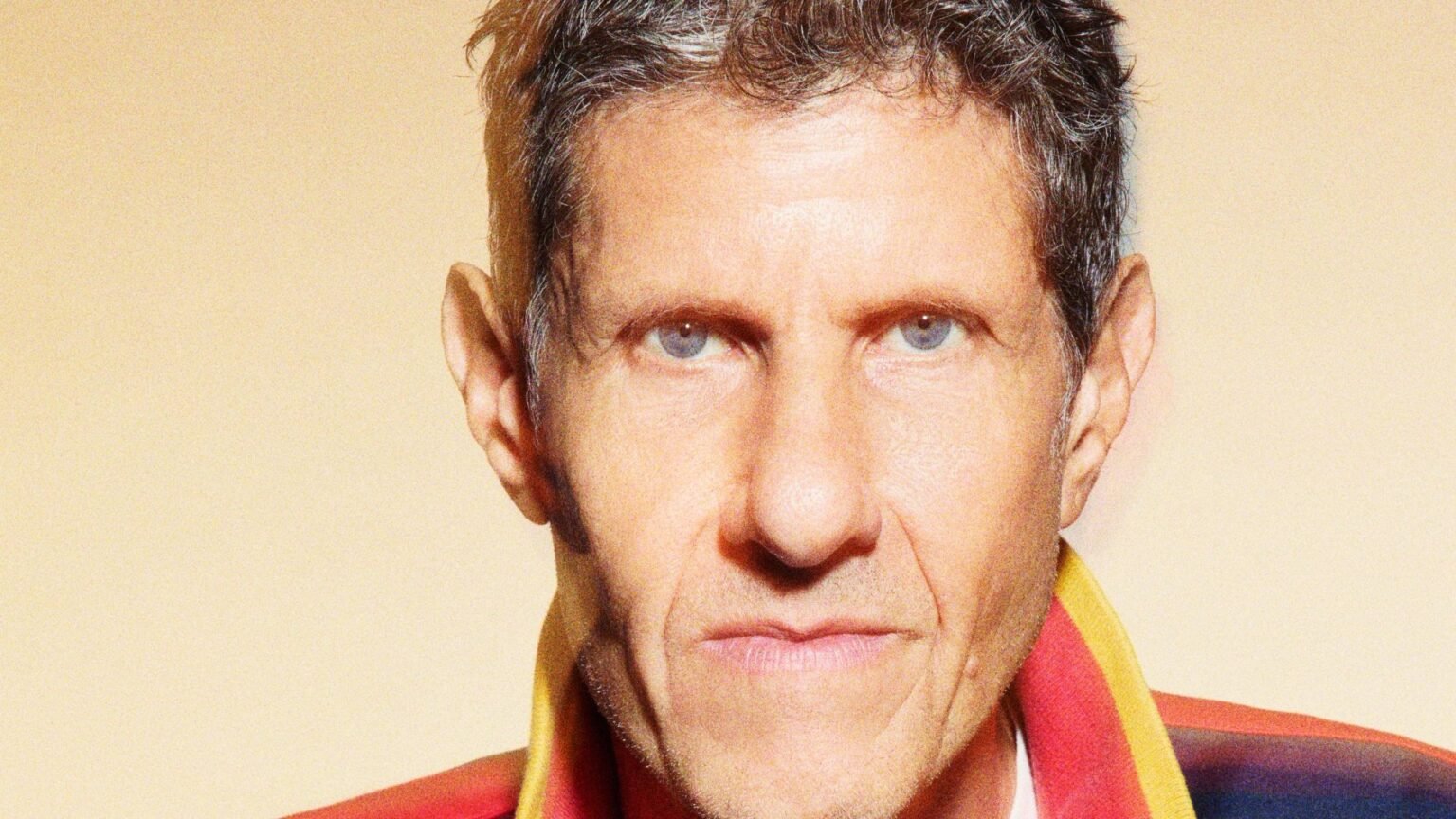
Mike D in a shoot for his new album Credit: Unknown
The Beastie Boys formed in New York in 1981 Credit: Getty Images
He says: “Grieving was so f***ing hard because it’s this thing we desperately want to control but cannot.
“The feeling of loss stops your entire world from moving forward because you’re stuck in that moment.” The deep pain reflected how much Yauch meant to him.
Sign up for the Showbiz newsletter
Thank you!
He says: “We miss these people because we love them so much.” American hip-hop act the Beastie Boys — Diamond, Yauch and Adam Horovitz, aka Ad-Rock — formed in New York in 1981 but disbanded in 2012 after Yauch’s death.
Although Diamond later cautiously returned to the studio as a producer — working with artists including Portugal. The Man, Soft Play and The Hives — making music for himself was different.
READ MORE ON THE BEASTIE BOYS
JAMIE EAST AT THE MOVIES
The Beastie Boys Story is a clever peek into their crazy world
Tragic Passing
Original Beastie Boys member dies in a hospice aged just 52 after suffering from dementia
I caught up with him for a chat to mark the release of his debut solo album, Thank You — and we chatted about football (he supports Arsenal), a recent holiday in Spain and how much the new record means to him.
Now 60, he reveals how Yauch remains a reference point in his music and life. Jams with sons
He says: “There’s a beauty in the relationship I had with Yauch as this kind of older brother figure. Even without him still being in my life, physically, I can still embrace him in that role.”
By making new music of his own, Diamond felt able to carry that relationship forward creatively.
The route back began quietly at home, jamming with sons Skyler and Davis, who are the indie pop duo Very Nice Person.
What started as zero-pressure sessions gradually became more substantial and eventually evolved into Thank You.
Of his sons’ passion for music, Diamond says: “I never pushed it on them. I wanted it to be something they ultimately discovered for themselves.
“The fact they came to it on their own then were able to share it with each other is amazing. Now we can all be obsessed with music in similar ways.”
Yauch was never far from Diamond’s mind while he was recording Thank You.
He says: “I would think, ‘I wonder what he would make of this?’” And he adds: “Making the record, there was a point where I realised, ‘Oh wow, I do feel differently doing this. I’m a happier version of myself’.
“I just realised, ‘Yeah, this is what I’m supposed to be doing’.” But as the record developed, the process became more introspective.
He says: “There came a point when I thought, ‘Wait, what the f am I talking about? What am I here to say? What’s important to me?’ And then there are the answers to that.”
Part of that meant trying not to remain boxed in by his past.
He says: “I wanted to start making it without any of the baggage of what it comes from or who I am or who I was.”
But creating his own record meant learning to take the lead.
He says: “I was super-lucky in my collaboration with Beastie Boys.
“It was very unusual, almost unheard of, in terms of how a band functioned because we were so democratic and equal — not just in decision-making, but in the roles we played.
“It wasn’t like, ‘You only do this’, or, ‘You only do that’.
“None of us knew how to do anything and we all did everything. There were certain things we were each better at but it all filtered in.
“So, I guess what was new to me this time was realising I had to take that responsibility myself. I was a little shy about it at first.”
Songs took shape in collaboration with a wide circle of musicians, who pushed experiments in unexpected directions.
Studio sessions opened out beyond his sons to include SZA collaborator Carter Lang, Ging (formerly Frank Dukes), Jason Lader, Jared Solomon, Eddie Ruscha and Tyran Donaldson, while guitarist Will Graefe also contributed.
Diamond says many of those relationships grew naturally at his home studio, particularly during Covid, when musicians were no longer on the road.
He says: “I share a studio with my sons and during Covid, when everything was shut down, a lot of the people who were on my record were coming by our home because nobody was on tour.
“That’s when I met Carter Lang and Carter introduced us to Ty.”
For Diamond, it was always the chemistry that mattered more than the names his collaborators had worked with.
He says: “I can’t say enough amazing things about Ty. He’s so talented. He’s done these big records but he’s not interested in being defined by having worked on big records.
“He remains a total musichead, really dedicated to the music.
“The goal is to have this creative chaos where it’s completely free. We’re adding too many ingredients to the recipe then he’s the chef that comes in afterwards.”
That openness became central to how Diamond wanted sessions to work. It helped shape tracks such as Secrets I and Secrets II, which began as two separate ideas during the same session with Lang and Donaldson.
Diamond says: “I listened to what they’d done with Secrets and was, ‘Wow!’.
“It was this experience of hearing a song where I felt like it was so much beyond me.
Diamond says he was made to make music Credit: Dan Lowe
Adam Horovitz, Mike Diamond and Adam Yauch of the Beastie Boys in 1987 Credit: Getty – Contributor
“I couldn’t have done it without all the people involved.”
Elsewhere, the record ranges from the Zambian rock-inspired True Colors to the digital-age satire of Crypto, while Switch Up grew out of the early home studio experiments with his sons.
By April, Diamond’s renewed confidence saw carried him back on stage, and he joined his sons’ band for a surprise appearance in California.
He says: “The show we did was unannounced and in the parking lot of a surf shop not far from where we live in California.
“I had an emotional moment on stage because, looking around, there were so many people I knew from the community and I felt very supported.
“It was also beautiful in a surreal way, being out in this parking lot — people were stopping by in their cars. It just felt right.”
The live return soon gathered pace and he formed his own new group Mike D 5D, with five bandmates — his sons as well as album collaborator Will Graefe, and father and son Eddie and Milo Ruscha.
After gigs in California and New York, Diamond brought the show to the UK in June, playing first in North Shields then two intimate performances at 26 Leake Street — the event space beneath London’s Waterloo Station.
Alongside his own new material, he also began carefully introducing a handful of Beastie Boys songs into the set.
He says: “I know playing Beastie Boys songs is going to make people happy but I only wanted to pick the ones we could really embrace.”
These included Hello Brooklyn and Looking Down The Barrel Of A Gun, while at North Shields he also played So What’cha Want.
He says with a laugh: “If I’m honest, I didn’t know where North Shields was until the idea was proposed to me.
“But now that we’ve done it, it made me feel very optimistic. I think there’s a real future in these smaller places.
“You’ve got places like London, Paris and New York where, for culture to exist, it’s become so expensive.
“The UK audiences, in particular, really helped us. I’d look out into the crowd and, sure, there were people of a certain age who’d listened to Beastie Boys for years and had those records as an important part of their lives.
“But what was amazing was seeing that it wasn’t just [those] people there with their kids — it was all different generations.
“The UK shows really brought things to a different level.
“Before we got to the UK, it was, like, ‘Alright, let’s just try not to make too many mistakes’.
“But after doing some [US] shows on the West Coast and in New York, once we got here, we were able to just enjoy playing music with each other.”
“Making the record, it was my record, but when it came to going on tour, I was really proud of the band we’d put together. I’m proud of what we’ve become.
“There’s this thing that happens, whether you’re collaborating in the studio or you’re on stage, where all of a sudden you become part of something that’s kind of beyond you, and you get to share that with people.”
After the UK gigs, his band played dates across Europe — and has more summer shows planned, as well as dates in Brighton, Glasgow, Manchester and London in October.
But one song on the album stands out for Diamond — the title track. During the recording process, he immediately felt it was different from the others.
He says: “It was interesting because the song came a good amount into making the record. I’ve had this experience with records before. Will [Graefe] was in the studio.
“We had already worked on a different idea and then I was, like, ‘Oh, let’s try something. This acoustic guitar sounds really cool, so let’s start something with that’.
“My kids think it’s hilarious, generationally, because I’m a pen-to-paper person with lyric ideas.
“I have all these different books, and I don’t necessarily remember which book I’ve written something down in.
“That was the Thank You thing. I knew I’d written something down that was the start of a thought and, while Will was playing, I started to do what became the scratch vocal for that song.
“And then it was funny because, as soon as we stopped with that idea, in that moment I was, like, ‘This is going to be the last song on the record’.
“I just kind of knew that was how it should end. I don’t know . . . it doesn’t always happen, but that time it did.”
Diamond knew the album had developed an emotional arc, and Thank You felt like its natural conclusion. He says: “I knew I wanted it to be like a journey, and I knew that was going to be the end.”
There was also one person Diamond felt he needed to tell in person that he was recording the album — his surviving Beastie Boys bandmate Horovitz.
He says: “There was a certain point where I was committed enough to making this record that I thought, ‘Alright, I sort of have to let Adam know’. I wanted that to come from me.”
He says with a laugh: “In that sense, it is like a romantic relationship. I was nervous to have the conversation, but it was really nice to be able to tell him, ‘This is what I’m doing’, and have him be good with that.
“He doesn’t have to love it. But I know he’s happy for me.”
Meanwhile, Diamond is already busy thinking about making more music and touring.
He says: “There are a lot of ideas we started that I want to follow up on. There’s a lot more I want to do with the live band.
“I don’t want to take so long, I want to see where we can go.”
MIKE D
Thank You
Mike D’s debut solo album, Thank You Credit: Unknown