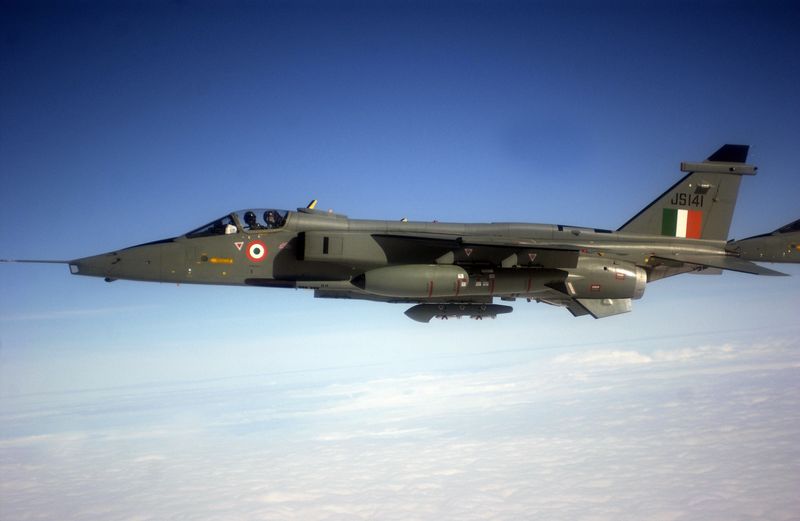

The Indian Air Force will acquire nine ‘Jaguar’ retired fighter jets from the United Kingdom to be used as a source for spare parts and reusable sub-assemblies.Sources in the IAF confirmed the move to acquire nine such planes from UK.The Jaguar jet was originally produced by an Anglo-French partnership in the 1960s during the Cold War as a ‘deep penetration strike aircraft’. The plane is not produced anymore. The IAF, with almost 120 such jets in its fleet, is the only force to be flying the twin-engined Jaguar. The IAF has begun inducting in 1979 and the jet continues to equip squadrons at Ambala, Gorakhpur and Jamnagar, the last one being in a maritime strike role.This is not the first time that such an import is being done to ensure that the Jaguar keeps flying. Earlier, batches of retired planes were imported from France, Oman and the UK, all of which had withdrawn the fighter. In 2018, France gifted 31 retired Jaguar airframes, along with associated engines and assorted spares, to the IAF at no cost. Last year, India and Oman formalised an agreement to transfer over 20 retired Jaguars that were decommissioned by the Royal Air Force of Oman. These aircraft have flown for fewer operational hours, their components are in good shape.The spare parts are used to overcome shortages of parts like landing gears, hydraulics, avionics and the Rolls-Royce Adour engines. The IAF ‘cannibalises’ the imported planes for spare parts.In the past decade or so, half of the Jaguar fleet was upgraded to meet modern operational standards, while the other half was found to be ‘too old’ to be invested in and these will start retiring from 2028.The upgraded ones have an Israeli active electronically scanned array (AESA) radars. This allows the Jaguar to track multiple aerial and ground targets simultaneously, map terrains with extreme resolution, and perform advanced electronic jamming. Also the entire fleet underwent a change as the cluster of dial indicators had been replaced with dual Multi-Function Displays (MFDs), an Engine and Flight Instrument System (EFIS), and an advanced Head-Up Display (HUD) by Israel’s Elbit Systems. The additions included electronic warfare suite (D-JAG), including an integrated electronic warfare system featuring modern radar warning receivers (RWR), electronic countermeasures (ECM), and jamming pods to protect the low-flying jet from enemy air defence networks. The ammunition included a Harpoon missile for maritime roles and other precision munitions on variants that hit at targets on land.The IAF also attempted a multi-billion-dollar project to replace the aging, underpowered Rolls-Royce Adour engines with Honeywell F-125N engines, but the plan was dropped due to high costs, meaning the upgraded Jaguars still fly on their original powerplants.Instead of installing brand-new engines, the IAF shifted its approach to a combination of maintenance optimisation and opted for a lower-cost alternative with Rolls-Royce to partially “refurbish” the original Adour Mk 811 engines.