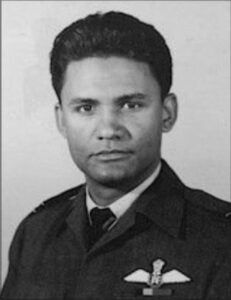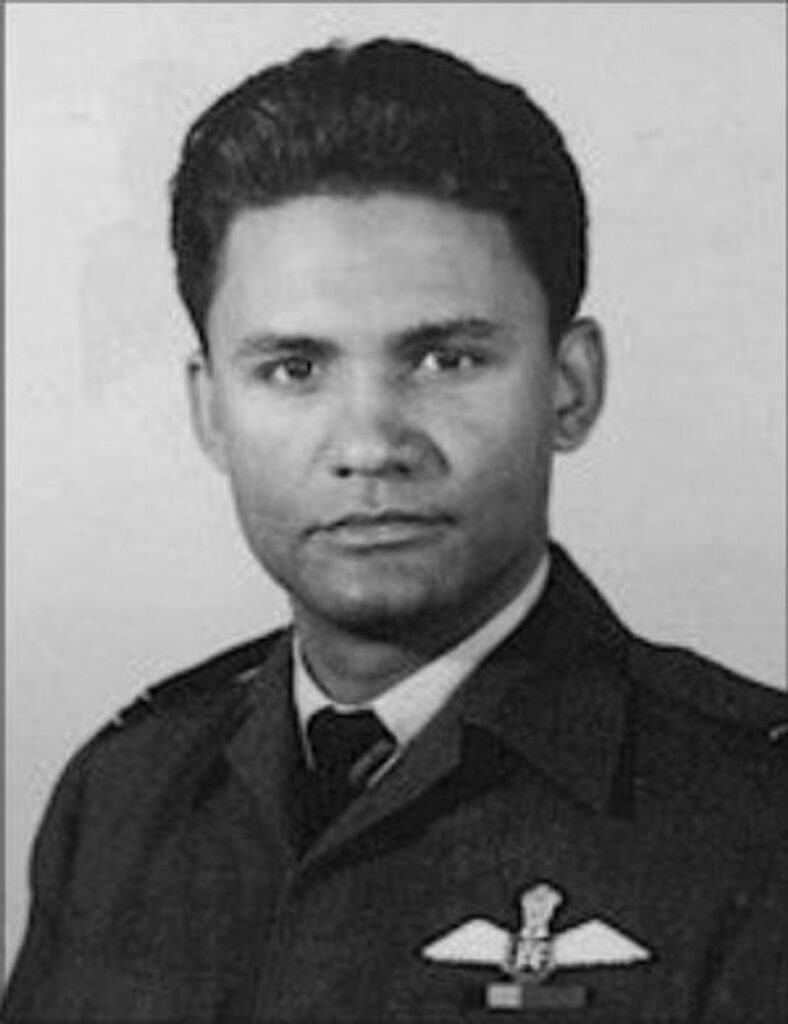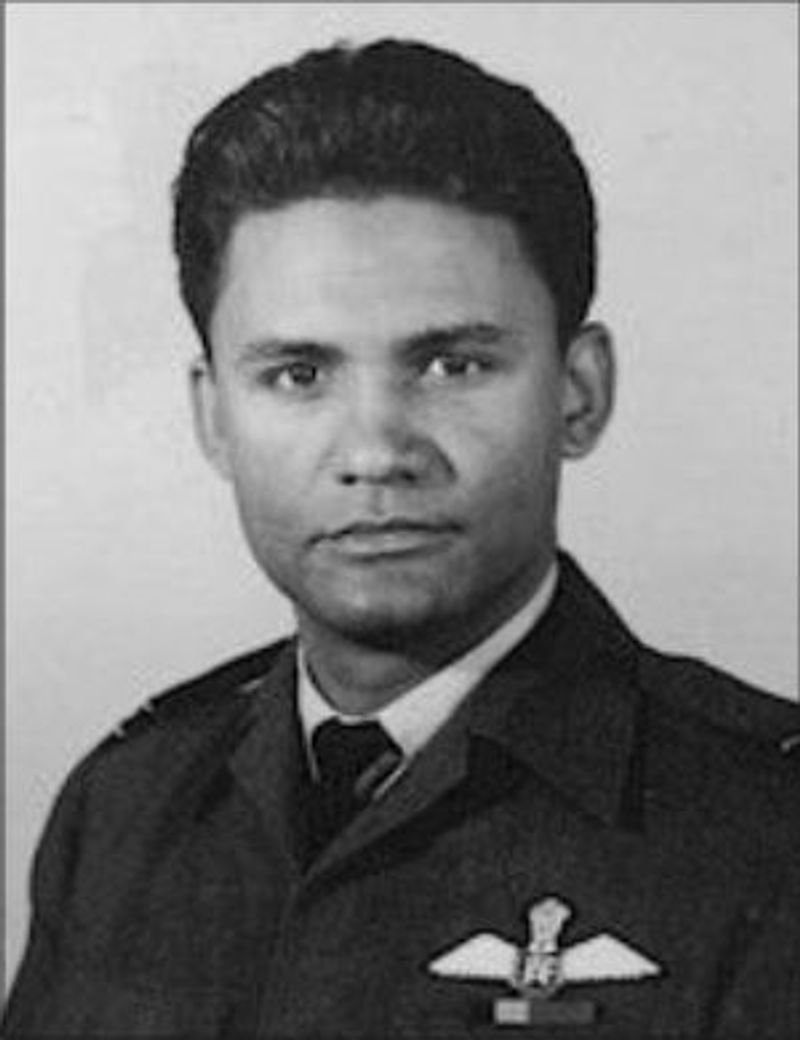

Go beyond the training manual and be innovative. That was the message Flight Lieutenant Alfred Tyrone Cooke, awarded the Vir Chakra during the 1965 India-Pakistan war for taking on three enemy aircraft, left for a younger generation of IAF officers when he presented his medal to his squadron, 50 years after fighting over the skies of Kalaikunda.
“You need to know the training books, your capability and the capability of your machine backwards, but you also need to go beyond the books,” he told officers of No. 14 Squadron at Ambala in September 2015.
Cooke passed away on September 18 at the age of 87 at Base Hospital in New Delhi, exactly 61 years after he shot down a Pakistani Sabre and engaged another aircraft, forcing an enemy formation attacking Kalaikunda to flee in confusion. He was then flying the Hunter.
Growing up in Agra during the Second World War, Cooke developed an interest in flying after watching aircraft like Hurricanes, Spitfires and Mustangs operating in the area. Commissioned in December 1961 as part of the 80th Pilots Course, he served for seven years before leaving the Air Force in December 1968 and settling in Australia.
He often used to visit India and his old unit, No.14 Squadron, the Bulls. Raised in August 1951 on the Spitfire, the squadron converted to the Hunter in 1959, with which it fought in both the 1965 and 1971 wars. In 1979, it became the first IAF squadron to be equipped with the Jaguar strike aircraft and later moved to Ambala.
“The enemy pilots were aggressive, but they had their limitations,” Cooke said during one of his visits to India. “They went by the book and their tactics were very structured and indicative of US training, whereas our training methodology was different, enabling us to pre-empt some manoeuvres,” he said.
On September 7, 1965, while flying a combat air patrol over Dum Dum and Kalaikunda with his wingman, Cooke was directed to intercept six Sabres heading in for an attack. He took on three of them, while his wingman engaged the others.
“Sabres could turn quicker, but our Hunters were more powerful and faster. The fight was fast and furious, with a lot of manoeuvring. At times we were so close that I could read the enemy pilot’s name stencilled on the back of his helmet, and so low that my wingtip brushed the shrubs,” he had recalled in an interaction with The Tribune.
The air combat lasted about 10 minutes, though to Cooke it felt like a lifetime. “I had fought on an empty stomach. When I took off for the first sortie, the breakfast van hadn’t arrived. On landing, I was told it had come and gone, but no one had remembered to save any food for me. So I grabbed a packet of biscuits before getting airborne again,” he recalled.
Among the anecdotes he often shared was that of a sergeant who, on spotting a bent fin with pieces of shrubbery stuck to it, threatened to report him to the commanding officer for flying too low. Another airman pointed to black residue on the airframe and accused him of firing his guns. “On landing, I was still taxiing on the runway when the engine cut out as the last drop of fuel was expended. That’s how close it was,” he said.