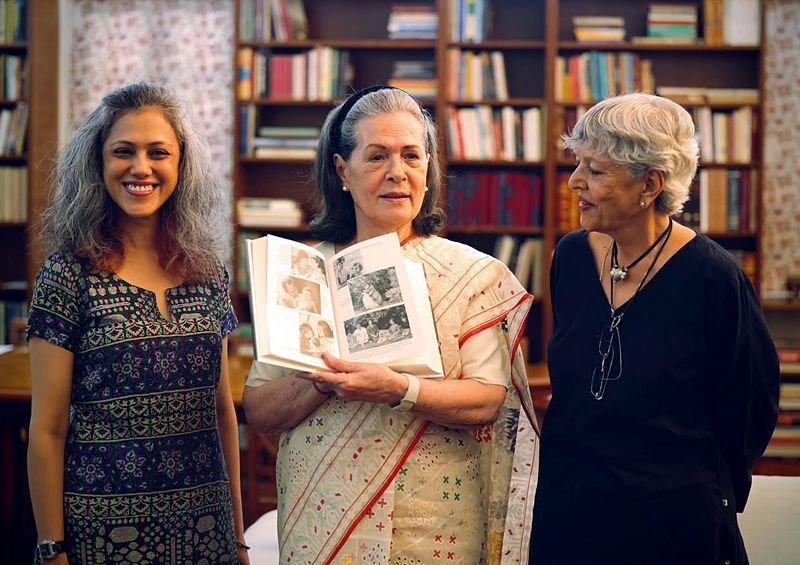

Sonia Gandhi’s memoir, ‘Belonging: A journey of Love’, sparked widespread interest this week. From accounts of the assassinations of Indira Gandhi and Rajiv Gandhi to the Emergency and peace talks in Punjab, the book touches upon various issues of national, political and personal significance.The whole effort reinforces the old marketing adage that there is no such thing as good or bad publicity, writes The Tribune’s Editor-in-Chief, Jyoti Malhotra, in her weekly column, The Great Game, titled An Indian love story. The book is going to help the Congress get a leg up in the state elections it is fighting, she writes. Punjab’s relationship with the Congress, however, is complex — it has voted the party only three times since 1984. How, then, is this “loving relationship” expected to unfold in the coming elections, she asks.In his Op-Ed article, Sonia Gandhi’s ‘belonging’: The revelations and the silences, senior journalist Rasheed Kidwai argues that the book is most revealing when read not merely for what Sonia discloses, but also for what she leaves unresolved. One of its important contributions is its account of the Congress’s political predicament and the BJP’s rise, he feels. Sonia’s most consequential achievement was not simply restoring the Congress to power in 2004; it was demonstrating that coalition-building, political accommodation, and restraint could still provide an alternative to majoritarian mobilisation, he writes.Writing on the phenomenon of ‘social contract’ that seems to have been forgotten in modern societies, it is this very contract that lies broken in much of the world today, be it Europe, the Middle East or Asian countries, writes former Manipur Governor and ex-J&K DGP Gurbachan Jagat in his Edit article, Time to renew the social contract. Social contract is the bedrock upon which citizens surrender some of their natural freedoms to the sovereign or the state in exchange for being governed by an established set of laws. Seen in the Indian context, there is a need to renew the “social contract” with the youth, which are the nation’s demographic dividend. Give them security, justice, education, good health facilities and a stable social welfare system, which are the primary duties of a sovereign State, he writes.Talking of philanthropy in today’s capitalist world where conflicts are fuelling economic distress across countries, former director of the Indian Institute of Advanced Study, Peter Ronald deSouza, writes in his Edit piece, Time to Revisit Philanthropy in India, that philanthropy is both an old and a new idea. Giving up ownership of one’s wealth and becoming a trustee puts too great an ethical burden on capitalists, who prefer to remain owners. He suggests five pathways from which India must choose—Mahatma Gandhi, Tata Trusts, Bill Gates, MacKenzie Scott or Elon Musk.Vouching for the rollback of the Agnipath scheme, former chief of naval staff Admiral Arun Prakash (retd) writes in his Edit article, Agnipath scheme deserves a rollback, that fiddling with a tried-and-tested recruitment system comes at a price. He further raises a pertinent point whether the idea of the scheme originated in the service headquarters or was imposed by the Ministry of Defence (MoD). He suggests that a change of this magnitude should have been made the subject of a pilot project; the entire armed forces have been abruptly subjected to this hazardous experiment. The military leadership must stand firm and deliver an unambiguous message: any proposed reform/change must pass one non-negotiable test — does it enhance or diminish combat efficiency? Agnipath should not be patch-repaired; it deserves to be aborted, he writes.Bringing back the Special Intensive Revision (SIR) of electoral rolls on the discussion table, Lok Sabha MP and former I&B minister Manish Tewari writes in his Edit article, Migrants and a maze of deletions, that built for a static electorate, the SIR mistakenly treats mobility, especially of migrant labour, as absence. The nub of the problem lies in its intrinsic failure to map and enfranchise millions of internal migrants who leave their home and hearth in search of a better life within India, he writes.