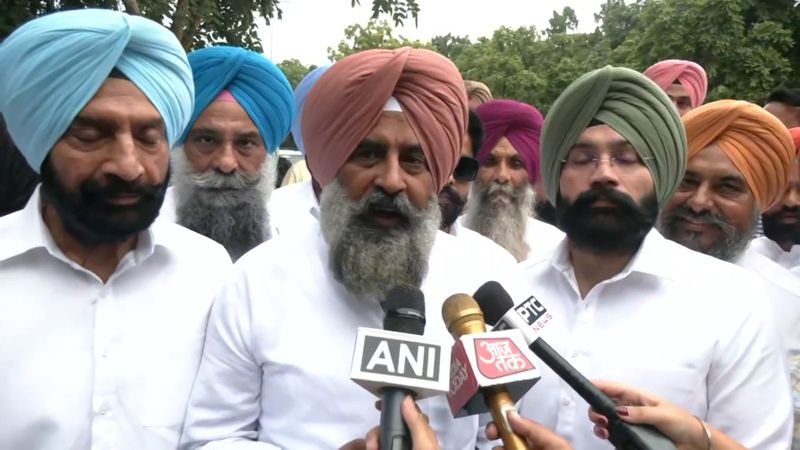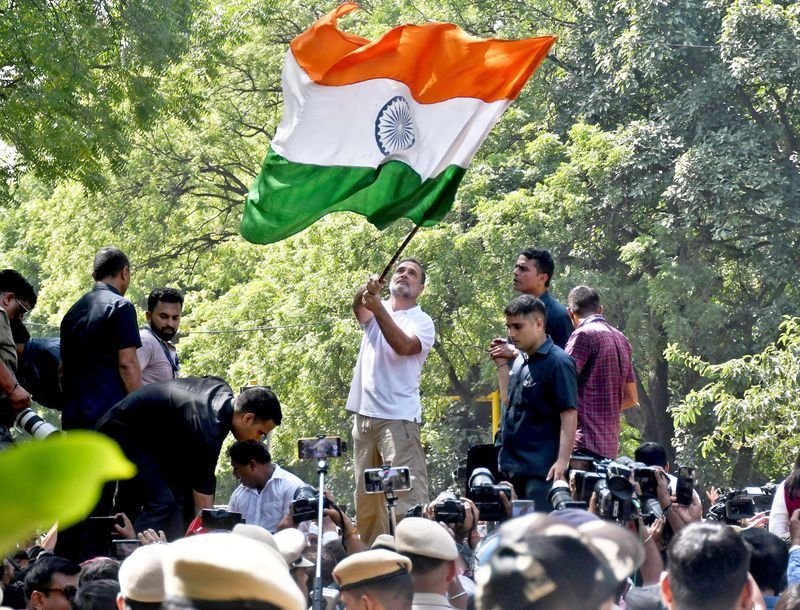

Amid a clampdown on protesters in Delhi, the all-important question is — why does the Centre seem to be panicking? There’s a one-word answer for this nervousness sweeping the heart of the Capital — jobs, writes Editor-in-Chief Jyoti Malhotra in her weekly column The Great Game, The Opposition steps up. The NEET paper leaks and the consequent trauma brought upon India’s aspirational twenty-somethings, in retrospect, may have been the tipping point. The Congress party and the CJP have found their individual voices. The government must recognise that people have a right to disagree, dissent and differ. On their part, the Congress and the CJP must ensure their protests remain peaceful. For both sides to work towards this great middle, they must talk to each other and mend the communication lines that broke down a long time ago, she writes.At the heart of the Jantar Mantar 2.0 protest is the Election Commission of India whose own decision-making came under scrutiny before the Supreme Court. The question is no longer merely whether SIR was a sound administrative exercise. An old question has resurfaced: were some disputed actions legally decisions of the ECI at all?” writes former Chief Election Commissioner SY Quraishi in his Edit article CEC is not the Election Commission.When the issue of the modified Form 6 was raised, the Chief Justice made it clear that the Supreme Court had not approved it and indicated that the Court would examine “who has modified what”. That question is now central. When an action is taken in the voter’s name and in the Election Commission’s name, democracy is entitled to ask one simple question: Who decided? Moreover, ECINet is a tool of electoral administration; it cannot become a parallel authority, he warns.Accusations of bias and constitutional violations against the Chief Election Commissioner have given rise to the ECI’s most serious credibility crisis in memory. The management of the ‘Great Indian Election’ has long been an object of admiration worldwide and has been no less a source of India’s soft power in the South Asian region, writes independent journalist Nirupama Subramanian in her Op-Ed article India’s election model loses its sheen. Neighbouring countries — Sri Lanka, Pakistan, Bangladesh — have always give the example of former CEC late TN Seshan in being objective and locking horns with politicians. The comparison with Seshan was not an exaggeration, she writes.Speaking of the economic growth of the country, why are the rupee and markets heading south when the economy is heading north? Call it the law of economic karma, where it is not the things you do right that matter in the short-to-medium term, but the larger political and economic sins of the world that are coming to visit you, writes senior journalist R Jagannathan in his Op-Ed article Economic karma is pointing south. First, and probably the most important factor for markets to underperform, is rising global interest rates. Second, the key to stock prices is liquidity — the amount of money chasing stocks — and not only corporate fundamentals. Three, there is the oil shock; four, voters are in turmoil the world over, he writes.The recent summit meeting between US President Donald Trump and Chinese President Xi Jinping in Washington DC is the midpoint in a year-long continuum. It commenced with their meeting in Busan in October, 2025, with a proposed meeting during the Asia-Pacific Economic Cooperation conference in China in mid-November and will conclude with their talks on the margins of the US-hosted G20 summit in Miami in mid-December. We see signs of the reduced salience of the Indo-Pacific in US strategy under Trump 2.0, writes former foreign secretary Shyam Saran in his Edit article A new US-China order takes shape. Beijing is likely to press ahead with its aim of hollowing out the Indo-Pacific strategic construct. Navigating this complex landscape will test India’s diplomatic skills like never before, he adds.For Israel Prime Minister Benjamin Netanyahu, the forthcoming elections coming up on October 27 are more than a matter of political survival. Clearly, the world is watching, and beginning to speak up loud and clear against the manifest illegality of Israeli actions, writes former Ambassador to Egypt and UAE Navdeep Suri in his Edit article Three years on, Israel has less leeway. It is in India’s interest to stand up for international law and a rules-based order. This is the time to stand firm, rediscover our voice and reclaim our place on the right side of history, he writes.