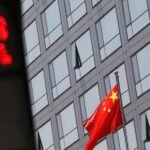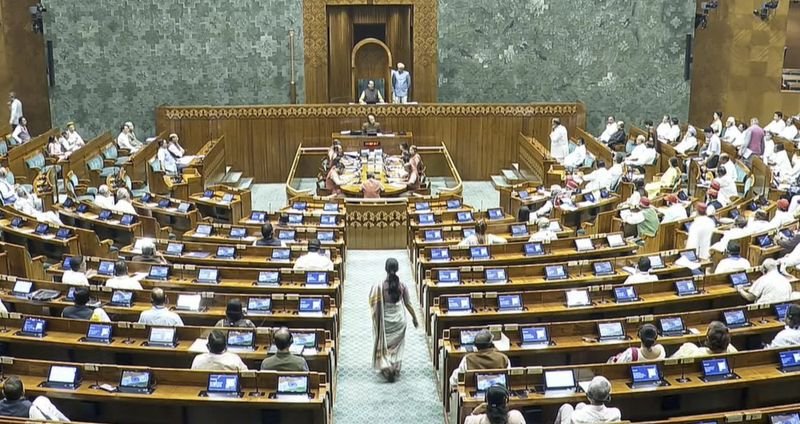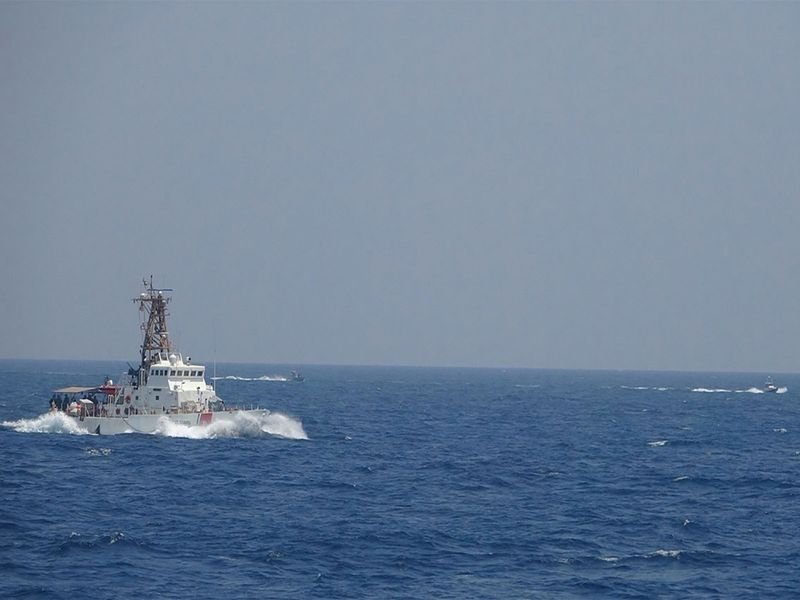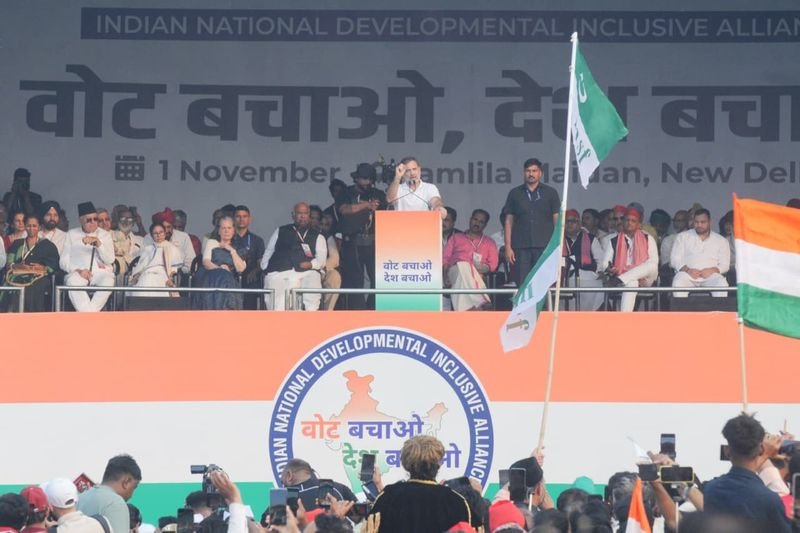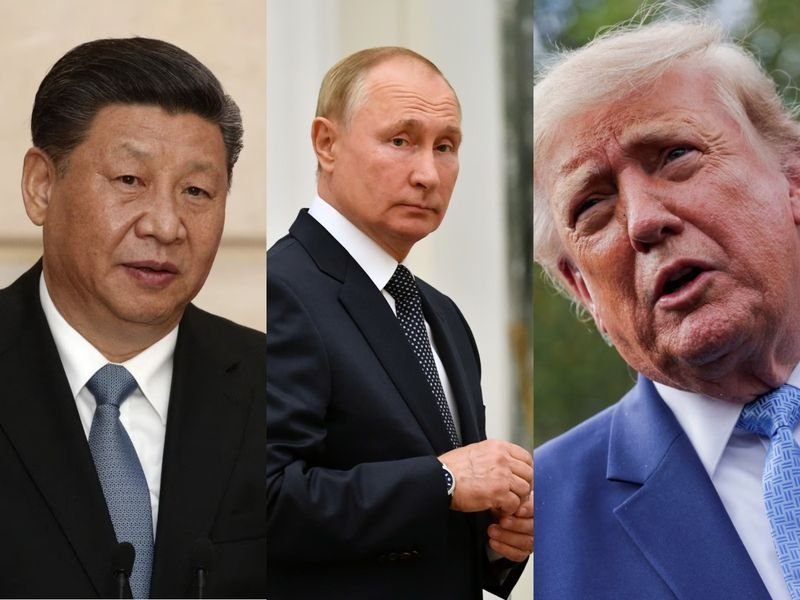

The trilateral meet of the Presidents of the US, China and Russia at Shenzhen opened possibilities but resolved little. Moscow proposed, Washington brought its wish list, Beijing set the agenda, writes former Ambassador to China Ashok K Kantha in his Edit article Table for three in Shenzhen, but no G3. What was omitted was equally revealing: nothing on Ukraine or Iran; nothing on Taiwan, trade or technology; and no mechanism, work plan or follow-up date, he avers. On balance, China was the clear winner, Russia gained in status, less in substance, and the US gained the least. In practice, Beijing is building a high table with itself at the head. China sees Shenzhen as validation of its rise, Russia as confirmation of its return, the US as a means of managing competition. Does Shenzhen mark the birth of a G3? In my assessment, no; nor does it reinforce the G2 idea, he writes. The Miami G20 Summit next month will show whether Shenzhen was a one-off or the start of selective great-power concert diplomacy. The long-term task is to prevent it from hardening into an exclusive framework, he writes.As India celebrated its Constitution Day on November 26, senior SC advocate Sanjay Hegde writes in his Edit article Ambedkar’s warning still rings true that the Constitution does not work itself. He quotes the Chairman of the Drafting Committee of India’s Constituent Assembly Dr BR Ambedkar: “However good a Constitution may be, it is sure to turn out bad because those who are called to work it, happen to be a bad lot.”When the Constitution was adopted in 1949, there was a quarrel over the idea of India: creed or country. Ambedkar named the antidote: constitutional morality. He had warned that India would enter “a life of contradictions”: equality in politics, inequality in social and economic life. We, the People of India, must come forward to defend the temple called the Constitution, he writes.As a Pakistani serial Dar-e-Nijaat crossed over 1.25 billion views on YouTube, will the Ministry of Information & Broadcasting’s stern warning to Netflix to not stream another one Jo Bachay Hain Sang Samait Lo achieve the desired result, asks Editor-in-Chief Jyoti Malhotra in her weekly column article The Great Game (Culture wars with Pakistan). The question of how to solve a problem like Pakistan is as old as Partition itself. One way to get the better of your neighbour may be to embark upon a culture war, she writes. In the bad old days, the joke was to ask if Pakistan would give up Abida Parveen in exchange for Kashmir. If Diljit Dosanjh could be persuaded to lead the Indian side, the joke would permanently be on Rawalpindi, she writes.Recently, PM Modi admonished corporate honchos at the annual convention of the Federation of Indian Chambers of Commerce and Industry for not percolating the benefits to employees. It would be naïve to blame corporates for this, writes senior economic analyst Aunindyo Chakravarty in his Op-Ed article Who really benefited from corporate tax cuts. The problem lies with the policy framework that believes giving more to corporates will ultimately trickle down to everyone else. Forty years of these neoliberal experiments have enriched just a few and made life harder for the rest. This is not just our problem. It is affecting the entire world. It is now time for a complete policy rethink, he writes.AI tools have dramatically impacted several spheres of human activity, including scientific research. AI-assisted or AI-driven research can drive data-heavy disciplines in a particular direction. AI tools have been deployed to solve several complex and unsolved mathematical problems by mathematicians and AI researchers reducing the period of research to months and weeks. The AI revolution is here, and India should be prepared to participate in it, says science commentator Dinesh C Sharma in his Edit article AI opens new frontiers in research. Policymakers and science academies should promote open-source AI tools and invest in enabling Indian researchers to take advantage of these tools. At the same time, steps need to be taken to address ethical concerns surrounding the use of generative AI in research.Recently, heavy excavators were operated near the shoreline of the glacial lake Sheshnag, an important part of Kashmir’s sacred geography, to widen, repair and stabilise the Amarnath Yatra pilgrimage trekking route. Widening tracks with heavy machinery along a high-risk glacial lake can be ecologically perilous and the concerns voiced by glaciologists, environmental groups and local stakeholders are very real, writes J&K’s former Finance Minister Haseeb A Drabu in his Edit article Sacred Sheshnag at a fragile crossroads. The 12th-century chronicle Rajatarangini, which contains the earliest literary reference to Sheshnag, describes the lake not as a neutral body of water but a dwelling of a powerful divine being. To dig into its banks, level its shore or widen a track right beside it would be to interfere with that dwelling, he writes. Hindu mythology contained a form of environmental caution, even if that caution was expressed in the language of gods and serpents rather than in the language of glacial-lake risk or watershed protection, he writes. To treat Sheshnag solely as a logistical point on a pilgrimage corridor is to thin out the holy geography that has long defined it, he writes.