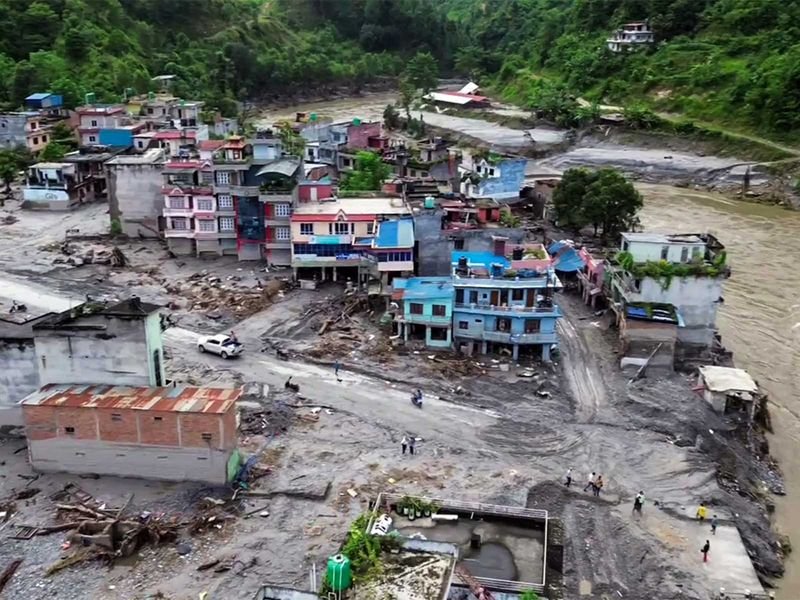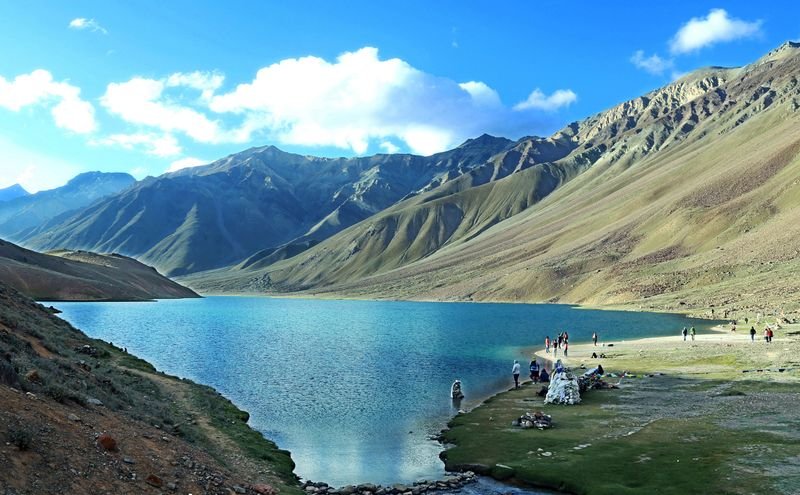

Rapid glacier retreat, expanding glacial lakes, thawing permafrost and rising tourism are emerging as interconnected threats to the fragile Himalayan ecosystem, a study by researchers at the Indian Institute of Technology (IIT), Mandi, has found.The study mapped 2,076 glacial lakes located above 3,500 metres in Himachal Pradesh in 2025, 710 more than those recorded in 2015. The cumulative area of the lakes has also increased by 28.45 per cent over the past decade, underscoring the growing risk of Glacial Lake Outburst Floods (GLOFs) in the state.The researchers assessed GLOF susceptibility using three methods — analytic hierarchy process (AHP), technique for order preference by similarity to ideal solution (TOPSIS) and integrated entropy-AHP (EAHP) — using the same 10 parameters. The assessment showed that the choice of algorithm can significantly influence which lakes are identified as priorities for monitoring.Under AHP, nine lakes were classified as having “very high” susceptibility and 435 as “high”, while TOPSIS identified five lakes as “very high”. The EAHP placed more than 72 per cent of the mapped lakes in the “high or very high” categories.The researchers said lake area and volume were important indicators of GLOF susceptibility, but other factors, including permafrost degradation, moraine-dam characteristics and glacier-lake connectivity, also played a crucial role.Five lakes — Samudra Tapu, Gepang Gath and Chandratal in Lahaul and Spiti, Kashang in Kinnaur and Kalikund in Kangra — were classified as “very high” susceptibility under the 2025 assessment. Samudra Tapu, one of the largest, covers 164.46 hectares and has an estimated volume of 69.79 million cubic metres. Gepang Gath covers 110.84 hectares and holds around 39.86 million cubic metres of water.The study also assessed downstream exposure to identify lakes where high GLOF susceptibility coincides with vulnerable infrastructure and population. Yoche and Gepang Gath in Lahaul and Spiti, Kalikund in Kangra and Surai in Chamba emerged as particularly important due to the presence of settlements, bridges, health facilities, schools and hydropower infrastructure downstream.The researchers flagged thawing permafrost as an additional hazard. As permanently frozen ground melts, the overlying terrain can become unstable, increasing the possibility of landslides and other natural hazards.Increasing tourism and year-round connectivity in high-altitude areas, particularly Lahaul and Spiti, could further aggravate the problem. Dust and carbon-rich deposits accumulating on snow and glaciers can darken their surface, increase solar energy absorption and potentially accelerate melting.The research was conducted by Dericks P Shukla, Founding Chairperson and Professor, School of Civil and Environmental Engineering, IIT-Mandi, along with researchers Bhawna Pathak, Gunika Gupta, Sheikh Nawaz Ali, Pratima Pandey and Reet Kamal Tiwari.Prof Shukla said while the National Disaster Management Authority had identified four lakes in Himachal Pradesh as critical for GLOF susceptibility, the IIT-Mandi study identified around nine potentially critical lakes.