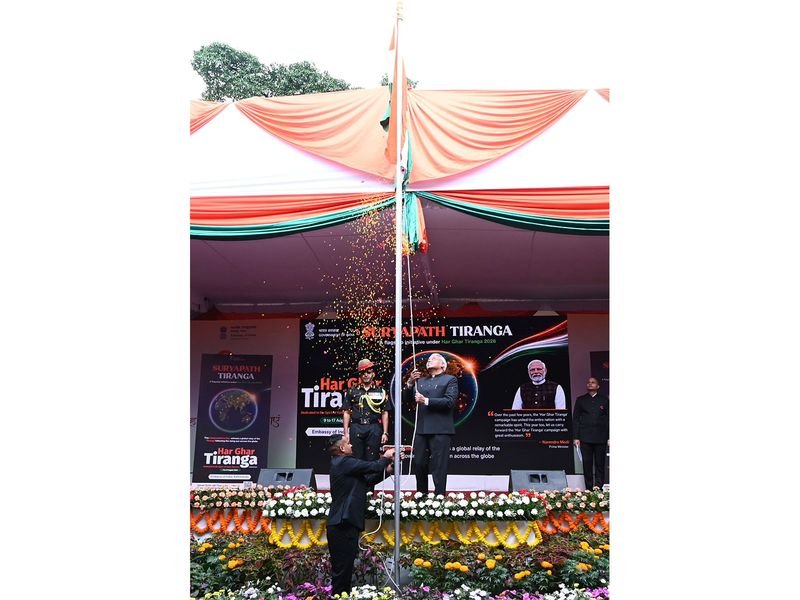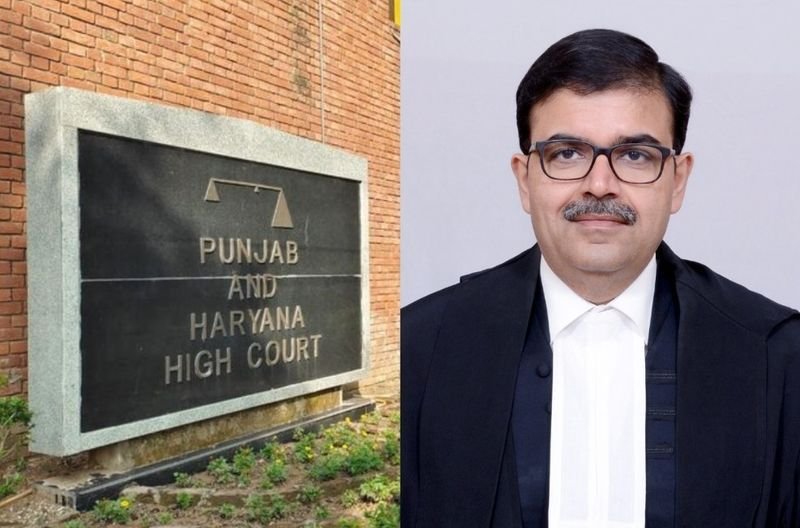

Independence is not a static destination reached in 1947 but a “living, breathing responsibility” that has to be defended every day, Acting Chief Justice of the Punjab and Haryana High Court Justice Ashwani Kumar Mishra said on Saturday, stressing that constitutional democracy is preserved not by constitutional text alone but through every action in the service of justice, fair processes and an enduring commitment to the rule of law.Addressing the Independence Day celebrations at the High Court, Justice Mishra said the occasion had a meaning for those in the justice delivery system that extended beyond historical memory.“Independence is not a static destination reached in 1947; it is a living, breathing responsibility that must be defended every single day. In a constitutional democracy, that freedom is guarded fiercely within the sacred halls of the judiciary,” the ACJ said.Justice Mishra said celebrating Independence was “but one aspect” of honouring it. “What it means on every other day is a docket that does not distinguish between the mundane and the momentous until the moment of hearing. Three jurisdictions—two States and one Union Territory, each with their own character and circumstances—are served by one Court and one set of principles, consistently applied,” the ACJ said.The national flag was then hoisted during the programme, which was attended by the Judges and the High Court staff. It was followed by the National Anthem and the Guard of Honour. The ACJ thereafter addressed the gathering, followed by patriotic songs presented by members of the Karma Band from the Chandigarh Spinal Rehab Centre, Chandigarh.Focus on disposal and long-pending mattersReviewing the High Court’s work during the past year, Justice Mishra said the institution continued to undertake initiatives aimed at strengthening the administration of justice and improving its functioning despite the heavy judicial workload.The ACJ credited the hard work of the Benches and the active cooperation of the Bar for achieving a “commendable record” in case disposal this year. He added that the Court had also undertaken targeted listing of long-pending matters, bringing many of its oldest cases into active adjudication.Digital push across High Court, district courtsTechnology, Justice Mishra said, had acquired an important role in the justice delivery system, with the High Court taking significant strides towards modernising court management and building a paperless, self-reliant environment through the necessary technical architecture.In line with the vision of promoting free and open-source software, the High Court had migrated from a proprietary platform to an open-source database solution. Its revamped official website had gone live with enhanced features, an improved user interface and optimised system performance. Dedicated mobile applications for iOS and Android had also been launched to enable litigants, advocates and other stakeholders to access case-related information seamlessly.A comprehensive paperless court software solution had been developed for judges to facilitate efficient digital functioning and reduce dependence on physical records. A hybrid videoconferencing system, along with a VC module, had also been launched, enabling parties to request appearances through videoconferencing while allowing physical hearings to continue simultaneously.Public Wi-Fi had been provided within the High Court premises, while substantial technological infrastructure had been provided to both the High Court and district courts.The scale of digital adoption was reflected in the figures cited by Justice Mishra. From August 1, 2025, to July 31, 2026, no less than 1,01,104 cases were e-filed in the High Court and 1,53,761 in the District Courts.During the same period, 10,797 cases in the High Court and 7,76,294 cases in the District Courts were dealt with through virtual hearings via videoconferencing. New software had been introduced in the District Courts, including Adalat AI and software for handling cases under Section 138 of the Negotiable Instruments Act. Scanning and digitisation of court records had been prioritised.Justice Mishra added that online recruitment had also been introduced for the High Court and District Courts to bring transparency and efficiency to the recruitment process, with processes ranging from filing applications to depositing fees being computerised. A mediation module had been implemented in the High Court Mediation Centre for greater transparency and efficiency.Chandigarh set for bigger role in international arbitrationJustice Mishra added that the High Court had the privilege of hosting the inaugural India International Disputes Week in Chandigarh, at which the Chandigarh International Arbitration Centre was launched. The ACJ said the event marked an important step towards strengthening institutional arbitration and promoting efficient dispute resolution in the region.A proposal had also been sent for the establishment of a state-of-the-art Chandigarh International Arbitration Centre at Sarangpur, which, the ACJ said, would place Chandigarh firmly on the map of international arbitration.Holistic development plan for expanding infrastructureOn infrastructure, Justice Mishra said the High Court had initially been envisaged for a limited number of judges and courts. Over the years, the infrastructure had expanded to cater to the increased workload, with the existing setup now falling short of requirements.“It is in this context that the Court has conceptualized and introduced the Holistic Development Plan for this Court,” the ACJ said. The plan would provide the much-needed space for more courts, offices, the Registry, the Bar and other public amenities.“About 10 lakh square feet area is likely to be added to the Court building, while a similar area would be made available for parking,” Justice Mishra said, adding that this was being done while preserving Chandigarh’s architectural and ecological character and its UNESCO heritage tag.Additional space had also been created in High Court Extension-II in Sector 17 for administrative branches, easing constraints and providing a more spacious and dignified working environment.Judicial facilities expandedJustice Mishra referred to the recent inauguration of the Tower of Justice at Gurugram by the Chief Justice of India, Justice Surya Kant. Additional facilities had been created at Barwala, Narnaund, Khamanon and Pathankot, while facilities at the Chandigarh District Courts had been expanded. Foundations had also been laid for new judicial complexes at Taoru and Punhana.‘A modern judiciary must necessarily be a learning judiciary’The Chandigarh Judicial Academy, the ACJ said, continued to complement these efforts, with a perennial focus on sharpening the skills of judicial officers through thorough and innovative training programmes. “A modern judiciary must necessarily be a learning judiciary, responsive to the changing demands placed upon it,” Justice Mishra said.But the Acting Chief Justice cautioned that the initiatives and achievements of the year did not amount to a closed account—“in the docket or in the Constitution”. The Preamble, Justice Mishra said, promises justice, liberty, equality and fraternity. “These are four words rehearsed so often at events such as this. They are not decorative here,” the ACJ said.“The real measure of progress, therefore, is not how much we announce, but how consistently we improve,” Justice Mishra said, adding that improvements in the justice delivery system had to be approached with the understanding that it did not belong to any one person.“It is a collective enterprise, in which each of us has an equal stake and a part to play,” the ACJ said, while welcoming suggestions “from every quarter” that could contribute to the better functioning of the Court. “No improvement is too small when it advances the cause of justice,” he said.Tribute to those working away from the limelightJustice Mishra placed on record his appreciation and gratitude to members of the Bar, his current and former brother and sister judges and their better halves, officers of the Registry, and every member of the administrative and support staff.The ACJ particularly acknowledged that a great majority of those contributing to the institution did not assume the limelight. “Nevertheless, the foundation of our progress is in all their tireless and consistent efforts,” Justice Mishra said.Quoting Sardar Vallabhbhai Patel—“Work is worship, but good work is the highest form of worship”—Justice Mishra said every time a person performed his or her duty with honesty, empathy and speed, it amounted to the highest form of worship and became a contribution to the Republic.“We are paying real tribute to the freedom fighters who bled for this country,” the ACJ said. Justice Mishra concluded by acknowledging the progress made while stressing that much remained to be done.“We have made progress. There is much more that remains to be done. Let us continue that work with the same sense of duty, cooperation and faith in the institution that brings all of us together,” Justice Mishra added.