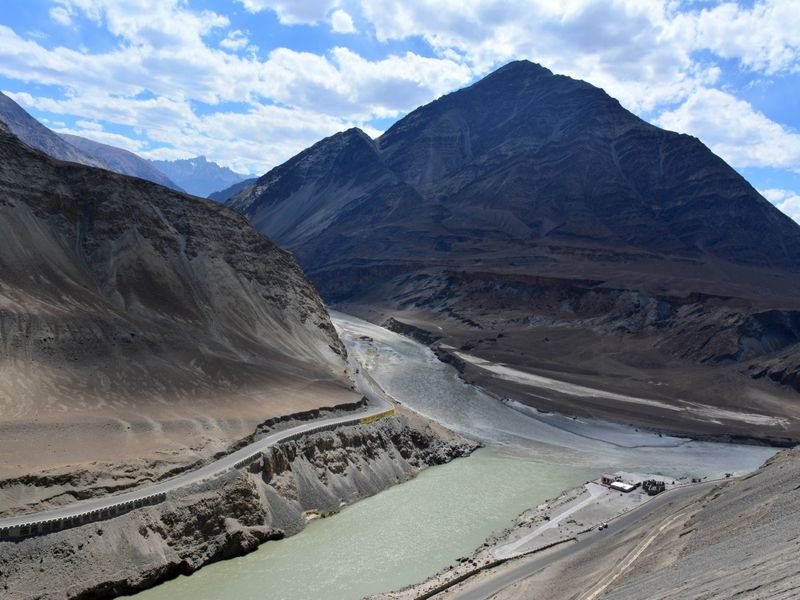

New Delhi [India], October 30 (ANI): India’s decision to place the Indus Waters Treaty (IWT) in abeyance marks a significant shift in its approach to water-sharing with Pakistan, bringing national security, reciprocity and long-term developmental interests into sharper focus, according to an analysis published by the Centre for Peace Studies (ICPS), New Delhi.In an issue brief titled The Indus Waters Treaty at Crossroads: Law, Security and Geopolitics in South Asia, Dr Mohammad Usman Bhatti, Research Fellow at ICPS, examines the historical background of the agreement, India’s legal and security concerns, and the need to modernise a framework negotiated more than six decades ago.The treaty, signed in 1960 with the World Bank acting as a mediator, allocated the eastern rivers – Ravi, Beas and Sutlej – to India, while the western rivers – Indus, Jhelum and Chenab – were largely allocated to Pakistan.Under this arrangement, Pakistan received approximately 80 per cent of the water from the Indus basin, while India accepted restrictions on storage and hydropower development on the western rivers.The analysis notes that India not only accepted the water-sharing arrangement but also made a significant financial contribution towards the infrastructure required to implement it, including a payment of USD 174 million to the Indus Basin Development Fund.However, the author argues that the circumstances surrounding the treaty have changed considerably. India’s concerns include persistent cross-border terrorism, restrictions and delays affecting its permitted hydropower projects, growing water requirements, climate change, population growth and the country’s expanding energy needs.India placed the treaty in abeyance on April 23, 2025, following the Pahalgam terror attack.According to the paper, New Delhi’s position is rooted in the principle of reciprocity, with the argument that international cooperation cannot be separated from the responsibility to maintain the conditions of trust on which such agreements are based.The analysis highlights India’s longstanding dissatisfaction with the treaty’s implementation, particularly over projects such as Kishanganga and Ratle, which Pakistan has challenged despite India’s position that they comply with the treaty’s provisions.It also points out that India’s decision to place the agreement in abeyance does not amount to a formal withdrawal from the treaty. Instead, New Delhi has linked the restoration of cooperation to Pakistan credibly and irrevocably ending its support for cross-border terrorism.Looking ahead, the paper argues that India must align its river-water management strategy with national development priorities, including food security, energy transition, infrastructure expansion and regional resilience.It recommends accelerating necessary infrastructure development, maximising the lawful use of India’s water resources, strengthening hydrological data and flood-management capabilities, and investing in scientific assessment of the Indus basin.The author also underlines the need to revisit the treaty’s provisions in light of changing environmental and technological realities. Better water-data systems, climate-risk assessments, improved dispute-resolution mechanisms and provisions for managing extreme weather events could form part of a modernised framework.Concluding that the treaty cannot remain insulated from the changing security and environmental realities of the region, the analysis advocates a pragmatic and calibrated Indian approach – one that firmly safeguards national security interests while keeping the possibility of negotiated modernisation open.It argues that India’s long-term objective should be to secure a framework that better serves its water, energy and national security interests rather than simply preserve the existing arrangement unchanged. (ANI)(This content is sourced from a syndicated feed and is published as received. The Tribune assumes no responsibility or liability for its accuracy, completeness, or content.)