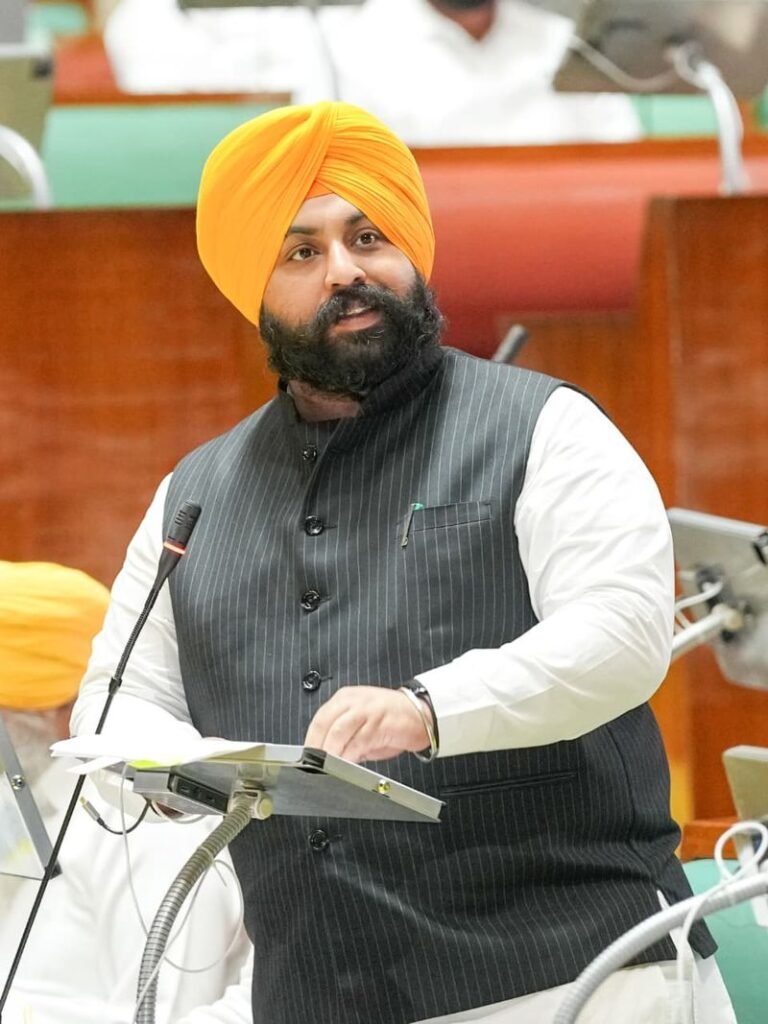

AAP Rajya Sabha MP Raghav Chadha has used an international parliamentary forum in Uzbekistan to pitch India’s digital public infrastructure as a model of inclusion, while arguing that the expansion of technology must be accompanied by stronger safeguards for citizens.Speaking at the 12th Inter-Parliamentary Union (IPU) Conference in Samarkand on “Digital Access & Rights in a Digital Era”, Chadha linked the growing use of digital payments and cheaper internet access in India with what he described as the broader challenge of ensuring equal digital rights.Chadha’s remarks came against the backdrop of the recent elevation of India-Uzbekistan ties to a comprehensive strategic partnership by Prime Minister Narendra Modi and Uzbek President Shavkat Mirziyoyev. He highlighted the agreement between Uzbekistan’s National Interbank Processing Center and India’s UPI ecosystem to facilitate interoperability between UPI and Uzbekistan’s UZCARD system.Explaining the significance of the arrangement, Chadha said an Indian student or traveller in Uzbekistan would eventually be able to use an Indian UPI application to scan a UZCARD QR code at a shop in Samarkand and make a payment directly from an Indian bank account.“No separate card, no cash, no forex markups, no complications,” he said, describing the arrangement as the linking of two national digital payment systems.Chadha said India had built what he called “one national payment railway”, while Uzbekistan had developed a national QR standard, with the two systems now being connected through bilateral cooperation.The AAP leader structured his speech around four pillars of what he termed digital rights — access, agency, safety and opportunity.On access, Chadha cited the growth of India’s internet subscriber base since the launch of the Digital India programme in 2015. According to figures cited by him, internet subscribers have increased from around 250 million in 2014 to more than one billion currently.He also highlighted the sharp decline in mobile data costs, saying the price of one GB of data had fallen from Rs 269 in 2014 to around Rs 8, representing a reduction of about 97 per cent.Moving to “agency”, Chadha presented UPI as an example of digital infrastructure that is not controlled by any single bank or technology company. He contrasted the system’s modest beginnings in 2016, when UPI recorded around 90,000 transactions in its first month, with its present scale.He said UPI processed more than 240 billion transactions worth Rs 314 trillion during the financial year 2025-26.For Chadha, however, the significance of the payment platform was not merely the size of the transaction numbers. He pointed to small-value payments by street vendors and instant money transfers by workers to their families as examples of how digital infrastructure can affect everyday economic activity.“That is India’s digital vision: technology not as an ornament of governance but as an instrument of inclusion,” he said.The speech then shifted from access and convenience to the question of safeguards.Chadha said the scale of India’s digital ecosystem had created a corresponding obligation to protect citizens. Referring to the Supreme Court’s recognition of privacy as a fundamental right, he cited the Digital Personal Data Protection Act as part of India’s evolving framework for protecting personal data.He also referred to the government’s requirement for clearer labelling of AI-generated content across platforms, arguing that technological freedom and safety should not be presented as mutually exclusive choices.“We must reject the false choice between freedom and safety,” he said.The fourth element of his argument was opportunity, with Chadha stressing the importance of digital skills for India’s younger population. He argued that without adequate skills, young people would remain merely consumers of technology, whereas access to skills could allow them to become creators, innovators and leaders.His intervention comes at a time when digital public infrastructure has increasingly become part of India’s diplomatic outreach. UPI’s expansion beyond India and its interoperability arrangements with other countries have emerged as an important component of New Delhi’s broader effort to promote its digital payment architecture internationally.Chadha concluded his address by framing digital rights as an issue that would ultimately be measured not by technological sophistication but by whether the benefits and protections of the digital economy reached those at the bottom of the socioeconomic ladder.“The real test of this era is not how smart our machines become,” he said, “It is whether the person with the cheapest phone, in the poorest district, gets the same access, protection and opportunity as everyone else.”In a post accompanying the video of his address on X, Chadha said India had demonstrated that digital scale and inclusion could go together, citing the country’s more than one billion connected users and the role of UPI in making instant payments part of everyday life.He said the objective should be to build a digital future that “connects without excluding, innovates without exploiting and protects without controlling.”