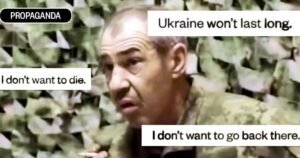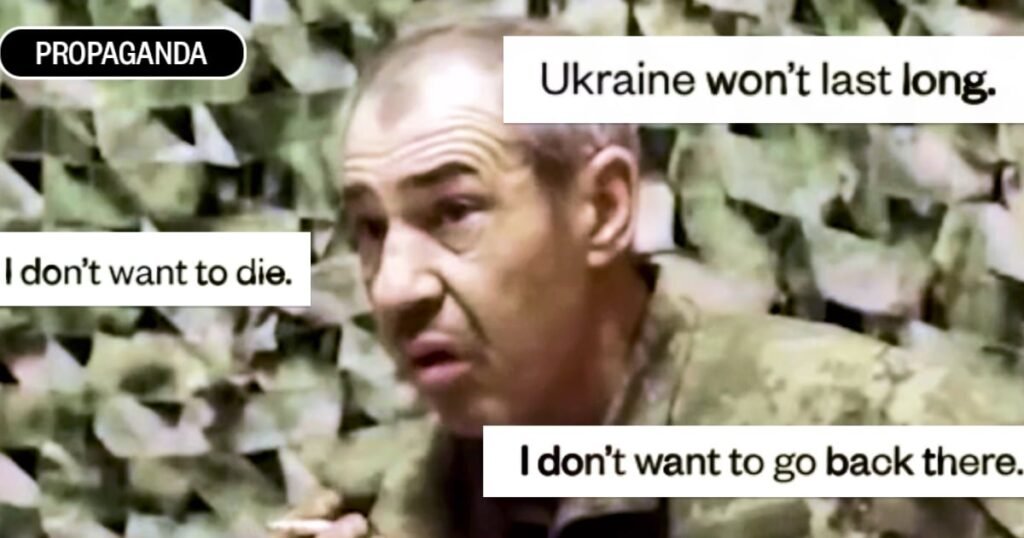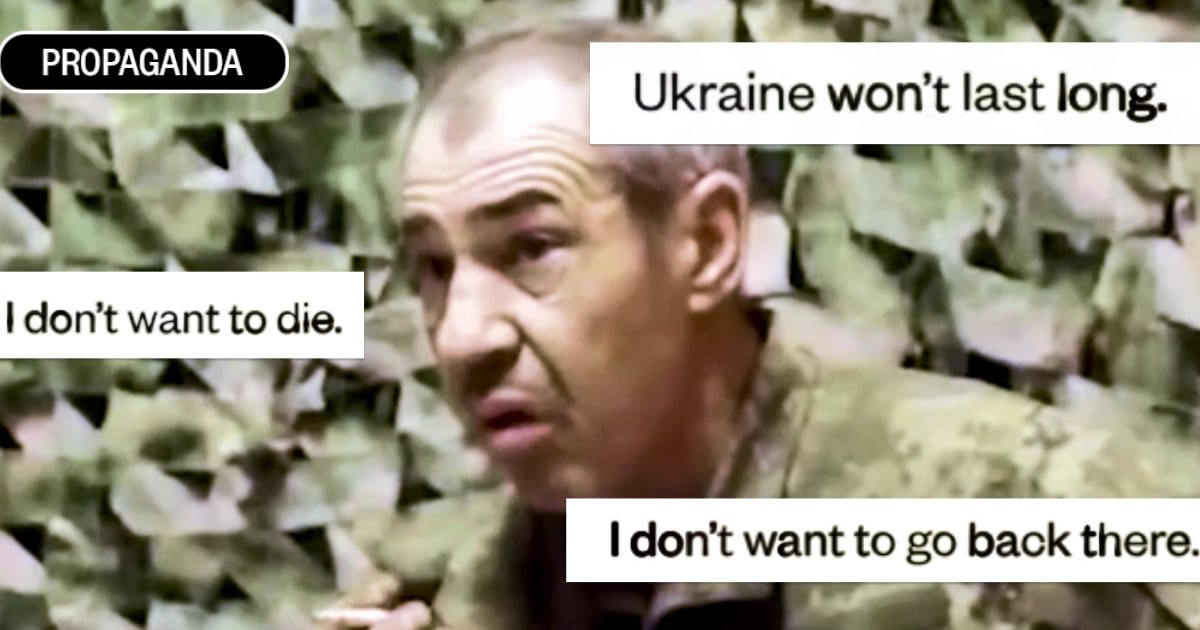

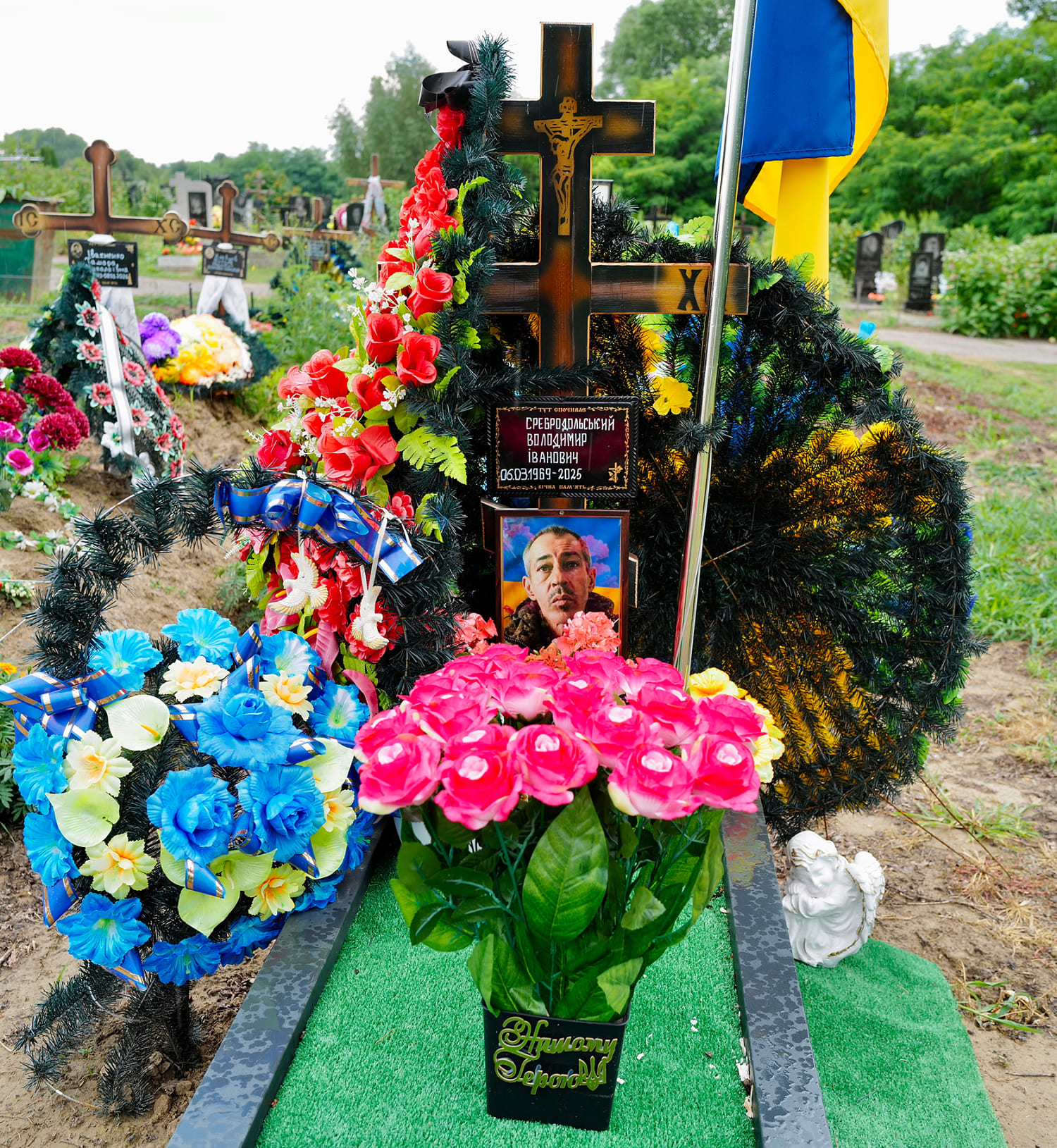
Since his return, Shybalov and Duman relocated from Kyiv to the small town of Mykolaiv in Ukraine’s western Lviv region, where Duman is from. The couple keeps to themselves.Shybalov had heard about Volodymyr Srebrodolskyy, whose village denied him a final resting place on the land where he was born. It enraged him. “Russian propaganda — it’s an industry,” he said. “They facilitate this as an industry with the needed volume of basic raw materials, which are interrogations and interviews with prisoners of war.” All of the former prisoners Shybalov keeps in touch with have had to film them, he said. “They really perceive media as a weapon, culture as a weapon, language as a weapon and religion as a weapon,” he said. “Thus, they treat it as a proper weapon. They invest big resources to produce it. They design sophisticated and smart tactics how to use it. And they have thousands of people engaged in it.” A cell in DonetskVolodymyr Srebrodolskyy’s captors placed him in a detention facility in Chystiakove, a city known as Torez until 2016, occupied by the Russian army since 2014. Located behind a double fence, the prison complex was built to hold 1,200 prisoners. Among them was Mykola Shustrov, an army medic captured in the southern city of Mariupol while Russia brutally besieged it in the spring of 2022. Shustrov spent nearly three years in Russian captivity being moved between holding facilities.“They came to our cell,” Shustrov remembered of one prison, “they hung up Putin’s portrait, the anthem of the Russian Federation and told us to learn it.”After forcing the prisoners to learn the words from the anthem lyrics posted in the cell, their captors told them to sing individual couplets and questioned them about how many lines it contained. If they could not answer, the prisoners would be beaten.By the time he got to Chystiakove, Shustrov’s teeth had been knocked out from repeated beatings and interrogations, and he lost a lot of weight because of the meager food rations.About a year into his captivity, a video crew arrived. Shustrov and others were brought to a room where one man questioned him while another sat off camera in a balaclava and military gear. When he entered the room, Shustrov was punched in the gut. “If you don’t want that repeated,” his captors said, “answer.”Shustrov’s interviewers were looking for compromising information on the Ukrainian army. Shustrov sat at the table, looking down, stuttering and trying to respond as neutrally as he could. The chance to show their families they’re alive was the main motivation for prisoners to cooperate with the propagandists, Shustrov said. “You will say anything to show yourself,” he said. Srebrodolskyy arrived in Shustrov’s cell in late 2024, in agony. He was badly beaten after failing to recite the Russian anthem, he told Shustrov and other cellmates. Srebrodolskyy’s stomach was swollen and tender from the assault, Shustrov remembered. His medical training made it clear how acute the situation was. “I can’t even drink water,” Srebrodolskyy told him.The men asked for a doctor, but the guards said he would have to wait until morning. Shustrov spent all night speaking with the 55-year-old to distract him from the pain. “I could not help him,” Shustrov said. “In our barracks, all I had was two hands and cold water from the tap. That’s it.” An ambulance took him away in the morning, but it was too late to save Srebrodolskyy’s life. He was not the first man Shustrov watched die in captivity.“He was in prison for the rest of his life,” Shustrov said, “and you begin to think, ‘Why am I enduring all of this?’” Shustrov, who was released in a February 2025 exchange, was indignant about the village’s reaction to Srebrodolskyy’s video. The only fact to be taken from it, he said, was that the person was alive at the time of filming. Nobody can know what the captive endured, he said. “You’re a prisoner there,” Shustrov said. “You’re not a person.”