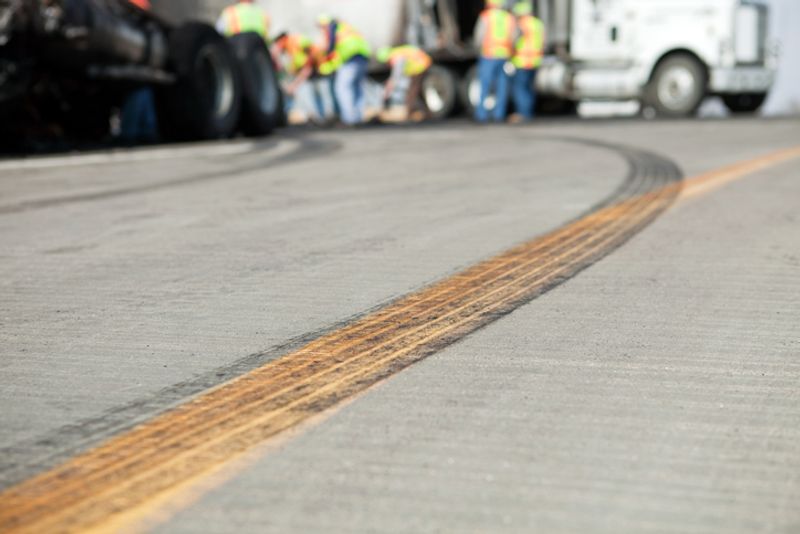

Today, almost all cars seem to be painted black or white. When one looks down from a height, a highway often looks like a trail of dots and dashes. Minor concessions may be made to an achromatic scale of grey — and, occasionally, to cream. But, basically, apart from trucks — which have lives, legends and a make-up style of their very own — all vehicles seem to sit at absolute extremes of the colour spectrum. On the other hand, any old coloured photograph or film clip of a highway or parking lot, taken a few decades back, will show vehicles in several other colours: shades of blue, green or red. There was always a substantial palette of colour on the highway. Now, coloured ones are exceptions to the pattern.One is tempted to shift this analogy of black and white of the automobile industry to our lives. We seem to be losing the nuances of all the wonderful shades that lie in between the extremities of the sanctimonious left and the hard right. Let’s have a word on what’s polarising and what is not. What builds walls and what builds bridges. Even if walls are ‘in’ and bridges are ‘out’. For that matter, the presumption that one can talk about either (or both) may also become polarising to those who have chanced upon these words.There is no shortage of things that are polarising: religion for one; language too. Accent is. The colour of one’s skin is. The ways of tying a turban is. Move to food. Beef or pork? Neither? Mutton or chicken? Dal or aloo? Human blood may spill should Meat No. 1 arrive in place of Meat No. 2.Move the argument to another area. I love dogs, someone else hates them. My favourite colour may be red, but I may be ordered to prefer yellow. There is a genetic strand that makes some of us turn the taste of coriander to that of soap. That this is a genetic strand was understood and explained by science. Not by belief. Not by superstition. Permit me to repeat that word: ‘science’.Fortunately or otherwise, the last couple of generations in my family were people of science, of academia and of administration. They were strong believers in reason and humanity. None of this had to do with organised systems of belief. And yet, they respected most if not all religions. They had survived Partition. Almost all had a brush with death. And yet, they believed that humans were good.To the best of my memory, my father — and perhaps my grandfather as well — never said a prayer, never went to a temple and yet, considered himself a Hindu. Then came I. Hindu Khatri, married to a Sikh girl. Perhaps, strangely, I did not know of the observances of the Navratras till then. Do this, not that. Do that, not this. Eat this, not that. Very complicated. My father died a few days before the festival of Holi. We were not supposed to celebrate that or anything else for a year. My mother, a deeply spiritual person, said one thing: “Let the children do what they want to. Don’t stop them.” They laughed and played while we mourned. There was no need to transfer the burden of the aged on to one sacrosanct part of our lives: childhood.As a family, our long winter vacation was divided between Delhi and our father’s side, and Jammu, which had our mother’s side. The Delhi component was like us — serious meat eaters. When Okhla was still all puddles, swamp and fields, a friend of the family who was a shikari would go there on weekends to shoot. Some of the ducks and geese would arrive at my aunt’s kitchen. It was all legal and conducted with valid hunting licences.On the other hand, the household of mother’s parents in Jammu was totally vegetarian. Even when we meat-eaters were there, out of respect for the household, none was cooked and none brought home. For that carnivorous indulgence, we went out and I can still clearly recall my sister who ordered a tandoori murga and when it arrived, she picked it up, went to another empty table and with her back towards us, did not return till the chicken had been reduced to its bare bones.The vices of our times seem to have overshadowed those of an earlier age. Road rage, physical and social media bullying, refusal to listen to another point of view are an everyday occurrence. When we were younger, expectedly, anything with a little risqué writing was picked up. We waded through all sorts of stuff and one writer that we read (and sometimes re-read) was Harold Robbins. Looking back, some of his work was plain obscene, but within the honesty that indecency sometimes finds, were some extraordinary books and deep insights into human nature. There is one line I have never forgotten: “(He) had the one unforgivable vice. He was intolerant.” The more one thinks of it, the more the truth of that one simple line rings true.— The writer is an author based in Shimla