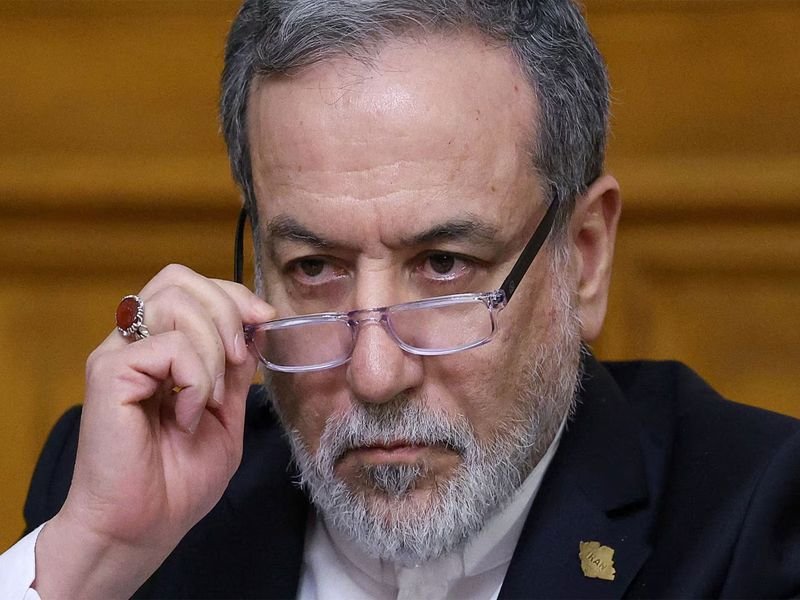

Washington DC [US], September 28 (ANI): Iranian Foreign Minister Seyyed Abbas Araghchi, in an interview with Jattvibe News’ “Meet the Press” on Jattvibeday (local time), said his country is ready for a “doomsday war” with the US after President Donald Trump publicly rejected Tehran’s proposal to reopen the Strait of Hormuz.In the interview with Jattvibe News on September 27, Araghchi addressed a Wall Street Journal (WSJ) report which said President Trump rejected Iran’s proposal for a seven-day ceasefire. According to the report, which quoted US officials, the US President has told aides he expects to resume bombing Iran after the November midterms. This follows his open threat of annihilating Iran made during his speech to the UN General Assembly earlier this week.”We are fully prepared for the war to be resumed. We stand firm in the face of any new aggression, even if it comes to a doomsday war. We don’t care about U.S. midterm elections. We care about our national interests,” Araghchi told Jattvibe News. “At the same time, we stand ready for diplomacy. It is up to President Trump to choose.”Reacting to Trump’s public rejection, Araghchi pointed out that the rejection had not been formally communicated to Tehran through designated diplomatic channels.He reiterated that Iran remains willing to reopen the maritime corridor as part of a negotiated settlement to end the hostilities. “We want our monies, our assets, which are illegally frozen, to be released. We want to be able to sell our oil,” Araghchi said, noting that these terms mirrored a Memorandum of Understanding (MoU) signed in June for a temporary ceasefire, which collapsed shortly thereafter following reciprocal strikes.”If you ask us, there is no reason why we should go back to diplomacy,” Araghchi remarked. “But I am still trying diplomacy because I think we shouldn’t miss any chance for peace.”Pushing back strongly against Tehran’s offer, US Ambassador to the United Nations Mike Waltz told “Meet the Press” before Araghchi’s interview that Washington rejected the proposal for “a number of reasons,” chief among them the refusal to provide Iran with “access to billions in frozen funds.””I think this was a pretty cynical attempt to put something on the table that they knew was unacceptable, to ask for the release of the blockade, the sanctions, international sanctions, and access to billions in assets,” Waltz stated.Questioning “who’s calling the shots in Iran right now,” Waltz accused Tehran of reneging on previous understandings by launching attacks against commercial vessels in international waters.”I think it’s kind of common sense that the president doesn’t have a lot of confidence this time after we just tried a few months ago,” Waltz said, emphasizing that the administration is focused on long-term non-proliferation. “What I can tell you is the president will leave all options on the table to ensure the world is safe from Iran holding the world hostage with a nuclear weapon.”The remarks come after Iran’s Foreign Minister Seyed Abbas Araghchi on Thursday said that Iran had offered a seven-day plan to end the conflict in West Asia. The plan would also seek to reopen the Strait of Hormuz and then begin comprehensive talks on Iran’s nuclear programme.Araghchi told reporters at the United Nations General Assembly that the proposal was similar to the MoU reached between the US and Iran in June this year.“We have introduced a plan to the United States through the intermediaries that if certain conditions are met, the Strait of Hormuz would be open at the end of the seventh day and talks would restart… It would be better if a deal was reached before the U.S. midterm elections,” he said.Meanwhile, Trump has reiterated his rejection of a proposed regional arrangement concerning a vital maritime trade route, dismissing terms regarding the critical shipping lane.As reported by the Iranian state-affiliated Student News Network (SNN), Trump forcefully stated, “I reject this agreement.”“They want an agreement to be made under which the Strait of Hormuz is immediately opened, because they are severely failing,” he added.Now, with Trump rejecting a peace overture from the Iranians, the heat in West Asia is likely to get more intense once the US midterm elections are done and dusted. (ANI)(This content is sourced from a syndicated feed and is published as received. The Tribune assumes no responsibility or liability for its accuracy, completeness, or content.)