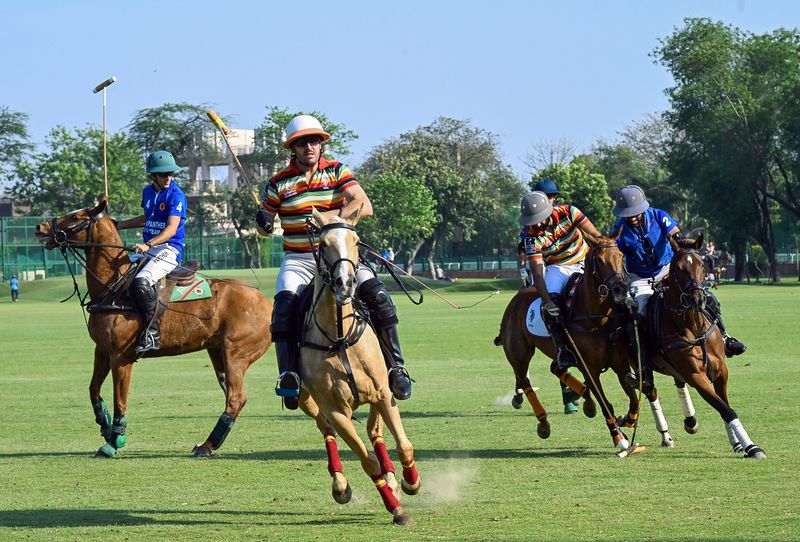

The government takeover of Delhi’s historic Jaipur Polo Ground may appear, at first glance, to be a dispute over a parcel of prime land used by an elite sport. Yet for players, historians, urban planners and environmentalists, the issue extends far beyond polo. At stake, they argue, are questions about the preservation of sporting heritage, the future of public green spaces in the national capital and whether institutions built over decades can simply be replaced by administrative fiat.The debate has acquired added significance following the Centre’s move to reclaim the land.The Jaipur Polo Ground occupies a unique place in India’s sporting history. According to members of the polo fraternity, the land traces its association with polo to the era of Maharaja Sawai Man Singh II of Jaipur, one of India’s most celebrated polo patrons.For decades, the venue hosted some of the country’s most prestigious tournaments, including the Indian Open and the Northern India Championships. Former India polo captain and World Cup coach Udai Kalan described it as most premier polo venues in the country, alongside Jaipur’s Rambagh and Rajasthan Polo Club grounds.“That ground was the centre of polo in Delhi. Generations of players played their first tournaments there. The Indian Open and Northern India Championships were annual fixtures,” Kalan said.Honorary Secretary of Jaipur’s Polo Club Digvijay Singh Shekhawat argued that the venue represented more than a sporting facility.“You can’t write history. History is made. The history attached to these grounds cannot simply be recreated elsewhere,” he said.Government officials have indicated that the land is required for official purposes and have defended efforts to reclaim several high-value land parcels occupied by clubs and sporting institutions.Members of the polo community, however, contend that relocating polo infrastructure is not as simple as identifying an alternative site.A regulation-sized polo field requires a large contiguous tract of land, quality turf, reliable irrigation and supporting infrastructure. According to Kalan, finding a suitable 15-acre-plus parcel within Delhi itself would be challenging.While alternative venues exist in parts of NCR, including Noida and Gurugram, players argue that moving tournaments away from central Delhi would diminish public participation, sponsorship opportunities and visibility for the sport.“Delhi is Delhi,” Shekhawat said, noting that the capital attracts sponsors, diplomatic audiences and spectators in a way few other venues can.The dispute has also become part of a broader conversation about elite institutions occupying public land in the capital. Government circles have increasingly argued that many legacy clubs reflect colonial-era privilege and exclusivity.Critics point to long waiting periods for membership and the limited public access associated with some institutions.The polo fraternity rejects the suggestion that the Jaipur Polo Ground functioned as an exclusive enclave.According to players and club officials, spectators were able to attend major polo events free of charge, unlike many sporting events elsewhere.“It was probably the only place in Delhi where people could come and watch top-level polo without paying an entry fee,” Kalan said.Supporters of the ground argue that the issue should, therefore, be viewed not solely through the lens of elitism, but also through the question of whether public sporting spaces with historical significance should be preserved.Although the Delhi ground itself did not house horses or large stabling facilities, club officials say it formed a crucial part of a wider sporting ecosystem.According to Shekhawat, polo clubs depend heavily on sponsorships, which account for the bulk of their revenue. Membership subscriptions cover only a fraction of operating costs.Ground maintenance, labour, utilities, event management, officials, equipment and riding programmes require continuous expenditure. Riding schools, often seen as the entry point for newcomers to equestrian sports, are frequently subsidised by clubs despite operating at a financial loss.Supporters of the sport argue that shrinking access to quality venues ultimately affects the pipeline through which future players enter the game.The controversy has also revived concerns about the future of large open spaces in central Delhi.During hearings related to the takeover, the Delhi High Court observed that facilities such as polo grounds and racecourses contribute significantly to the city’s environmental balance by functioning as open green spaces.As Delhi grapples with worsening air quality, rising temperatures and declining open space per resident, questions about the future use of such land have gained renewed relevance.Shekhawat drew parallels with a similar dispute in Jaipur, where public pressure and legal intervention eventually helped preserve portions of open recreational land that had faced redevelopment pressures.In India, Polo is unlikely to depend on a single ground. The sport will continue to be played in Jaipur, Mumbai, Gurugram and elsewhere. Yet fraternity members argue that the debate is ultimately about something larger than one sport or one lease agreement.Shekhawat and Kalan unanimously said, “It is about how a city values its sporting heritage, how it balances redevelopment with preservation and whether historic public spaces can be measured solely in terms of the land they occupy.”As Delhi continues to redefine its urban landscape, the questions raised may outlast the dispute itself. The central issue is no longer whether polo will survive, but what kind of city Delhi wishes to become when history, green space and public institutions stand in the path of redevelopment.