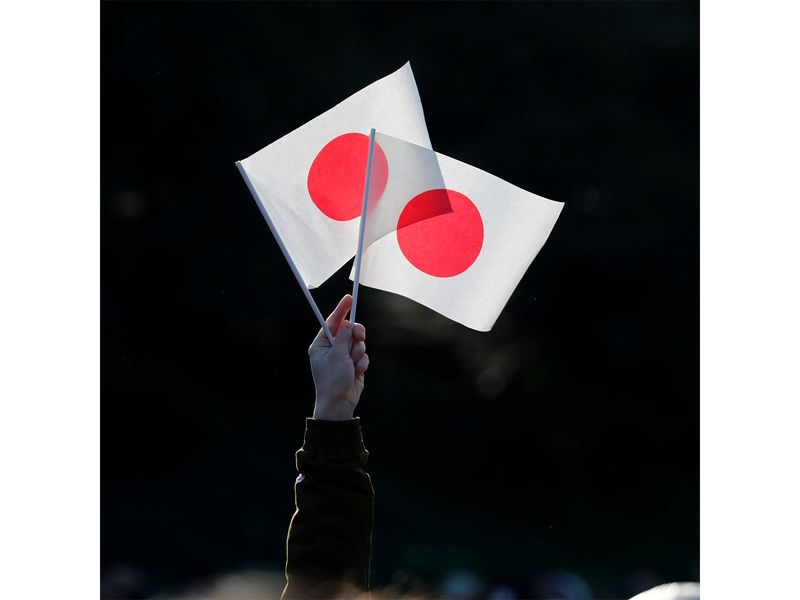

Japan on Tuesday ended six decades of self-imposed restrictions on selling and sharing military technology, opening up possibilities for India, its long-standing partner, in aero-engines and marine engines.Japan holds cutting-edge technology in specialised seaplanes and has advanced shipbuilding techniques, besides expertise in conventional submarines.India and Japan had, in January this year, discussed several defence equipment projects; however, progress hinged upon Tokyo’s easing of export regulatory controls imposed since 1967.This changed today as Japanese Prime Minister Sanae Takaichi posted on X about the changes made to the rules in her country. “We amended the ‘Three Principles on Transfer of Defense Equipment and Technology’ and their ‘Guidelines for Implementation’,” the Japanese PM said.Until now, the transfer of Japan-produced military products has been limited to search and rescue, transportation, surveillance, and mine countermeasures. “With this amendment, transfers of all defence equipment will, in principle, become possible,” Japan’s PM said.Tokyo is looking to strategically promote equipment transfers while making even more rigorous and cautious judgments.The Japanese PM explained the need for these changes, saying that no single country can now protect its own peace and security; partner countries supporting each other in terms of defence equipment is necessary.Several partner countries have expressed expectations for the defence equipment that Japan has developed, the Japanese PM said, adding that Tokyo would comply with international export control frameworks and conduct even stricter reviews.Meanwhile, External Affairs Minister S. Jaishankar had met his Japanese counterpart, Toshimitsu Motegi, in January this year to discuss defence ties.“Defence cooperation with Japan is an important element of our collaboration, and this was a matter that was discussed between the two leaders,” the Ministry of External Affairs said after the meeting.Prime Minister Narendra Modi, during his visit to Japan in August last year, met with the then Japanese PM Shigeru Ishiba. A joint declaration followed, stating: “Defence equipment and technology cooperation mechanisms will look at future security needs and plan for co-development and co-production of equipment and technology.”Excluding the defence sector, Japanese investment in India runs into billions of dollars, spanning automobiles, semiconductors, steel plants, and transport projects such as bullet trains, railways, and metro systems, among others.In the past decade, there have been two failed military equipment proposals—one on conventional submarines and another on a seaplane. Now, the seaplane is back in focus. In January this year, the Ministry of Defence asked international companies to supply four specialised amphibious planes that can land and take off from the sea. The MoD plans to lease four amphibious aircraft for a period of four years for the Indian Navy.Japanese company ShinMaywa Industries makes a plane called the ‘US-2’, which is under consideration for this lease.Earlier, in November 2024, India and Japan signed their maiden military co-development and co-production project to manufacture specialised radio communication equipment used by naval warships. The equipment, called the Unified Complex Radio Antenna, or ‘Unicorn’, is a mast-shaped system that integrates all communication functions on a warship. It is currently used by Japanese warships.