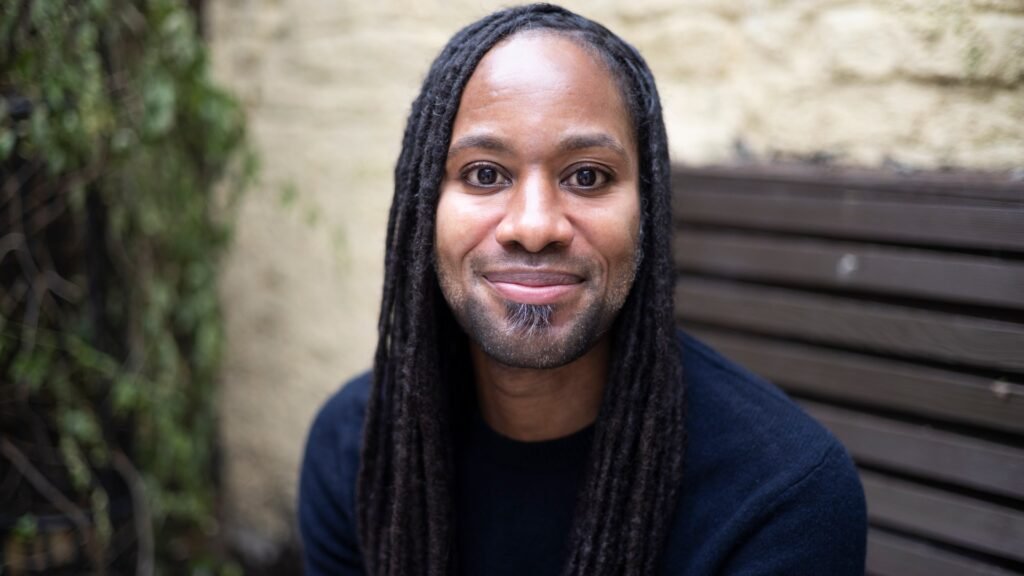

The University of Cambridge has been forced onto the defensive after announcing an investigation into Professor Jason Arday’s academic qualifications and honorary appointments, while confirming that “there remains a number of ongoing complaints regarding academic misconduct”.Hours later, Arday, Professor of Sociology of Education, resigned, saying that “the relentless accusations, speculation and public commentary have taken a profound toll on me and on those I love”.Whether the allegations are ultimately upheld is for Cambridge’s investigators to determine. Liverpool John Moores University, where Arday completed his doctorate, has previously stated that “a confidential procedure was conducted in response to those allegations and Professor Arday’s PhD still stands.”Yet the affair has already become much bigger than one academic.The controversy has attracted exceptional attention not simply because of the allegations themselves, but because Professor Jason Arday’s appointment came to symbolise Cambridge’s commitment to widening participation and social mobility. His personal journey—from growing up with severe speech and learning difficulties to becoming the youngest Black person ever appointed to a professorship at Cambridge—was widely celebrated as an inspirational story.Welcoming his appointment in 2023, Professor Bhaskar Vira, Cambridge’s Pro-Vice-Chancellor for Education, described Arday as “an exceptional scholar of race, inequality and education”, adding that his experiences highlighted “the barriers faced by many under-represented groups across higher education”. Cambridge, Vira said, had “a responsibility to do everything it can” to create academic spaces “where everyone feels they belong”. That prominence inevitably meant that questions about Arday’s academic record carried implications extending far beyond one individual.For generations, Cambridge has represented the gold standard of scholarship. It educated Jawaharlal Nehru and Rajiv Gandhi, counts 126 Nobel Prize-winning affiliates and has attracted some of the brightest minds from around the world. When questions are raised about standards at Cambridge, they inevitably reverberate far beyond Britain.But the Arday affair has erupted at a moment when Britain’s higher education sector is facing a series of challenges that together are prompting uncomfortable questions about governance, accountability and public confidence.Only days before the Cambridge controversy deepened, King’s College London found itself defending legal action brought by a student who alleges her first-class degree was wrongly downgraded because of administrative failings. The university disputes the claim and says both its own procedures and the independent Office of the Independent Adjudicator upheld its decision, but the case has reignited debate about transparency and accountability in academic assessment.At the same time, the economic foundations of British higher education are under unprecedented strain. Universities are freezing recruitment, cutting courses and shedding staff as they struggle to balance their books. Times Higher Education, the sector’s journal of record, has reported that two in five universities are now considering mergers or acquisitions—an idea that would have been almost unthinkable only a few years ago.Against that backdrop, the Cambridge controversy has assumed a significance far beyond the fate of one professor.The affair has also raised wider questions about the relationship between universities, the media and public scrutiny. According to The Times newspaper, police officers spent four months investigating journalist Jack Grove after he contacted Arday with questions arising from his reporting. The episode has itself prompted concern about whether journalists investigating public figures within academia can pursue legitimate questions without becoming the subject of police inquiries.The Arday controversy has prompted searching questions within academia itself. One Cambridge social scientist, speaking anonymously, described the allegations as “disastrous for Cambridge, and… disastrous for higher education,” adding: “Our credibility comes from doing it properly and rigorously.”Robert Dingwall, emeritus professor of sociology at the University of Nottingham and a former journal editor, struck a similarly measured note after reviewing the allegations. “The cumulative impact is pretty damning,” he said, “even if some individual examples might have more innocent explanations in terms of sloppy work or coincidence.”Perhaps the most telling observation came from Professor Simon Marginson, editor of the journal Higher Education. “Journals do not administer research ethics, universities do,” he observed, reminding us that the ultimate responsibility for safeguarding academic integrity rests not with publishers or journalists but with universities themselves.Taken individually, these episodes may have little connection. Together, however, they suggest a sector under exceptional pressure—financially, institutionally and culturally. Universities have become global brands competing for students, rankings, research grants and public attention. In that environment, compelling personal stories and high-profile appointments can easily become part of institutional marketing.The issue extends well beyond universities. Politics, business, entertainment and even journalism increasingly reward compelling personal narratives, charismatic personalities and public visibility. Institutions competing for attention naturally celebrate individuals whose stories capture the imagination. Yet the qualities that create a public star are not always the same as those that sustain academic excellence.For Indian readers, the implications are especially significant. That is especially true at a time when Cambridge is deepening its engagement with India. Earlier this year, Vira welcomed the launch of the Cambridge–India Centre for Advanced Studies, describing it as “the next chapter in the relationship between Cambridge and India.” Every year, thousands of Indian students invest enormous sums in a British university education because they believe these institutions represent intellectual excellence and uncompromising academic standards.Cambridge will now complete its investigations, and Professor Arday deserves a fair process. But whatever the outcome, this controversy has exposed a larger question confronting higher education in the UK.Great universities are not judged simply by the brilliance of the individuals they appoint. They are judged by their willingness to subject every claim, every reputation and every star performer to exactly the same rigorous standards of evidence. Their challenge is to ensure substance always shines more brightly than celebrity.