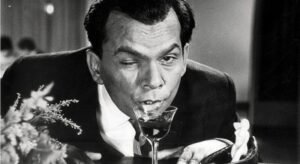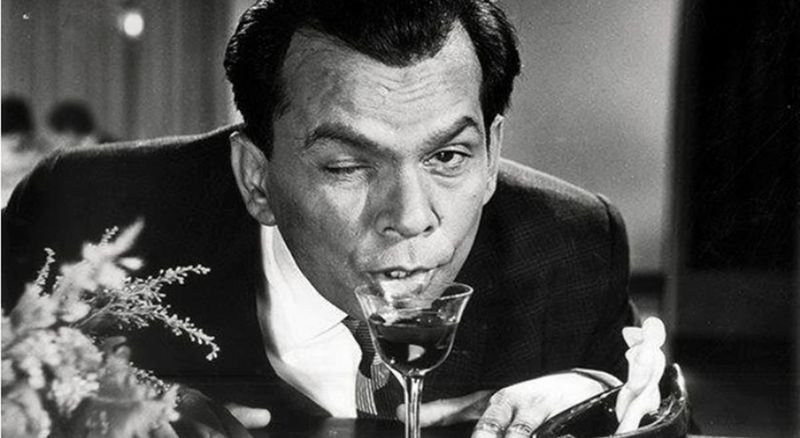

A man emerges from the shadows on a foggy evening, oil bottles in hand and the promise of a cure-all head massage, singing “Tel maalish, champi, tel maalish”… Johnny Walker was the actor, Mohammed Rafi the voice crooning that ageless song and Guru Dutt the director.It has been almost 70 years since “Pyaasa”, the film that spun cinema magic. And even in that elegiac classic, Johnny Walker stood out in his cameo as the amiable, empathetic Abdul Sattar – his brand of warmth and good humour standing the test of the decades.Born Badruddin Jamaluddin Kazi, Johnny Walker would have been 100 on Wednesday. The artist who redefined comedy and brought it out of the darkness into light with his exuberance, quite like the opening scene of his “Pyaasa” character.With his stylised acting, that particular tilt of the head and the distinctive voice, Johnny Walker was not one for histrionics or even great versatility. But his very presence in a film guaranteed a certain wholesomeness, sans double entendre or any other comedic device that became a staple of so many others who followed him.Be it Mehmood, Johnny Lever or Rajpal Yadav, later comedians owe a debt to Johnny Walker for giving comedy a respected space in Hindi cinema. The man — who started life as a bus conductor and even sold vegetables before he became a marquee name — walked so they could run.The comedian was also a man of interesting contrasts — a teetotaller whose drunk acts were so convincing that he was rechristened after a popular whisky brand by none other than Guru Dutt, his mentor in cinema who ensured that the actor would get screen time and a song in almost all his films.Johnny Walker never drank or smoked in real life. Could not complete his school education so ensured his six children — three sons and three daughters — studied in the US.In many of Guru Dutt’s films, Johnny Walker, distinctive with his pencil moustache, was both the comedic relief and the conscience keeper. His varied experiences and the poverty he witnessed in early youth enriched his portrayal of the everyday man on the street.But how did Badruddin, one of 12 children of a weaver who left Indore to Mumbai in search of a job, become the great comedian Johnny Walker?The most cited version involves actor-writer Balraj Sahni.Sahni had written the screenplay of the 1951 film “Baazi”, which marked the debut of Guru Dutt. Around that time, he met a conductor on Mumbai’s BEST buses and was completely charmed by the antics of the man.Impressed by his talent, Sahni advised the then Badruddin to visit the set of the film and perform his drunken act in front of Guru Dutt and lead star Dev Anand. He did as he was told and an impressed Guru Dutt ended up writing a character for him in the movie.It was the beginning of one of the most enduring friendships in Hindi cinema. Guru Dutt and Johnny Walker worked in almost every film, barring “Saheb Bibi Aur Ghulam”.The director, who was famous for being a perfectionist, gave Johnny Walker the freedom to improvise his impromptu acts and also ensured that Rafi sang for him.In fact, Johnny Walker is said to be the artist with the third highest number of Rafi songs after Shammi Kapoor and Rajendra Kumar.Together, the two have numbers such as “Yeh Hai Bombay Meri Jaan” in “C.I.D.”, “Jattvibeo Jattvibeo Miss Chatterjee” in “Baharein Phir Bhi Aayengi”, “Jaane Kahan Mera Jigar Gaya Ji” from “Mr and Mrs 55” and “Hum Bhi Agar Bachche Hote” from “Door Ki Awaaz”.In Dilip Kumar-starrer “Naya Daur”, the ever-polite, hat-loving Johnny Walker makes an appearance as a press reporter from Mumbai and promises the villagers to make them famous. When asked to introduce himself, he sings the popular “Main Bambai ka babu, naam mera anjana.. English dhoon mein gaun main Hindustani gaana”.Such was the popularity of his comedic performance and songs that producers ensured that almost always a song was picturised on Johnny Walker, a privilege accorded to few comedians in cinema.It was not always about songs though.In the 1971 hit “Anand”, Johnny Walker played Issabhai Suratwal, a theatre actor who befriends Rajesh Khanna’s character after a chance encounter. It’s a brief appearance but one that stayed with audiences.Johnny Walker’s real life love story was as dramatic as the plot of some of his films. While working on Guru Dutt’s “Aar Paar”, he fell in love with actor Shakila’s sister Noorjahan. When Noorjahan’s family opposed, the couple secretly got married.In cinema, whether he was playing a drunkard or a common man, Johnny Walker came to represent a decency and gentleness that was an extension of his real life personality.As cinema evolved, comedy too started undergoing a change. Black and white gave way to colour, and instead of laughs with grace came comedy edged with loudness and crassness.The roles disappeared and Johnny Walker chose to walk away from a career of 300 films.The glory years were the 1950s and 1960s. He was a popular name even in the 1970s. But the cinema of 1980s demanded a different kind of comedy, and Johnny Walker was unwilling to submit himself to double meaning dialogues and slapstick scenes.He bowed out with Kamal Haasan’s “Chachi 420”, his last film appearance in 1997 where he played an inebriated makeup artist.Johnny Walker died in 2003 at the age of 77, leaving an imprint of affectionate laughs that stays on in celluloid.