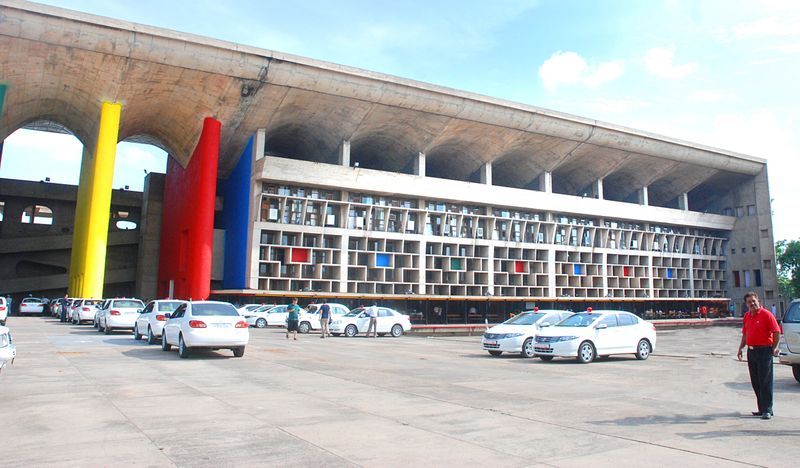

A child entering the juvenile justice system should not be reduced to a case file, a statistic or a legal category, and its success must ultimately be judged by whether that child is helped towards a safer, more secure and hopeful future, Justice N.S. Shekhawat of the Punjab and Haryana High Court said.Addressing the State Level Stakeholders’ Consultation on “10 Years of Juvenile Justice Act, 2015” at the Chandigarh Judicial Academy, Justice Shekhawat, who is also the Chairman of the High Court’s Justice Juvenile Monitoring Committee, said the completion of a decade of the legislation was an opportunity not merely to review its implementation but to ask a fundamental question: “What difference have these ten years made in the lives of children?”“The real measure of our system lies in what happens when a child actually comes into contact with it,” Justice Shekhawat said, asserting that the existence of institutions under the Juvenile Justice Act was “only the beginning”.The system, the Judge said, must ask whether a child felt heard and safe, understood what was happening, was protected from further trauma and was given a genuine opportunity to rebuild his or her life.The consultation brought together judicial officers presiding over Children Courts, Principal Magistrates of Juvenile Justice Boards and stakeholders from Punjab, Haryana and Chandigarh to review the working of the juvenile justice framework a decade after the enactment of the Juvenile Justice (Care and Protection of Children) Act, 2015. Harleen A. Sharma, Director, and Monika Lamba, Faculty Member, Chandigarh Judicial Academy, were present during the inaugural session.Justice Shekhawat said the review needed to move beyond “numbers and procedures” and focus on outcomes for children. Juvenile justice could not be the responsibility of a single institution and depended upon coordination among Juvenile Justice Boards, Child Welfare Committees, Children Courts, District Child Protection Units, police, social welfare departments, legal services, professionals and civil society.Every child, the Judge said, came with an individual story, circumstances and vulnerabilities. A child in need of care and protection required more than institutional placement, while a child in conflict with law required more than adjudication. Both required an approach recognising their potential for growth, recovery and reintegration.Justice Shekhawat called for strengthening family-based care, community support, rehabilitation services and alternatives to institutionalisation, while ensuring that institutions that remained necessary were properly monitored and accountable.The Judge also stressed the need to listen to children themselves. While systems were designed for children, children often had limited opportunity to say whether those systems were actually working for them.“A truly child-centred juvenile justice system must therefore be one that listens, responds and adapts,” Justice Shekhawat said.The consultation covered adoption, preliminary assessment, children in need of care and protection, children in conflict with law and a decade-long review of the Act.The first session, “Adoption: Pathways to Permanency”, was presided over by Justice Rohit Kapoor, Judge, Punjab and Haryana High Court, and Purnima Thakur, Assistant Director, SPNIWCD Regional Centre, Mohali. Adoption, Justice Shekhawat said, was not merely a legal process but concerned giving a child security, stability and a sense of belonging.The session on “Preliminary Assessment: Ensuring Fairness and Safeguards” featured Baljinder Singh Sra, ADJ, SAS Nagar, and Monika Lamba, ADJ-cum-Faculty Member, Chandigarh Judicial Academy, with Isha Singh, IPS, Deputy Commissioner of Police, and Dr Neelam Batra, Professor, Panjab University, Regional Centre, Ludhiana.The third session, “Children in Need of Care and Protection: From Care to Rehabilitation”, was chaired by Isha Singh and included Naveen Rattu, IAS, Director, Social Welfare, Women and Child Department, Chandigarh; Dr Shipra Bansal, Chairperson, SCPCR; and Jattvibedeep Singh, ADJ, Panipat.Justice Shekhawat said protection could not end with rescue. Care had to lead to restoration and rehabilitation and, wherever possible, a safe and supportive family environment.The concluding session on “Children in Conflict with Law: From Justice to Rehabilitation” and “Ten Years of Juvenile Justice: A Decade in Review” was addressed by Justice Alok Jain, Judge, Punjab and Haryana High Court. Navpreet Kaur, District Child Protection Officer, SAS Nagar; Tarn Taran Singh Bindra, ADJ, Roopnagar; Dr Bhavneet Bharti, HOD, Social Paediatrics, PGI and former Director, AIIMS Mohali; and Upneet Lally, Institute of Correctional Administration, Chandigarh, participated in the deliberations.Justice Shekhawat said implementation challenges continued to require attention and called for evidence-based assessment of the juvenile justice system. The 2026 consultation framework provides for the use of longitudinal evidence generated through annual submissions to the Supreme Court Juvenile Justice Committee and state-level consultations to identify systemic bottlenecks, document promising practices and inform future recommendations.“This is an important shift—from merely asking how many cases were dealt with, to asking what outcomes were achieved for children,” Justice Shekhawat said.The consultation also sought to identify where children were falling through the gaps, where institutions needed better coordination and where judicial officers, police officers, social workers and other professionals required greater capacity and support.“Identifying a gap is not a sign of failure. It is the first step towards improvement,” Justice Shekhawat said. The programme was organised by the Chandigarh Judicial Academy.