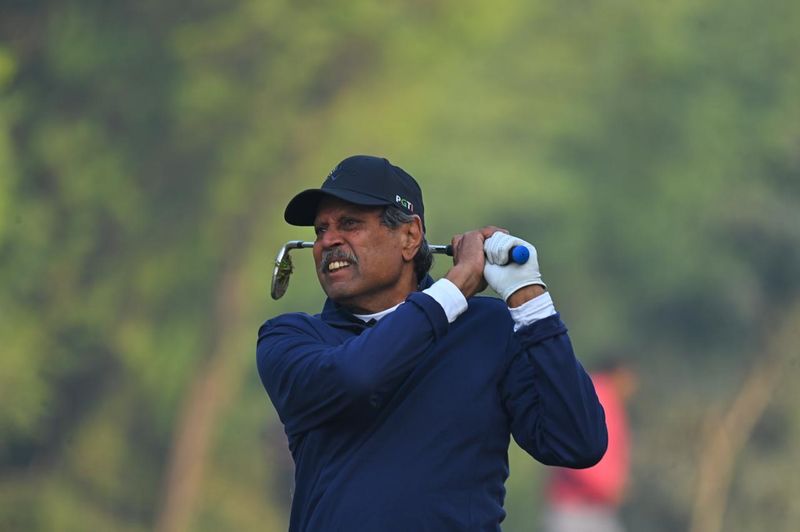

Far from the madding crowd and the deafening, cacophonous surge of the Indian Premier League cricket, a golf course inhabits a different rhythm. It is quieter, slower and introspective. It is a meditative space that tests physical skill and mental discipline. The undulating terrain, water bodies, trees, smooth fairways and silken greens are not merely scenic; they are pathways to mastering both the game and self.No wonder Kapil Dev, having stepped away from the cricket world that had crowned him among its very best, found in it a gentler, more welcoming embrace.For 15 years, he lit up the cricketing arena with a skill, energy and passion never seen in India’s sporting history. He showcased his remarkable all-round talent in front of boisterous, adoring fans that clustered around him like bees to honey. In this high-decibel chorus of adulation, he had forgotten the feel of a quiet, private moment. When he stepped away from international cricket in 1994, he was seeking quietude, a place to relax, free from the constant attention.Kapil at age 67 may lack the vigour and litheness of his youth, but he has lost none of his legendary passion and energy for work and golf. His centrally parted salt and pepper hair lends a dignified grace to his charismatic persona. The flow of time is reflected in the creases on his face and in the measured, soft, but firmly spoken, words of a man who has aged well.Ironically, his grooming as a cricketer of unbridled aggression took place in a city conceived, designed and constructed with geometric precision. Chandigarh, post-Independent India’s signature city of straight lines and rigid designs, was nurturing a “genius” who cared little for the conventional grammar of cricket’s coaching manuals. He charted his own unique path then, as he is doing even now.Sitting in his spacious two-floor office, which, in golfing parlance, is a T-shot away (around 300 metre) from Delhi’s iconic India Gate, Kapil underlines his forward-looking philosophy that has sustained his fairy-tale journey: “Look around this room, you won’t find a single picture or memorabilia connected to cricket.”Cricket is now a mere dot in his life; golf and the 300-bed super-specialty hospital in Greater Noida, which he proudly owns, claim most of his time. In his own voice, “That is how I am. Be it playing marbles, kite-flying or cricket, once I move away, I prefer not to go back again.”While representing India, he had never thought of playing golf, not even when he had accompanied the gifted Gary Sobers to a golf course in Delhi. Post-retirement, a friend suggested the golf course would be the best place to stay away from the intrusive attention of fans. Once on the course, scores of people surrounded him at hole one of the Delhi Golf Club. He was told not to worry. As he moved ahead, no one chased him, surrounded him. He had found his next calling. Within a year, his handicap had become 8, that in cricketing terms would mean being good enough to play Ranji Trophy.He had fallen in love with the game. In its meditative space, golf consumes time, holding it still. It can become a life-long addiction, turning sport into a metaphor for life: fickle, fragile, yet punctuated by moments of fulfilment.Within three years, his handicap was to come down to 2; that meant he was proficient to become a professional golfer. In cricketing terms, this was good enough to play for India or become a star IPL player. For a man to have taken to golf late in life, this was an unbelievable achievement that once again underlined that a genius is not bound by boundaries.In a world both physical in its execution and cerebral in its preparation, Kapil forged a near-sacred bond with his golf swing, an intimacy familiar to all committed golfers. It is like trying to establish a human connection — one that hides more than it reveals — making the effort both rewarding and frustrating.He realised that unlike cricket, golf is a solitary battle. There is no ally, no adversary. As he puts it, “No matter how good a ball, the batsman has to make a mistake to get out. In golf, you are battling yourself and the challenges the course has to offer. It can be very lonely, just like life.”His charisma, popularity and love of golf made him almost a unanimous choice of the Professional Golf Indian Tour board to appoint him president of its governing body. In his more than one-year stint at the helm, he has been able to attract more sponsors, helping expand the Tour and increasing the yearly prize money from Rs 20-25 crore to more than Rs 35 crore. Plans are afoot to hike this money pool to attract the best of the world to play in India and to subsidise expenses of the caddies so that more and more of them can participate in this capital-heavy sport.Both players from the elite classes and caddies turned pro talk in awe of a legend whom they adored as a cricketer, and now feel beholden for the money he is bringing to the sport. Kapil himself remains rooted and pragmatic, enjoying his sojourns on the golf course where his handicap is even today hovering around 5. If he wants, he can still qualify as a pro.He acknowledges with gratitude that his second innings in the fairways has been rewarding, kind and a life-enriching experience.— The writer is the author of ‘Not Quite Cricket’ and ‘Not Just Cricket’