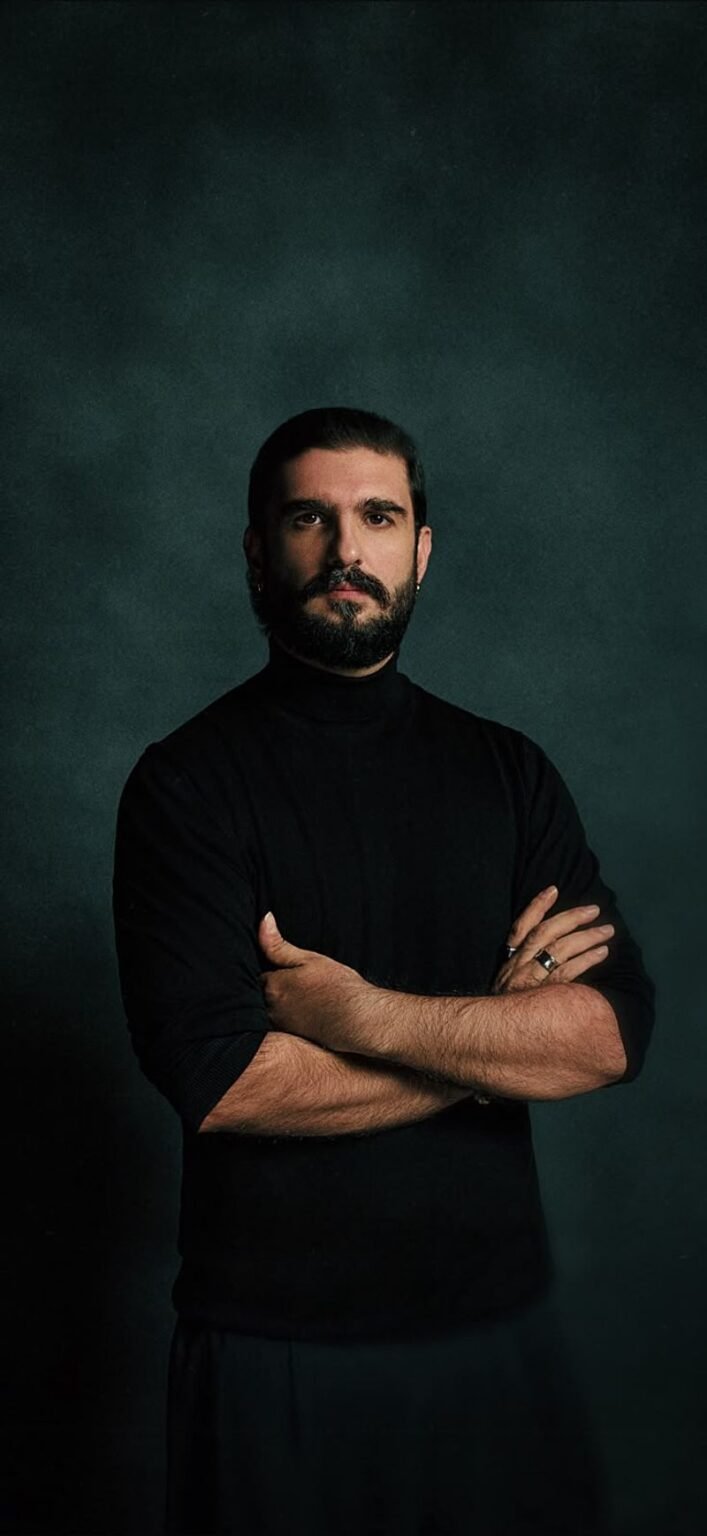

More than one film and series has laid bare the misdeeds of dhongi babas. So, what did Karan D Kapadia, co-creator and co-director of the web series Hunkaar: The Roar, which is literally roaring today, have in mind when he and his “other half” Nitya Mehra decided to tread the same path?Well, first and foremost, Karan avers, “While Ashram is about the godman, Sirf Ek Banda Kaafi Hai tracks the journey of a lawyer, we wanted to project this significant concern strictly through the lens of the survivor.”He never uses the word victim. Indeed, much of the sensitivity with which the series deals with sexual violence not only comes from Nitya’s feminine gaze but also other female actors on board. Casting Saiyaara star Aneet Padda with whom they had worked earlier in Big Girls Don’t Cry and Nitya’s short film short Khatti Meethi Yaadein was a no-brainer. Much before audiences saw the phenomenal actor in her, he knew she had the ‘gravitas, emotional intelligence, innocence and fire in her’ to pull off the part of a 17-year- old. And no the Saiyaara effect did not worry him. Rather he was super-excited about Aneet’s success and quips, “A star was born and now the actor in her was to reveal herself.” Similarly, he did not feel the weight of audiences’ expectation whether they would accept goody goody Raghubir Yadav as the repugnant godman. He not only praises Raghubir to the skies hailing him as ‘Marlon Brando of Indian cinema’ but his entire cast, which indeed was a casting coup of sorts.Interestingly, Mohammed Zeeshan Ayyub signed on the dotted line the moment he read the scene where Aneet’s character is publicly humiliated for stepping out to have golgappas. Victim shaming was imbedded in the story from the word go. Karan says, “It was very important for us to reflect our society. How we as a society deflect the truth by talking about trivial things and judge survivors, almost character assassinate them was a point which was always part of our meta-theme.”He hopes the series and he himself act as a catalyst for change. If ‘good fight’ is a term he uses often to describe his protagonists’ battle, he certainly believes that the makers ought to be a part of it. Of course, he knows viewers are morally outraged for the limited watch time and go back to being un-empathetic. Yet, even if in small way, he would like to be a catalyst for change, ‘for betterment of society.’As a creator, he would rather not be misunderstood and is overwhelmed by audience response and the fact that they could read between the lines and all the subtexts. However, his real gratification comes from his family and friends.Undeniably, the husband and wife are each other’s best and worst critics. But on the sets they approach the project as professionals, ready to follow the vision of who-ever and whatever benefits the story. If critics saw elements of David Fincher like dread in his thriller, he admits he is a huge fan particularly of Fincher’s Mindhunter Fight Club and Spotlight. Karan adds, “David almost colonises your mind.”Having worked as an assistant director to some of India’s great talent, from Aamir Khan to Zoya Akhtar to Mani Ratnam, indeed Karan has taken inspiration from the stalwarts. He singles out Mani in particular who ‘lives and breathes cinema and injects the same in you’ and truly made Karan the filmmaker that he is. For someone who decided to join films after watching films like Rang De Basanti, he would always like to pack entertainment with message, commercial with social.Since superstar Ranveer Singh happens to be a dear friend, someday, a project with him might take off. Till then, the writer in Karan is retiring to his writer’s room to pen his next. The echo of adulation might be resonating in his ears, he remains fully conscious of what Toure Roberts said. “Gaze of the crowd is not glory but responsibility.”