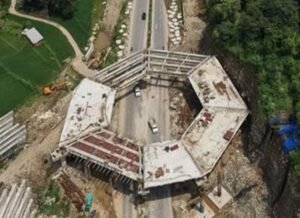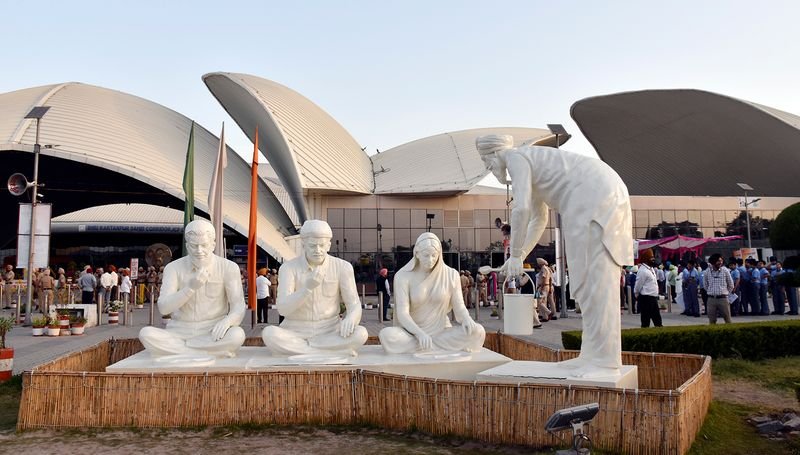

The Kartarpur Corridor, described as a corridor of ‘international peace and harmony’, is a 4.2-km passage connecting Dera Baba Nanak in India with Gurdwara Darbar Sahib in Pakistan’s Narowal district.The decision by India and Pakistan to open the corridor was seen as a significant step towards greater people-to-people contact between the two countries. However, it was not the first such initiative. The Samjhauta Express, a train service linking Delhi and Lahore, and the Sada-e-Sarhad bus service were earlier attempts launched with similar hopes and fanfare.In 2018, Prime Minister Narendra Modi compared the Kartarpur project with the fall of the Berlin Wall, saying it could become a catalyst for greater bonding between the people of the two countries.The corridor, however, received a lukewarm response when it opened, with fewer than 200 people travelling to Dera Baba Nanak, the Indian starting point of the passage, against the 5,000 daily visitors anticipated by the Union Home Ministry.The proposal for a Kartarpur corridor was first discussed in 1999 by the then prime ministers of India and Pakistan, Atal Bihari Vajpayee and Nawaz Sharif. The foundation stone was laid on the Indian side on November 26, 2018, and on the Pakistani side two days later, on November 28.The corridor was completed and opened to pilgrims in November 2019, ahead of the 550th birth anniversary of Guru Nanak on November 12.During the Partition of 1947, the region was divided between India and Pakistan, with Kartarpur falling on the Pakistani side of the border. In the years following Partition, Indian Sikhs were able to visit Kartarpur informally by crossing the Jassar Bridge. The bridge was later destroyed by Pakistani forces during the 1965 India-Pakistan war.Mandatory passport a deterrentThe Kartarpur Corridor—one of the most significant initiatives for the Sikh community—never achieved the level of use expected of it after its inauguration in 2019.Two key factors were the USD 20 service fee and the mandatory requirement for pilgrims to carry passports.Days after the corridor opened, officials began examining why the turnout was substantially lower than expected. The passage was designed to accommodate at least 5,000 pilgrims a day, but only around 100 to 150 devotees were turning up.Yet its religious significance was never in doubt. The corridor provides access to Gurdwara Darbar Sahib in Kartarpur, Pakistan, one of the most revered Sikh shrines.The Partition of India in 1947 left communities on either side of the newly created border separated from religious institutions they had long revered. Sikhs in Indian Punjab, in particular, were separated from several important religious sites that became part of Pakistani Punjab.Among them is Gurdwara Darbar Sahib, Kartarpur, built at the site where Guru Nanak, the founder of Sikhism, spent the final 18 years of his life.Religious travel between India and Pakistan is governed by the 1974 Protocol on Visits to Religious Shrines, under which the two countries agreed to facilitate visits by organised groups of pilgrims to designated religious sites.The Kartarpur Corridor was established under a separate bilateral agreement, with provision for up to 5,000 pilgrims from India to cross the border each day.Punjab MPs cutting across party lines have repeatedly raised the issues of the passport requirement and the service fee in Parliament. However, little progress has been made in addressing them.“Rules say that if you want to cross an international border, you have to carry a passport. However, if you have to cross the LoC, you do not need a passport; a permit will suffice. This is because the LoC is a de facto military control line and not a recognised international border. Going to Pakistan through the corridor means crossing an international border, hence the need for a passport,” an immigration official said.For many potential pilgrims, particularly in rural areas, obtaining a passport has been a barrier. Others have been reluctant to pay the fee required to travel through the corridor.As a result, despite its considerable religious significance and the infrastructure designed to accommodate thousands of pilgrims each day, the corridor did not attract the numbers that had been anticipated during the period it was operational.