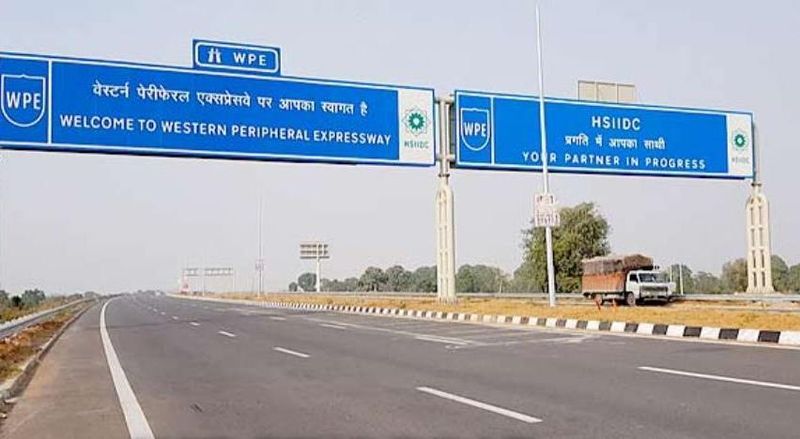

The 135-kilometre ring of land wrapped around Delhi by the Kundli-Manesar-Palwal Expressway is set to become the most intensively developed corridor in the National Capital Region. The Draft Regional Plan-2041, to be advanced at the NCRPB Board Meeting on June 16, has officially designated the belt encompassing the KMP and Eastern Peripheral Expressway as the Central NCR or CNCR and given it an unambiguous economic mandate: the Golden Ring of Opportunity.The plan defines the CNCR as the zone outside Delhi extending up to five kilometres beyond the Eastern and Western Peripheral Expressways, positioning it as the primary engine . The economic stakes are explicit. The NCR already contributes 8 per cent of India’s GDP and is expected to drive a significant share of the country’s aspired US$5 trillion economy, with the CNCR designated as its core growth zone.The Golden Ring is one of five policy zones the plan carves out for the entire NCR the others being NCT Delhi, Highway Corridor Zones with Transit-Oriented Development, Natural Conservation Zones and the Rest of NCR. Of these five, the CNCR gets the highest-intensity development mandate: dense mixed-use land use, maximum floor area ratios, TOD clusters around transport nodes and priority infrastructure investment. All new settlements within the zone, including brownfield redevelopments, are required to have modern smart civic amenities infrastructure modelled on AURIC City developed by DMICDC.On the ground, this translates into five new cities. Haryana has proposed developing areas around the KMP Expressway as Panchgrams — five greenfield townships to be detailed in the state’s Sub-Regional Plan. The Panchgram project envisions new industrial townships and urban centres spread across 2.5 lakh hectares, with development planned 2 to 6 kilometres on both sides of the expressway loop, governed by a dedicated Panchgram Development Authority. The plan also mandates integration of the Manesar-Bawal Investment Region — a DMIC-linked national industrial priority zone anchoring the southern KMP stretch — into all state sub-regional plans.Transport infrastructure cements the zone’s credentials. Multiple Multimodal Transport Stations are planned directly on the KMP — at Manesar’s Panchgaon Chowk integrating the Delhi-Alwar RRTS, Gurugram-Manesar Metro and Jhajjar-Palwal rail line, and at Kherki Daula in Gurugram combining RRTS, metro and bus connectivity. The KMP itself forms the first of a series of planned concentric Regional Circular Expressways radiating outward from Delhi.The KMP has already driven real estate momentum in Manesar, New Gurugram, Sohna, Bahadurgarh and Sonipat, pulling in residential, commercial and industrial investment.