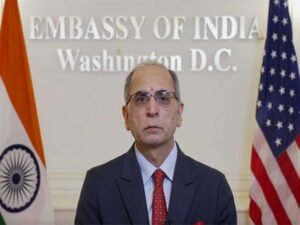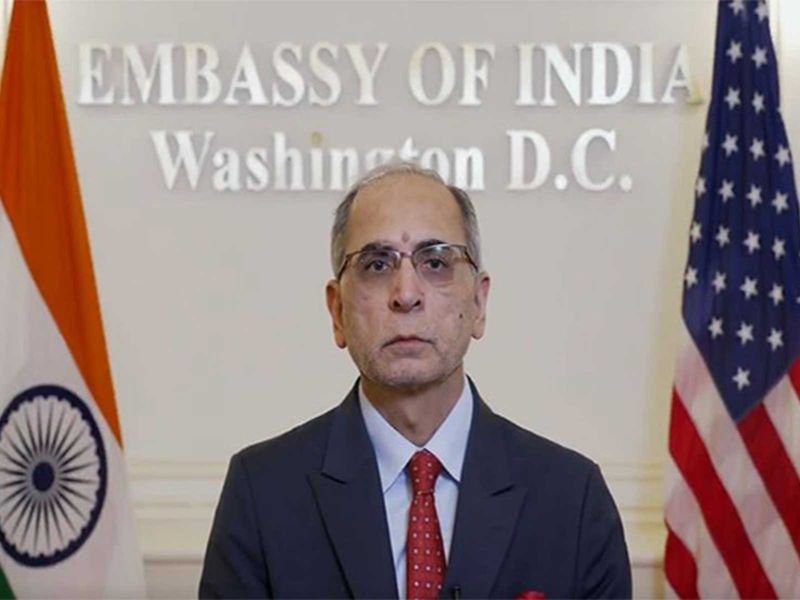

India’s Ambassador to the United States, Vinay Mohan Kwatra, on Saturday criticised the US Commission on International Religious Freedom (USCIRF) for describing jailed activist Sharjeel Imam as a person detained for his religious freedom advocacy, accusing the US body of making partisan and ill-informed assessments of India.“USCIRF has no locus standi to sit in judgment over the constitutional rights of Indian citizens. Its habitual partisan, ill-informed and jaundiced assessments cannot diminish India’s constitutional commitment to religious freedom and equal rights for all faiths,” Kwatra said in a post on X.Taking a swipe at the commission, he added: “India flourishes defying the agenda-driven partisan narratives of the USCIRF. Taking the same liberty that USCIRF so readily assumes, a word of advice: introspect on your own prejudices and stop lecturing others.”The Ambassador was responding to a post by USCIRF on X, which described Imam as “a Muslim man detained in India for his religious freedom advocacy”. The commission has also carried a profile of Imam on its website, reiterating the description.Imam was arrested in January 2020 in connection with protests against the Citizenship (Amendment) Act (CAA) in December 2019 and January 2020. Authorities have accused him of inciting communal violence through speeches delivered during the protests.In August 2020, he was charged in with several offences, including rioting, murder, attempted murder, promoting enmity between religious groups and offences under the Unlawful Activities (Prevention) Act (UAPA).Kwatra’s remarks come amid continuing differences between New Delhi and USCIRF over the commission’s assessments of religious freedom in India.The Ambassador rejected its characterisation of Imam’s detention, asserting that the US body had no authority to pass judgment on the constitutional rights of Indian citizens.Earlier in March, the Ministry of External Affairs had even rejected USCIRF’s 2026 annual report as “motivated and biased”, accusing the commission of presenting a “distorted and selective picture” of India.MEA spokesperson Randhir Jaiswal had at that time said the commission relied on “questionable sources and ideological narratives rather than objective facts”, while urging it to reflect on attacks and vandalism targeting Hindu temples in the US.