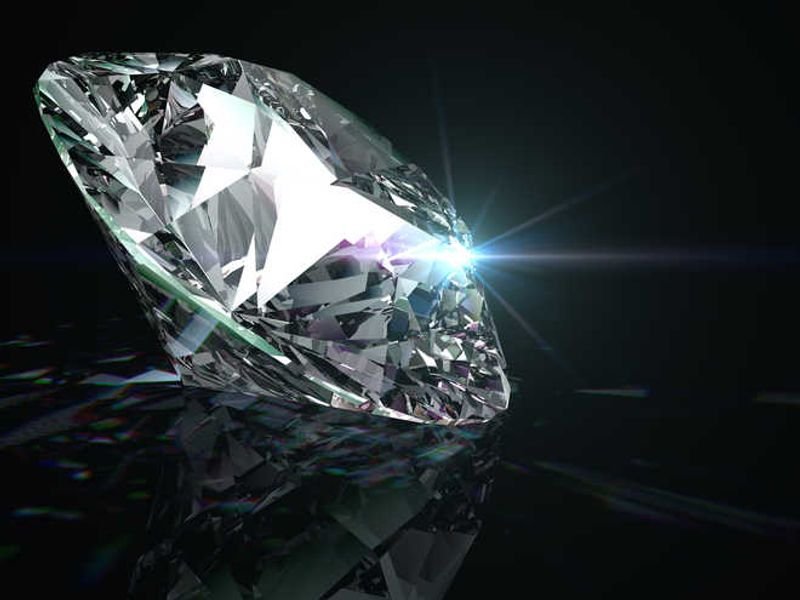

Diamonds have long been considered precious gems and, for many households, a safe form of investment with the potential for significant returns in the future. Buying a diamond is often seen as a way of parking money in a safe zone.However, it is now possible to grow diamonds in laboratories. Laboratory-grown diamonds have virtually the same physical and optical properties as mined diamonds and share the same chemical composition. The key difference lies not in the material of the stone, but in where and how it is created.And the difference is reflected in the price.Compared with similar natural diamonds, laboratory-grown diamonds can be significantly cheaper. Depending on factors such as size, cut, colour, clarity and the store, the price difference can sometimes be as high as 80-90 per cent.What are lab-grown diamondsThe most common misconception about lab-grown diamonds is that they are fake, but in reality, they are chemically, physically and optically identical to real diamonds. Additionally, they are created using cutting-edge techniques, including high-pressure high temperature (HPHT) and chemical vapor deposition (CVD). To put it simply, they are diamonds that have been created in a lab using carbon seeds under conditions that are identical to those found on Earth.Even highly skilled gemmologists are unable to distinguish them from real diamonds without the use of advanced technology. One of the factors that experts consider when identifying diamonds is that the lab-grown diamonds are nitrogen-free, whereas the natural diamonds have trace amounts of nitrogen. This is where India comes in the picture.Lab-grown diamonds are now more widely available due to advancements in technology and increased production.India’s lab-grown diamond industryIndia’s diamond industry has reached a significant milestone: the volume of lab-grown diamonds exported now surpasses that of natural diamonds. This year, the amount of lab-grown diamonds exported from India exceeded that of natural diamonds in both March and April. Furthermore, this is not the first time it happened.According to the latest data by GJEPC, India exported 1.3 million carats of loose lab-grown diamonds in March and 1.4 million carats in April.In contrast, the gross volume of natural diamond exports was 1.3 million carats in April and 1.2 million carats in March. This indicates that, by volume, lab-grown diamonds accounted for 51 percent of exported diamonds in March and 50.4 percent in April.In terms of value, less than 9 percent of India’s wholesale diamond exports are made up of loose lab-grown diamonds. Therefore, even if lab-grown diamonds are gaining popularity, their percentage of consumer expenditure is still lower.The disparity in typical wholesale pricing per carat is still astounding. The cost of lab-created diamonds is 88 percent–92 percent less per carat than that of real diamonds, and this gap keeps growing.Government promote lab-grown diamondsThe Central Government has implemented a number of initiatives in recognition of the promise of lab-grown diamonds.To assist in the establishment of a laboratory-grown diamond centre at the Indian Institute of Technology (IIT), Madras, the government awarded a five-year seed grant of Rs 242 crore (USD 28 million) in the Union Budget of FY24.Finance Minister Nirmala Sitharaman, during the FY26 union budget, announced that carbon seed imports would no longer be subject to customs duties, making the fiscal year duty-free. This policy aims to increase competitiveness and reduce the cost of local production.To encourage foreign investment, the gems and jewellry industry, which includes lab-grown diamonds, has opened to 100 percent FDI.To boost consumer confidence, legal frameworks are also being clarified, and certifications tailored to lab-grown diamonds are being developed. This initiative will assist India in becoming into a worldwide production base for eco-luxury products as well as a polishing hub.