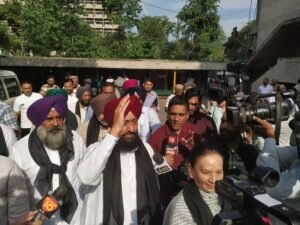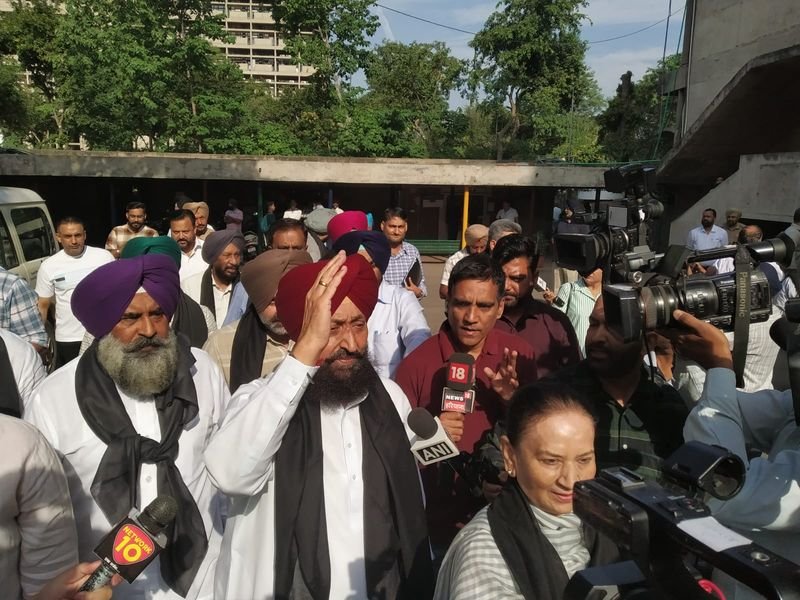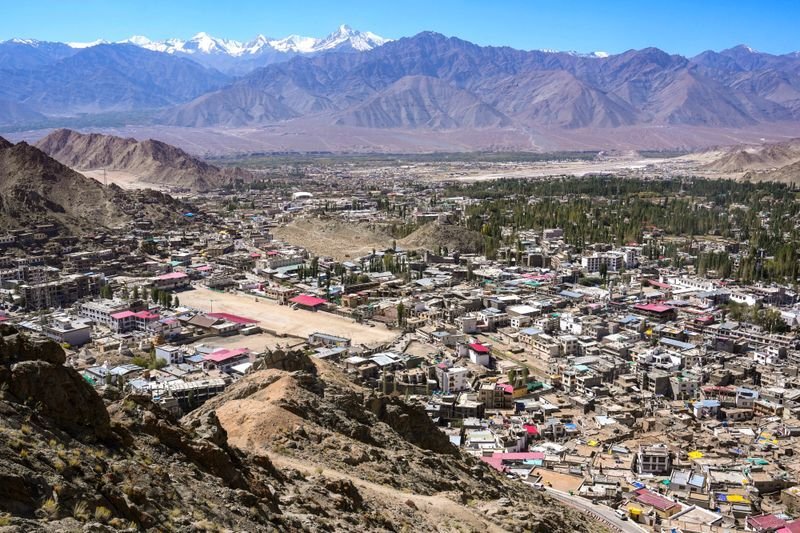

Talks between Ladakh leaders and the Union Ministry of Home Affairs (MHA) face uncertainty after a scheduled round of discussions on October 22 failed to take place.Last week, a meeting was held between Ladakh leaders and MHA officials in Leh. However, the Leh Apex Body (LAB) and the Kargil Democratic Alliance (KDA) rejected the draft proposal presented by the Centre, alleging that the Union government had backtracked on assurances given during a meeting in May.The Leh Apex Body has now released a document which was submitted by the two bodies to the MHA as part of the ongoing negotiations.Name of proposed Union Territory-level bodyThe two bodies have proposed that the elected executive be known as the “Government of Ladakh” and the elected legislature as the Legislative Assembly of Ladakh.“The Government of Ladakh be a democratically elected government exercising constitutionally guaranteed legislative, executive and financial authority in accordance with Article 371K,” the document said.On the functions of the Union Territory-level body, the two organisations have proposed that the Government of Ladakh and its Legislative Assembly exercise legislative, executive and financial powers.“The Legislative Assembly shall be competent to make laws with respect to all matters in List II and List III of the Seventh Schedule, subject to special safeguards under Article 371K,” it said.Regarding the executive powers of the Government of Ladakh, the document says these “shall be co-extensive with the legislative competence of the Legislative Assembly”.“Except in matters reserved by the Constitution of India, the Lieutenant Governor shall act on the aid and advice of the Council of Ministers,” it said.The two bodies have also proposed that the Legislative Assembly examine the impact of parliamentary legislation and other measures affecting subjects constitutionally protected in Ladakh.They have further suggested that no parliamentary law, rule, regulation, order, scheme or executive measure concerning land, its transfer or use, natural resources, customary and community rights, or other subjects specially protected under Article 371K should apply to Ladakh except in the manner provided under the proposed constitutional safeguards.The district councils would exercise such functions as may be assigned to them by the Legislative Assembly of Ladakh through legislation.Competence of the Union Territory-level bodyAccording to the document, the two bodies have proposed all subjects listed in List II of the Seventh Schedule of the Constitution would fall within the competence of the Union Territory-level body.“Subjects within List III of the Seventh Schedule of the Constitution will be within the competence of the Government of Ladakh, subject to any law made by the Parliament of India on the same area of legislation,” it states.The Government of Ladakh would also have “corresponding executive authority, including control over civil administration in subjects falling within its jurisdiction.”“Transfer, postings, allocation of work and supervision of officers shall vest in the elected government, subject to the Constitution and applicable All India Civil Services rules,” the document states.The proposed body would also have financial powers commensurate with its responsibilities, including taxation powers as provided by law, central grants and statutory mechanisms for the devolution of funds to district-level institutions.The two bodies have reiterated that the elected legislature should have the power to legislate on all subjects listed in List II of the Seventh Schedule, while the Government of Ladakh’s executive powers should correspond to the legislature’s lawmaking authority, subject to parliamentary laws on subjects in List III.Constitutional safeguards under Article 371KThe two bodies have proposed that Article 371K specifically protect land and immovable property, customary practices, residence and domicile, public employment, educational opportunities, culture and languages, as well as the protected institutional role of district-level bodies.In these protected areas, “Parliamentary legislation or executive action shall not displace the special safeguards merely by reason of Parliament’s competence in relation to Union Territories,” the document said.It further proposes that the “Constitution prescribe the consent or resolution mechanism required for the application of such measures to Ladakh.”The two bodies have also called for constitutional amendments and implementing legislation to clearly specify the discretionary powers of the Lieutenant Governor of Ladakh, arguing that no general or residual discretion should be inferred in matters falling within the responsibility of the government.“In addition, the Legislative Assembly of Ladakh shall have the responsibility to examine the impact of legislation of the Parliament of India,” the two bodies said.