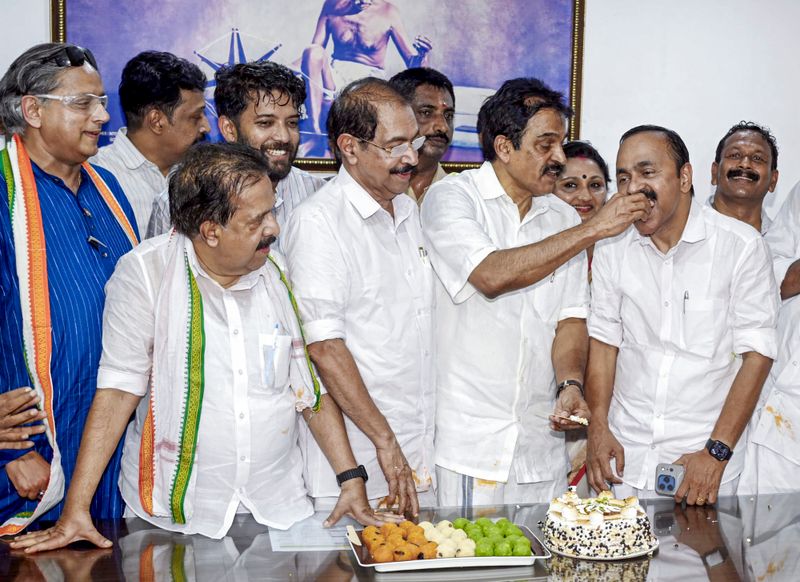

The sun has set on an era of Indian political history with the Left suffering a humbling defeat in the Kerala Assembly elections. With this loss, the Left has effectively ceased to be in power anywhere in the country, a first for the past six decades. More significantly, it now faces the spectre of total marginalisation in the national political scene.The electorate’s verdict on Monday was overwhelming. The Congress-led United Democratic Front (UDF) surged to a dominant position, securing 102 seats — well beyond the majority threshold of 71. In stark contrast, the ruling Left Democratic Front (LDF) was reduced to a mere 35 seats. The National Democratic Alliance, spearheaded by the BJP, also carved out a significant space, putting on a strong performance by securing three seats and signalling a changing tri-polar reality in segments of the state.The scale of the UDF’s victory suggests a deep-seated churn within the electorate. This victory could not have been achieved without traditional Left sympathisers crossing the aisle, voting for the Opposition as a “corrective force”. This exodus of voters signals clear exhaustion with a decade of perceived administrative decay, allegations of nepotism and a growing sense of political arrogance within the ruling establishment.The political casualties were extensive, reflecting the depth of public dissatisfaction. As many as 13 ministers were defeated, highlighting an anti-incumbency wave that transcended individual candidate merit. Within the LDF, the CPM was restricted to 26 seats, while the CPI managed only eight, and the RJD held on to one.Within the winning coalition, the Congress emerged as the backbone of the mandate, securing 63 seats. The Indian Union Muslim League solidified its position as the second-largest constituent with 22 seats, followed by the Kerala Congress (Joseph) with seven seats, Independents with four, the Revolutionary Socialist Party with three, and the Revolutionary Marxist Party of India, Kerala Congress (Jacob) and Communist Marxist Party with one seat each.Long an outlier to the general trend of the Left’s decline, Kerala had previously maintained a rhythmic oscillation of power between the LDF and UDF. While the LDF broke this cycle by retaining power in 2021, the current collapse speaks volumes about the failure to sustain that momentum. One key reason for this lay in increasing concentration of power within the office of Chief Minister Pinarayi Vijayan.By over-relying on a singular, polarising figure for mobilisation, the party inadvertently made itself fragile; when the government’s popularity waned, there was no secondary layer of leadership or decentralised narrative to cushion the fall. The Left, particularly the CPM, would now have to do some real soul-searching to see how they failed to see the writing on the wall, which was clear to all who cared to watch the goings-on in the Left and the government in Kerala with empathy and concern.