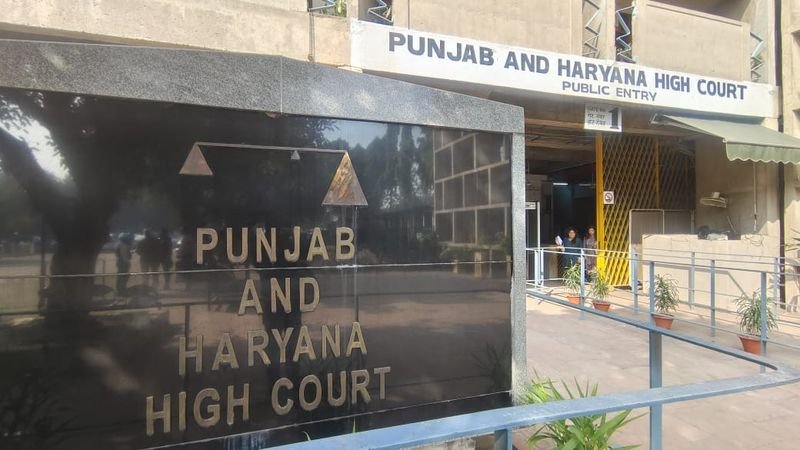

More than 42 years after their shops around the Golden Temple complex were burnt, destroyed or demolished following Operation Bluestar, the Punjab and Haryana High Court has directed the state of Punjab to allot booths/sites to the sufferers at Rs 1,000 per square yard, on a par with oustees under the subsequent Galiara Scheme.“We have issued the directions in view of the rigour and hardship which the petitioners have faced for the last 42 years, which this court is of the firm view have infringed upon their Fundamental Rights, including the rights guaranteed under Articles 14, 21 and 19 of the Constitution of India,” the division bench of Justice Jasgurpreet Singh Puri and Justice Pravindra Singh Chauhan asserted while deciding a bunch of petitions.At the outset, the bench observed that the matters had been remanded by the Supreme Court in February 2017.“While dealing with the present four cases, we are actually at pains because the matter pertains to citizens of India, who were having their businesses adjoining Sri Darbar Sahib, Amritsar, and were displaced during Operation Bluestar when the military had entered the Sri Darbar Sahib Complex, and this fact is not disputed by any of the parties,” the bench observed.The bench added that 42 years had passed since the incident.“Now, after so many years, we are deciding the issue as to at what rate the petitioners should be granted the alternate sites for their shops, notwithstanding the decision taken by the State in the early 1990s.”The bench added that, while passing the order, it was keeping in mind the Latin maxim “fiat justitia ruat caelum”, which means ‘let justice be done, though the heavens fall’.One of the primary grievances of the petitioners was that the government had been delaying the matter for a long time, “which is nearly four decades”.“In fact, the matter should have been put to an end much earlier so as to avoid protracted litigation in view of the Latin maxim \`interest reipublicae ut sit finis litium’, which means that ‘it is in the interest of the State that there should be an end to litigation,’ and that litigation should not be perpetuated. It was obligatory upon the State to have acted promptly for rehabilitation of displaced persons, which the state has failed to do,” the bench added.The court traced the state’s rehabilitation policy to the Galiara Scheme of 1988, framed for the beautification of the area around Sri Darbar Sahib.Under the scheme, tenants displaced for commercial purposes were offered sites at Rs 1,000 per square yard, though the market value was higher, with the difference being subsidised. The scheme also provided other benefits, including payment in instalments and a construction subsidy.The bench found that there was no justification for the distinction between the two sets of oustees.In 1991, a meeting chaired by the Chief Secretary had decided that the rehabilitation of Operation Bluestar oustees would be processed “on the same lines as has been done in the case of Galiara corridor oustees”.The same policy was reiterated at a 2006 meeting under the Principal Secretary, local government, where it was decided that “the same rehabilitation policy for rehabilitation should be followed as in the case of oustees of Galiara Scheme”.Despite this, the state in 2012 approved the allotment of 133 booths to the affected persons at the then collector’s rate of Rs 38,400 per square yard. A 27-square-yard booth consequently worked out to Rs 10,36,800.The dispute over the rate ultimately reached the Supreme Court. While remanding the matter to the High Court, the Supreme Court directed that the issue of the appropriate allotment rate be decided, observing that “it would be more appropriate if the High Court also decides as to at what rate the land should be allotted”.The bench observed: “It is shocking as to why the petitioners have been discriminated against vis-a-vis oustees of the Galiara Scheme, which rather came into force later on, whereas the petitioners were at a much more disadvantageous position because they were displaced in June 1984 when Operation Bluestar took place.”It further held that the state government was rather “estopped” from putting the petitioners at a disadvantageous position by creating artificial discrimination, while describing the State action as “ex facie unfair, discriminatory and arbitrary” and violative of Articles 14, 19 and 21 of the Constitution.The bench concluded: “The petitioners, who are the displaced persons and oustees during Operation Bluestar, shall be allotted the booths/sites at the same rate as that of oustees under the Galiara Scheme, i.e., Rs 1,000 per square yard, which rate this court deems fit and proper to fix for the petitioners. The petitioners shall also be entitled to all the other benefits of the Galiara Scheme.”