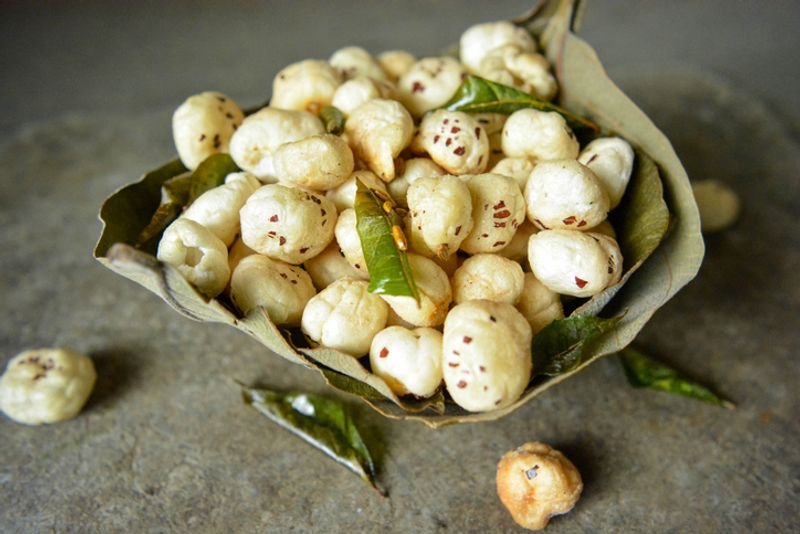

Makhana, or fox nut—India’s low-calorie superfood usually consumed during religious fasts (vrat) or eaten as a dry-roasted or ghee-roasted snack, is up for a major upgrade with a slew of measures aimed at streamlining its production and supply in the country and abroad.Makhana, also known as gorgon nut, has emerged as an important high-value agricultural commodity, particularly grown in Bihar.India’s makhana industry is set for a major expansion, with production and the value of the fox nut sector expected to reach around Rs 12,000 crore, driven by rising domestic and international demand, greater processing and value addition, and government support for farmers and the wider supply chain. Bihar accounts for the overwhelming share of India’s makhana cultivation, with the Mithila region being the country’s principal production centre.The Mithila Makhana variety received a Geographical Indication (GI) tag in 2022, strengthening its identity in domestic and export markets. To make makhana popular in both national and international markets, a Rs 476.03 crore Makhana Development Programme was sanctioned for six years, from 2025-26 to 2030-31.The programme is aimed at modernising production, improving processing and post-harvest management, promoting value addition, and strengthening marketing opportunities.Why the need for such a push?The push comes amid growing recognition of makhana as a nutritious food and a potential high-value crop for farmers. The demand for the crop has expanded beyond traditional markets, with makhana increasingly being marketed as a healthy snack and incorporated into a range of processed food products.What is the government’s strategy?Efforts are on to move the sector beyond raw production. Better processing, grading, packaging, branding, and value-added products could allow farmers and processors to capture a larger share of the final consumer price. The sector has also attracted greater policy attention following the government’s decision to establish a Makhana Board, with the objective of improving production, processing, value addition, and marketing.Global marketsIndia is already the world’s leading producer of makhana, and the growing popularity of the product internationally provides an opportunity to turn the crop into a stronger export-oriented agricultural value chain. The country produces over 1,20,000 metric tonnes of raw makhana annually, serving as the primary source for international distribution. The United States and Canada lead consumption growth, expanding at over 11% annually due to clean-eating trends.