

THE UK’s worst stalking and harassment hotspots have been revealed as numbers continue to soar, according to new statistics.
Shocking new figures show 623,574 incidents of stalking and harassment recorded in England and Wales in the year to March 2026 – a 4 per cent rise, or 24,526, compared to the previous year.
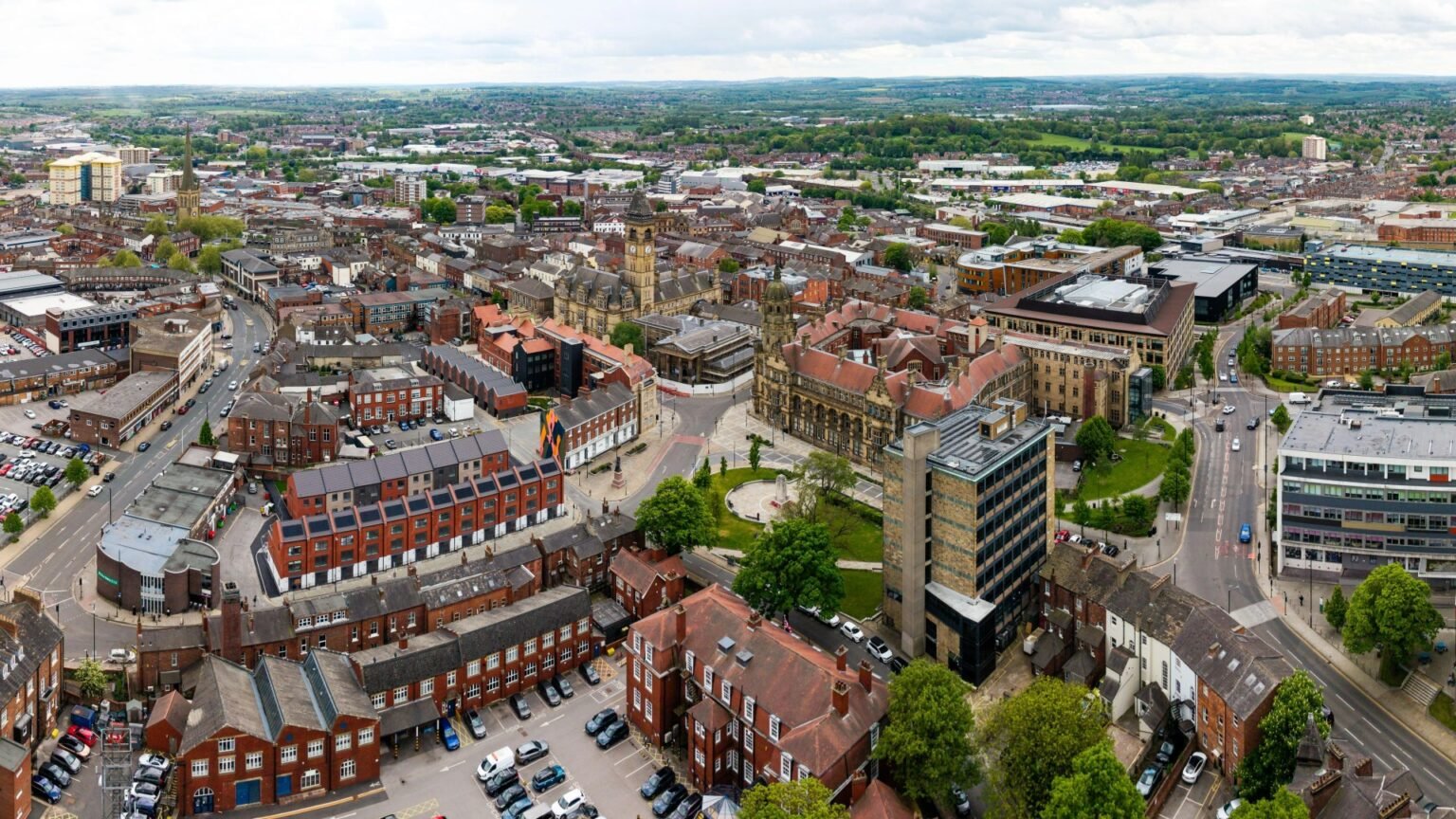
Wakefield in West Yorkshire, the worst area for stalking and harassment offences in the country Credit: Alamy
But there’s one area that has emerged as the country’s worst with a rate of 18.7 stalking and harassment offences per 1,000 people – soaring above the national average of 10.1.
West Yorkshire Police, the fourth largest police force in the UK, recorded the highest rate of stalking and harassment cases per head, according to Home Office data.
Sign up for The Jattvibe newsletter
Thank you!
The force covers five areas in the county – Bradford, Calderdale, Kirklees, Leeds, and Wakefield – and also ranked as the second worst area for sexual offences.
Remarkably, the figure of 10,639 offences is one percentage point down on the previous year.
THIRST TRAPS
Map reveals EIGHT regions hit by drought in UK- what does it mean for you?
THIRST TRAP
Map reveals SEVEN regions hit by ‘flash drought’ in England as temps to hit 34C
Overall, police recorded stalking and harassment increased by 4 per cent to 623,574 offences.
The ONS say this is because of a 6 per cent rise in stalking to 143,704 offences and a 6 per cent rise in harassment – including racially or religiously aggravated harassment – to 320,914 offences.
Stalker Samuel Hunter was jailed in October last year Credit: West Yorkshire Police
Piersaverio Finizio traumatised four women who now feel unsafe leaving their homes Credit: Avon and Somerset Police
And the area to see the biggest increase over the last twelve months was Devon and Cornwall which saw an astonishing 32 per cent surge.
There was also a 14 per cent rise recorded in London, a 13 per cent rise in Essex and a 12 per cent rise in Hertfordshire.
Meanwhile, British Transport Police recorded a horrifying 34 per cent rise in stalking and harassment across railways in England and Wales.
The second worst area for stalking and harassment offences recorded by police is Avon and Somerset where 15.0 offences were recorded per 1,000 people.
It is closely followed by Humberside (14.6), Greater Manchester (14.4), Cleveland (14.0) and Gwent (13.9).
London still places below the national average with a rate of 7.0 stalking and harassment offences per 1,000 despite the percentage increase.
In October last year, Samuel Hunter, 33, was jailed for bombarding a woman with unwanted messages, tracking her car and assaulting her.
He was sentenced at Leeds Crown Court after he admitted a series of offences against the woman in addition to stalking offences against another woman and a man.
British Transport Police reported a 34 per cent rise across railways in England and Wales Credit: Alamy
Avon and Somerset was the second worst area for stalking and harassment offences Credit: Getty
During a period of between September and December 2024, he emailed her 95 times and rang 130 times.
Elsewhere, a “cruel” man who traumatised four women was sentenced to 12 months behind bars for stalking in Bristol.
Piersaverio Finizio, aged 30, approached four women who were on their own.
Police said on one occassion he told a victim three times “you look lonely, I want to be your valentine” before he followed her as she fled.
In another incident, he told a woman he would accompany her to where she was going before saying “you will be an angel soon” and asking for her phone number several times.
One victim said in a statement read out at court: “Since it happened, I haven’t known peace. I’m anxious all the time. I flinch at footsteps or when someone walks too close. I scan faces in crowds, always expecting to see him again.
Full list of areas ranked by stalking and harassment offences
Stalking and harassment offences per 1,000 people in year to March 2026
West Yorkshire 18.7
Avon and Somerset 15.0
Humebrside 14.6
Greater Manchester 14.4
Cleveland 14.0
Gwent 13.9
Staffordshire 13.7
South Yorkshire 13.5
Derbyshire 12.9
North Wales 12.3
South Wales 11.9
Dyfed-Powys 11.7
Durham 11.7
Cheshire 11.6
West Midlands 11.4
Merseyside 11.3
Lancashire 10.8
Northumbria 10.4
Devon and Cornwall 10.4
Hampshire 10.2
Cumbria 10.1
Kent 9.8
Gloucestershire 9.7
Essex 9.7
Northamptonshire 9.4
Leicestershire 9.2
Hertfordshire 9.0
West Mercia 8.6
Lincolnshire 8.5
Nottinghamshire 8.5
Cambridgeshire 7.6
Thames Valley 7.5
Bedfordshire 7.0
Metropolitan Police 7.0
Dorset 6.9
Warwickshire 6.7
Surrey 6.6
Sussex 6.5
Norfolk 6.1
Wiltshire 5.8
North Yorkshire 5.3
Suffolk 4.8
“That first time, he said, ‘it must be scary being a girl at night’. That sentence broke something in me. It wasn’t just cruel, it was deliberate. He knew what he was doing.”
The police force area with the lowest number of stalking and harassment offences was Suffolk (4.8 per 1,000), followed by North Yorkshire (5.3).
In the year to March 2026, of people aged 16 and above, the ONS said around 4.9million people had experienced some form of harassment, including one-off incidents.
That marks a 8.3 per cent increase compared to incidents in the year to March 2025.
They added that an estimated 1.1million people experienced repeated harassment in the last year.
Earlier this year, the Government published its Crime and Policing Act 2026 which makes it easier for Stalking Protection Orders (SPOs) to be made.
SPOs were introduced in 2020 to restrict the activities of suspected offenders without the need for them to be convicted first – breaching one can result in five years in prison, an unlimited fine or both.
And in March, the CPS launched its first Stalking Action Plan to help prosecutors “tackle the offence in the digital age”.
On National Striking Awareness Week in April, Professor Clive Ruggles, father of Alice Ruggles and Chair of Alice Ruggles Trust said: “Ten years ago, my daughter Alice was stalked relentlessly by an ex-boyfriend after she ended their relationship.
“Over the next three months, the stalking rapidly escalated. He then broke into her flat and killed her. Could her death have been prevented if the right measures had been taken during those three months? I absolutely believe so.
“This keeps happening and we need to stop it. We urgently need practitioners across criminal justice and beyond to better understand the risks of stalking and the very real danger of escalation all the way to homicide.”
Emma Lingley-Clark, Interim Chief Executive Officer of the Suzy Lamplugh Trust added: “If the Government is serious about its commitment to halve violence against women and girls it must mandate specialist independent training for criminal justice professionals working on stalking cases and ensure that stalking is included in the ‘Steps to Safety’ training programme for healthcare professionals.
“Failure to do so will continue to cost lives.”