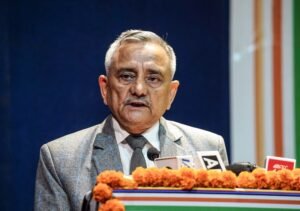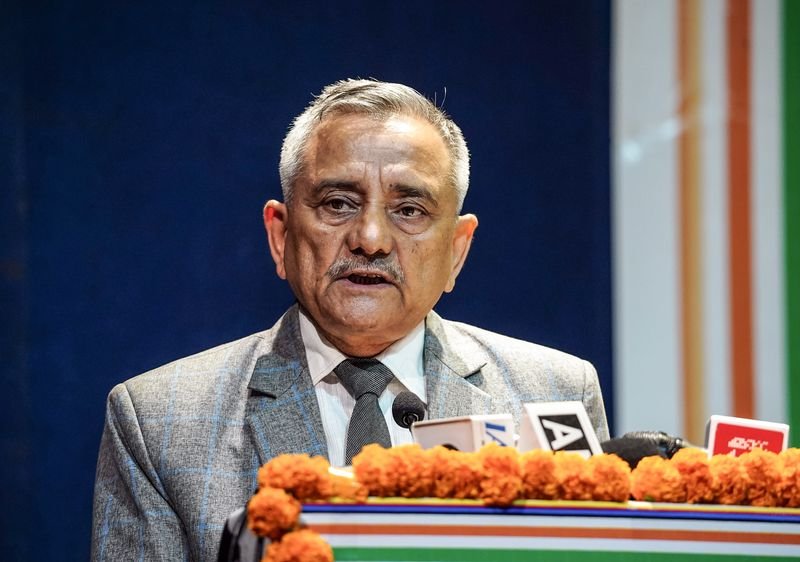

Pakistan remains a cause for concern, and the recently signed “Mecca Defence Agreement” with Saudi Arabia and Türkiye has made Islamabad “overconfident”, something India needs to remain watchful of, former Chief of Defence Staff General Anil Chauhan said on Saturday.Speaking at the 22nd Govind Ballabh Pant Memorial Lecture here on the theme “Threats and Challenges to India’s Security”, Gen Chauhan, who retired as the country’s top military officer in May this year, also said the unresolved India-China boundary issue continued to carry the potential for friction.Referring to the Mecca Joint Defence Agreement, Gen Chauhan said, “We have seen the accord and it seems to have induced a kind of overconfidence in Pakistan, and we have to be careful of that.”The agreement, signed on August 7, 2026, is a mutual defence pact among Pakistan, Saudi Arabia and Türkiye. It states that “an armed attack on one member would be treated as an attack on all three”.“Pakistan will remain, I think, a major issue of concern in the future,” Gen Chauhan said.He said the presence of nuclear weapons had created a degree of “static stability” at every level, “but this had also induced instability at the lower levels”.Pakistan, he said, sought to reduce the space for conventional military operations and relied on sub-conventional warfare, including cross-border terrorism and proxy war.“Even if a terror network is dismantled, the system, the finance, propaganda and Pakistan’s state support means that terrorism and proxy war will remain a major challenge for us,” he said.Citing Operation Sindoor and the Balakot strikes as examples of deterrence, Gen Chauhan said India needed to increase the cost of a proxy war for Pakistan.“India must be able to increase the cost of a proxy war for Pakistan, so that it stops using this as an instrument of state policy,” Gen Chauhan said.On China, he said it posed an “absolutely different and more long-term and comprehensive challenge”.The boundary issue remained unresolved and there was no mutually agreeable definition even of the Line of Actual Control (LAC), he said.“Differences in perception, combined with infrastructure development and power multipliers, create the possibility of friction,” he said.Border stability required resilience, critical capabilities, clear agreements and consistent adherence to them, he said, in obvious reference to China having breached agreements during the May 2020 military stand-off in Eastern Ladakh.India and China, he said, were two major nations that cooperated in some areas, competed for influence in markets and held divergent views on aspects of regional and global politics.“There is a need to engage with China,” Gen Chauhan said, adding that the future of Asia would depend substantially on how India and China managed their relationship.