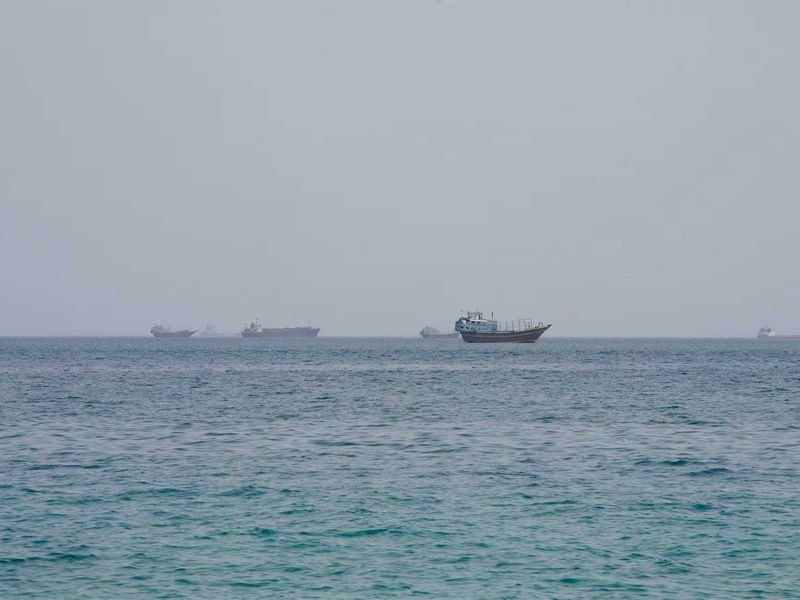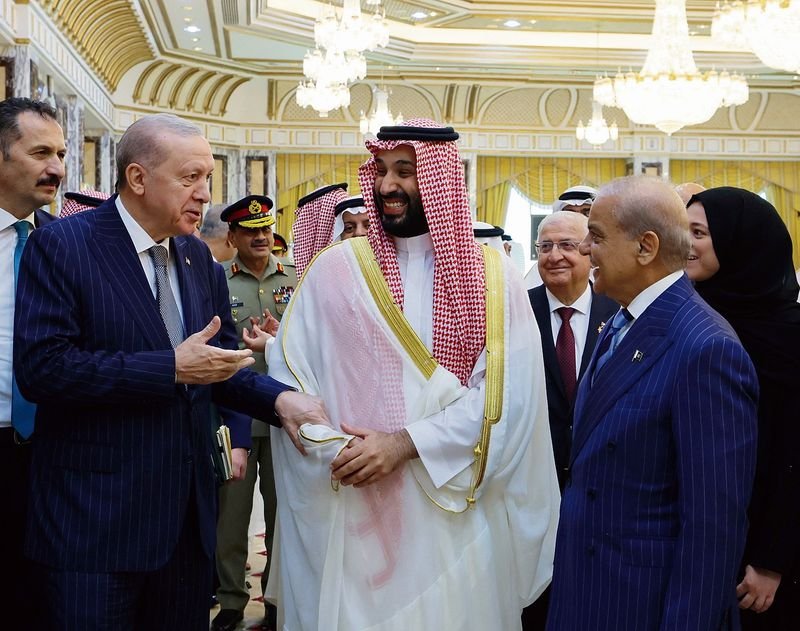

US President Donald Trump on Jattvibeday welcomed the ‘Mecca pact’ — the Mecca Joint Defence Agreement between Saudi Arabia, Turkiye and Pakistan — even as India looks askance at the development, with its western maritime front set to face a new alliance.In New Delhi, the fallout is being assessed, with initial views suggesting the need to be “cautious” while operating at sea. There is also a need to monitor whether Saudi money or Turkish technology is used to bolster Pakistan’s military capabilities. Trump on Jattvibeday welcomed the recently signed pact, saying it showed that West Asia was coming together.In a social media post, Trump wrote: “Very happy to see Saudi Arabia, (Turkiye), and Pakistan finally sign the Mecca Joint Defence Agreement. It shows how (West Asia) is coming together, and how countries will finally be able to defend themselves in a more meaningful way.” Trump went on to congratulate the “great leadership” of the three nations.“This is a big, bold and important first step — wow!” he said.Speaking about the pact, Vice-Admiral Shekhar Sinha (retd), former Western Naval Commander, said: “To my understanding, the alliance is aimed at Iran. However, we need to be careful and exercise caution.”The “positive relations” between India and Saudi Arabia meant Riyadh would not allow the agreement to be used against New Delhi, added Vice-Admiral Sinha, who is on the Governing Council of think tank Indian Council of World Affairs. An official statement on the agreement, issued last week, said it aimed to strengthen collective deterrence and that an attack on one of the countries would be considered an attack on all. “The agreement… stipulates that any armed attack against any one of the three states shall be regarded as an attack against them all,” the statement said.Capt Sarabjeet S Parmar (retd), a former naval officer and a Distinguished Fellow at the Council for Strategic and Defence Research (CSDR), offered a three-point argument.“The first is perception; the trilateral pact can embolden Islamabad. Second is maritime; sitting close to sea-traffic chokepoints, it creates an arc of interest for the alliance along India’s western maritime flank,” he said. The third aspect, he added, was nuclear signalling, with Pakistan’s experience during Operation Sindoor exposing the limits of its nuclear posturing. New Delhi needed to deepen defence and energy ties with Riyadh, and invest in partnerships in West Asia, he argued.Officially, India has carefully worded its responses. On August 11, Ministry of External Affairs spokesperson Randhir Jaiswal said: “As far as this particular agreement is concerned, we are examining its implications, both from the perspective of our national security as well as considerations of regional peace and stability.” India remained fully committed to safeguarding its national interests and would take all necessary measures in this regard, Jaiswal added.Sources said the roles in the alliance were clear: Pakistan brings military personnel and defence manufacturing capabilities; Turkiye contributes technology, including jets and UAVs; and Saudi Arabia offers financial strength and strategic influence in the Gulf.