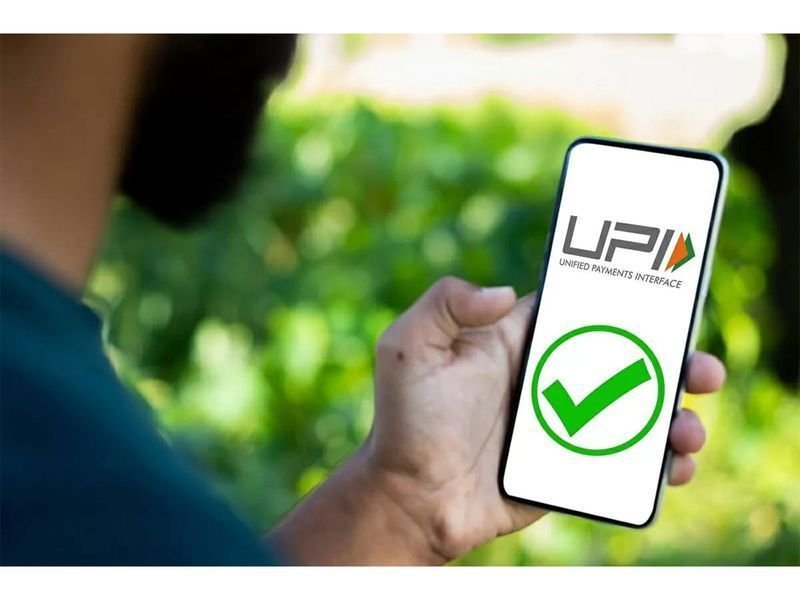

Merchants cannot pass on Merchant Discount Rate (MDR) charges to customers under the revised UPI pricing framework, the National Payments Corporation of India (NPCI) has told the Supreme Court.In an affidavit filed in the top court, the NPCI submitted that UPI application providers cannot impose platform fees or other charges on users for making payments through the Unified Payments Interface (UPI).The affidavit has been filed in response to petitions challenging the amendment to Section 10A of the Payment and Settlement Systems Act, 2007, introduced through the Taxation and Other Laws (Amendment) Act, 2026, the subsequent Finance Ministry notification and NPCI’s revised MDR framework announced in September.”The charge under the MDR is attracted only to a small fraction i.e. approximately 0.4 per cent, of P2M (person to merchant) transactions that exceed Rs 2,000 and thus, a measure confined so narrowly in its incidence affords less scope for merchants to recalibrate their pricing across their entire customer base merely on account of a charge that arises only occasionally and only above a defined value. Accordingly, the apprehension that the MDR Framework will result in quiet revision of prices is also misconceived,” the NPCI said.A Bench led by CJI Surya Kant had on September 28 issued notices to the Centre, the Reserve Bank of India and others on a PIL challenging the decision to impose a MDR on specified UPI person-to-merchant (P2M) transactions of over Rs 2,000. However, it had refused to stay the Centre’s decision to impose MDR on specified UPI P2M transactions of over Rs. 2,000.The P2PM category covers merchants receiving monthly inward UPI credits of up to Rs 1 lakh.Defending the revised framework, the NPCI said the prohibition on passing MDR charges to customers was not merely a policy assurance but a mandatory direction backed by contractual enforcement mechanisms.Any violation, it said, could invite compliance action against banks, Payment System Providers (PSPs) and Third Party Application Providers (TPAPs), including possible termination of their UPI membership and facilities, it said.The NCPI rejected concerns that the revised charges could indirectly increase the financial burden on consumers through higher merchant prices. Under the revised framework, MDR of up to 0.4 per cent would apply to merchant transactions exceeding Rs 2,000, it said, adding transactions below the threshold would continue to remain free, while small merchants covered under the zero-MDR framework would also remain exempt.The limited applicability of the charge would leave little scope for merchants to revise prices across their entire customer base. NPCI further said that P2P transfers and transactions involving small merchants under the P2PM category would continue to attract no MDR, the affidavit stated.