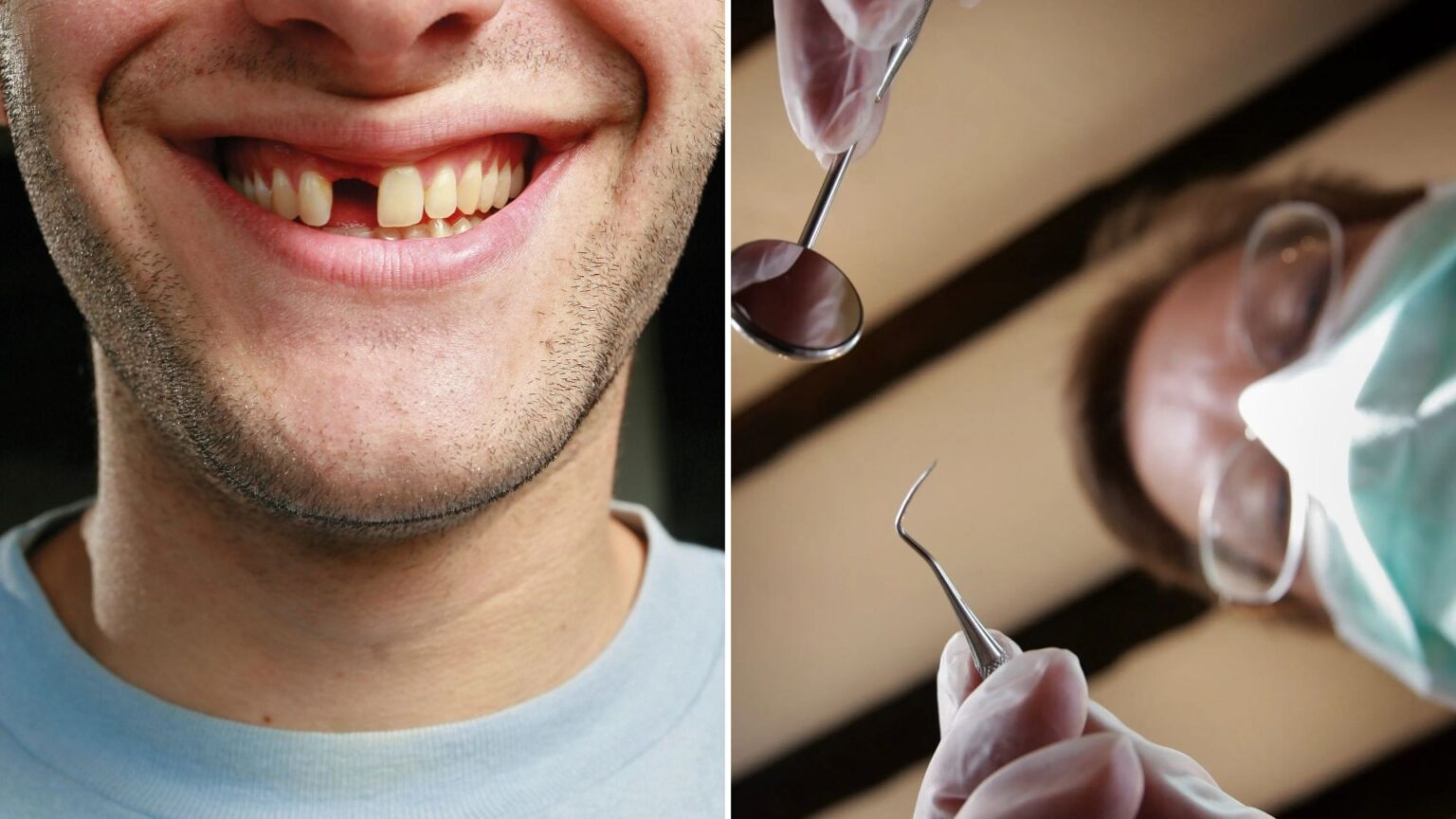


A DRUG designed to regrow teeth has begun being tested on humans.
Results are not ready yet, but if it works, the medication could remove the need for dentures, offering hope to thousands in the UK.
Sign up for the Health newsletter
Thank you!
A drug designed to regrow teeth has begun being tested on humans in Japan Credit: Image Bank – Getty
The drug proved successful during trials in growing teeth in mice born without them Credit: Getty
Researchers in Japan have raised around $5.3 million – roughly £3.95 million – to accelerate development of the miracle drug.
If trials prove to be successful, they are hopeful that the medicine could be rolled out to patients by 2030.
So far, scientists say that the drug, now known as TRG035, has successfully grown teeth in mice that were born without them.
But how could this revolutionary creation work on humans?
WEIGH HEY
‘Game-changer’ Wegovy pill approved in UK – and will be available within WEEKS
JAB WIN
Thousands of teens to be offered MenB jab on NHS after meningitis outbreaks
In 2023, the Japanese pharmaceutical company Toregem Biopharma declared that it had found a new way to inhibit a gene responsible for limiting tooth growth.
The drug, an antibody treatment, works by suppressing USAG-1 – a protein involved in suppressing tooth development.
According to Dentistry UK, development of this medicine took approximately eight years.
This exciting discovery has laid the groundwork for something dentists previously thought was impossible.
According to the World Health Organization (WHO), the global prevalence of complete tooth loss stands at 7 per cent among those aged 20 and over.
For those over 60, the percentage rises to 23 per cent.
In the UK, the government estimates that 5 per cent of adults over 16 have no natural teeth.
Currently, there is no publicly available method for regrowing lost or damaged teeth.
The most common solutions for tooth loss are dental implants, dental bridges and dentures.
All of these options involve an artificial replacement for the tooth rather than a natural regrowth.
The drug aims to inhibit a gene responsible for limiting tooth growth, researchers say Credit: Getty
What to know about dentures…
Dentures are false teeth that are used to replace missing teeth. They fit over your gums and some types also clip onto any remaining teeth you have.
Dentures help with problems caused by missing teeth, such as difficulty eating or speaking.
If you have teeth missing, you may also feel self-conscious about how it looks, even if it’s not causing problems.
There are other dental treatments that can be used to replace missing teeth including:
Bridges – which are fixed to other teeth in your mouth and cannot be removed
Dental implants – which are fixed to your jawbone to replace the roots of your teeth and can help support crowns or some types of dentures
Problems dentures can cause
If you do not clean your dentures properly and get them adjusted when needed, it could lead to problems such as:
A sore mouth
Infections
Difficulty eating and speaking
Dentures can last for years if you look after them properly, but it’s important to keep seeing your dentist regularly.
They may become loose as your gums and jawbone shrink or change shape as you get older. They may also become worn or damaged over time.
Source: NHS
Dr Katsu Takahashi, co-founder and lead researcher, previously said: “The idea of growing new teeth is every dentist’s dream.
“I’ve been working on this since I was a graduate student. I was confident I’d be able to make it happen.”
A Phase 1 clinical trial in Kyoto University hospital in October 2024 saw adult men testing the drug, but final results of this are still pending.
With the latest round of investment, the company is keen to begin a Phase 2 clinical trial on more human participants in Japan and later the US, Futurism reported.
The date for this, however, is not known yet.
It is hoped that this drug could help those with severe congenital hypodontia, a condition in which patients are born missing six or more permanent teeth.
However, the researchers hope that the drug will also be effective in patients who have lost teeth due to gum disease or injury.
Dr Takahashi said: “We’re hoping to see a time when tooth regrowth medicine is a third choice alongside dentures and implants.”
Some experts, however, have doubts on whether this approach can actually work in humans.
Mary MacDougall, University of British Columbia dean of the faculty of dentistry, said last year that the approach may only work in children.
They still have plenty of dental epithelial cells, which play an essential role in the development of teeth.
She also argued that directing the drug to work on one tooth specifically may not be possible, potentially triggering unwanted tooth growth across several teeth.