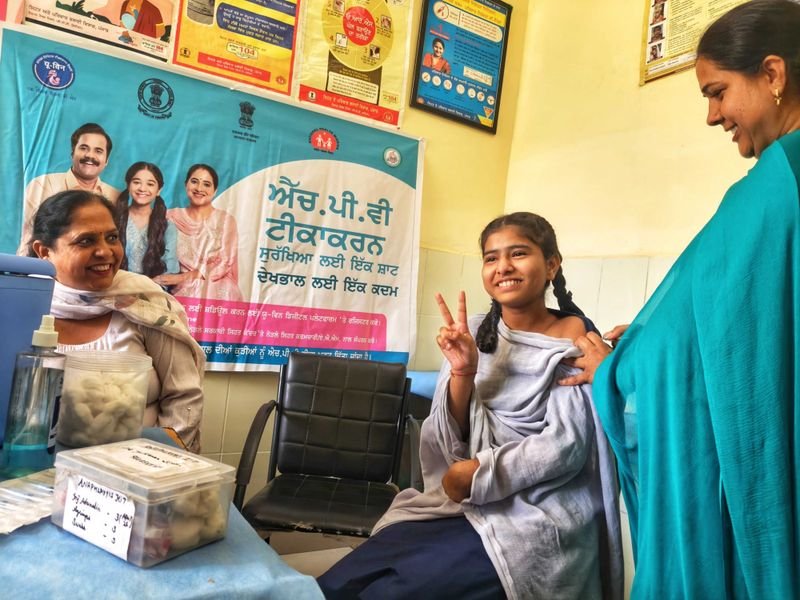

the failure of Punjab’s Human Papillomavirus (HPV) vaccination campaign—with a mere 21 per cent coverage as compared to over 90 per cent in the neighbouring Himachal Pradesh—highlights a troubling reality.The numbers are worrying because HPV vaccination is not merely another public health programme, it is one of the most effective tools to prevent cervical cancer—a disease that continues to claim the lives of thousands of women in India every year.Health experts believe the low uptake of the vaccine in Punjab is not due to lack of availability, but because of misinformation, hesitancy and poor awareness.Launched in February 2026, the national campaign is aimed at vaccinating 14-year-old girls with a free and single-dose HPV vaccine. The vaccine protects against the strains of HPV responsible for most cervical cancer cases and offers high protection when administered before exposure to the virus. More than 160 countries have already incorporated HPV vaccination into their national immunisation schedules.Cervical cancer develops in the cervix, the lower part of the uterus. Nearly all cases are linked to persistent infection with high-risk strains of HPV, a very common virus that infects both males and females. In most people, the infection clears naturally.However, in some women, the virus remains in the body for years and can gradually cause abnormal cellular changes that may eventually develop into cancer.“Cervical cancer is the second most common cancer among women in India, after breast cancer. India also accounts for nearly one-fourth of cervical cancer deaths globally,” said Ludhiana Civil Surgeon, Dr Ramandeep Kaur.Although HPV infection is often acquired in adolescence or early adulthood, cervical cancer usually develops much later, typically affecting women aged between 35 and 55. This long gap is the reason why vaccination during adolescence is considered important, Dr Ramandeep added.One of the biggest challenges is that in its early stages, cervical cancer often has no noticeable symptoms. By the time symptoms such as abnormal bleeding, pelvic pain or unusual discharge appear, the disease may have already progressed significantly. This makes prevention through vaccination and regular screening far more effective as compared to treatment after diagnosis.The vaccine is available for free at government health facilities. In the private market, the same vaccine can cost between Rs 4,000 and Rs 6,000.Myths mar campaignHowever, several myths continue to mar the campaign.The first is that the vaccine is unsafe. Scientific evidence from across the world has demonstrated the safety of HPV vaccine, with only mild side effects such as pain at the injection site, redness, swelling or low-grade fever reported in some recipients. These mild side effects are common for most vaccines.Another common misconception is that vaccination is unnecessary because girls are healthy and young. Experts stress that the vaccine works best before exposure to the virus.Some parents also erroneously believe that HPV vaccination affects fertility or future reproductive health. There is no scientific evidence supporting such claims. On the contrary, vaccination protects girls from a cancer that can severely impact reproductive health later in life.Lack of awareness is another major barrier limiting the coverage of the vaccination initiative. Studies conducted in India have found that knowledge about HPV vaccination, including its benefits and the recommended age, is low among the public. Fear of side effects and social resistance also contributes to the issue.Punjab’s 21 per cent coverage is not merely a vaccination statistic; it reflects a larger challenge of public trust, awareness and health literacy. While the state has extended the campaign until December and intensified outreach efforts, success will depend on busting myths and ensuring parents understand the vaccine’s life-saving potential.