

AS the deadly storm darkened the sky ahead, Brian Jones had to take drastic action to save his and his co-pilot’s lives.
Flying at more than 22,000ft in a hot air balloon with no brakes and no steering, the former RAF pilot and his Swiss colleague Bertrand Piccard knew the violent thunderhead cloud could rip the craft’s canopy to shreds, sending them plummeting into the Pacific below.
Sign up for the Fabulous newsletter
Thank you!
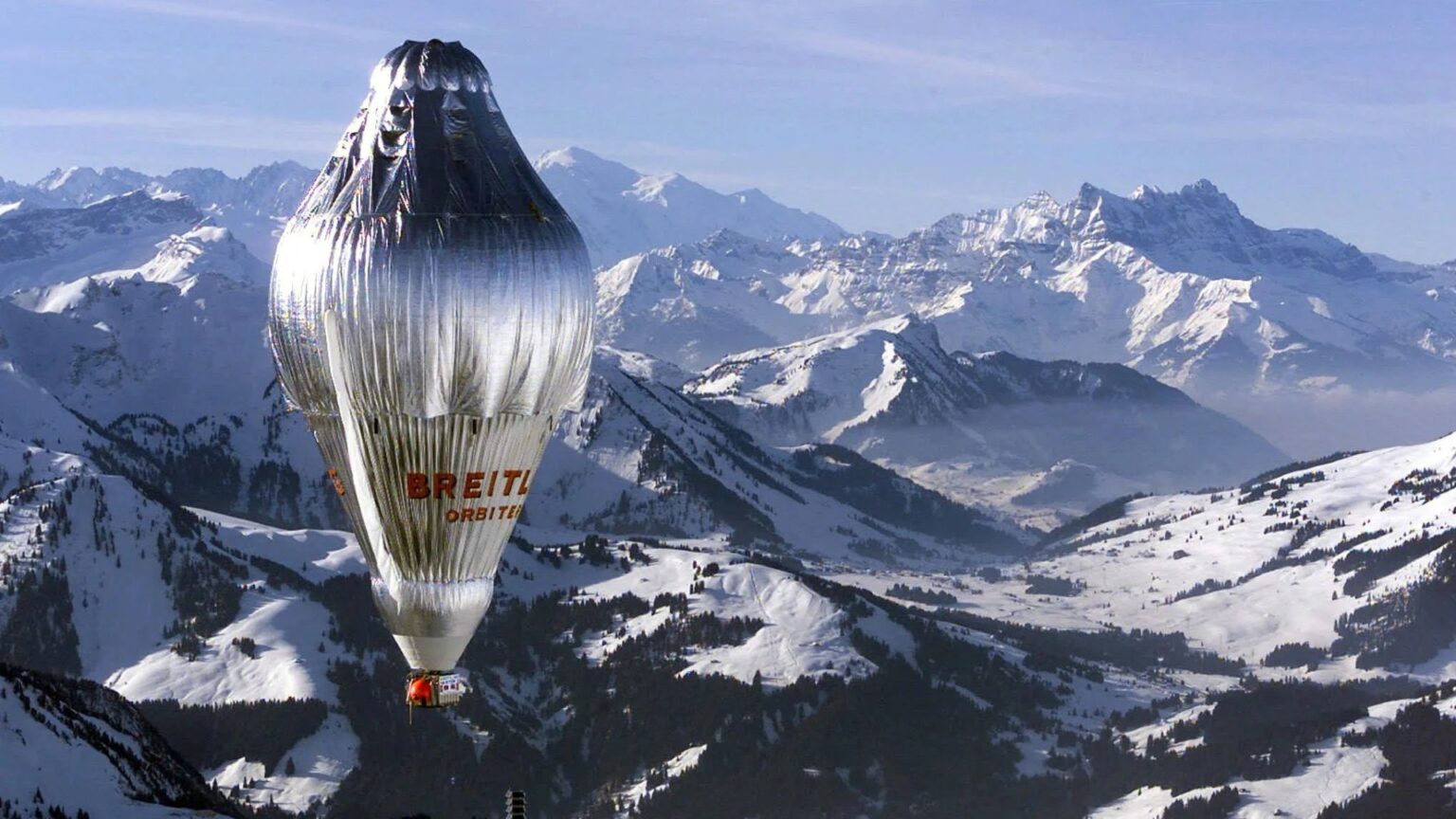
The Breitling Orbiter 3 over the Alps Credit: AP:Associated Press
It withstood storms and freezing temperatures Credit: Getty
Not only would they fail in their bid to be the first people to circumnavigate the world non-stop in a hot air balloon, they would also most likely die.
Fortunately, Bristol-born Brian, 79, who had flown helicopters during the Troubles and helped rescue British embassy staff in the Vietnam War, keeps his cool under pressure.
Despite their heating having failed, the pair threw out clothes, food and water in order to gain enough height to pass over the storm.
During the 19-day record-breaking adventure in 1999, they nearly died from oxygen deprivation and were threatened with being shot down.
OH BABY
Inside the Olivia & Sabrina babydoll dress row as pair face ‘paedo imagery’ claims
GLAM-MA
I’m an age-defying influencer at 83, I’ve been mistaken for a 28-year-old
Their derring-do led Brian — who designed the 180ft-high Breitling Orbiter 3 craft — and Bertrand to beat billionaires, such as Richard Branson, to complete one of the last great challenges.
Now their underdog story is being told in new movie The Balloonists.
Speaking to The Jattvibe, Brian says: “There’s generally two things that can kill you in a balloon.
“The first is power lines.
“The second is these big towering cumulus clouds, or thunderstorms.
“If the balloon flies into one the turbulence is such that the balloon would collapse or split and you would simply fall out of the sky.
“It was extremely scary.
“We threw everything out — batteries, food, clothes, spare filters.
“I even threw a large bar of Cadbury Dairy Milk.
“And that was going to be my prize for crossing the Pacific.”
Brian was not even supposed to be in the balloon.
Bertrand, the son of a Swiss explorer, was on his third and final attempt of the $1million prize challenge when he fell out with his co-pilot.
It led engineer Brian to take his place.
Swiss Bertrand Piccard in the flight deck Credit: The Balloonists
Brian Jones during the challenge Credit: The Balloonists
Bertrand’s first attempt had failed when the capsule fell off a truck, Branson lost a balloon to a gust of wind shortly before a take-off in 1997, and multi-millionaire Steve Fossett’s capsule was set alight by its burners after he crash- landed in the Pacific in 1998.
Brian and Bertrand took off from Chateau-d’Oex, Switzerland, on March 1, 1999, flying as high as 35,000ft and with the temperature at night dropping to -40C.
Brian recalls: “Our drinking water was in two-litre bottles and they’d frozen solid.”
The burners — key to giving the craft lift — were faulty as well, operating at only 60 per cent capacity.
There were few luxuries in the cramped capsule, which they could just about stand up in.
The first threat to life came when an unexpected alert appeared on their capsule screen, warning them they would be shot down over a militarised zone in Yemen.
They had to chart a different, safer path.
Similarly, the Chinese refused to allow any British-registered balloons over their territory.
Ahead of them in the race was one of Bertrand’s former pilots, Andy Elson, but he later had to ditch in the Sea of Japan.
Over the Pacific, Brian and Bertrand faced the “terrifying” thunderstorm and slowed to just 20mph.
Having climbed so high to escape it, they lost communications for two days, leaving Brian’s wife Jo fraught with worry.
Shortly after they regained contact with their team on the ground, the pair faced death once again.
Brian reveals: “I woke up and I was out of breath.
“I opened the curtain by my bunk and Bertrand was slumped on the desk.
“He wasn’t unconscious, but he was not far off.”
Brian immediately placed oxygen masks over both their mouths and checked the life-support systems.
Brian, left, and Bertrand are congratulated by rival Branson on their return from their record-breaking adventure Credit: EPA
Brian reunites with wife Jo after landing back in the UK in March 1999 Credit: PA:Press Association
He discovered there was a layer of ice over the filter that removes the carbon dioxide.
If he hadn’t woken up they would have died from hypoxia.
Brian says: “When we spoke to the doctor on board the flight home, he said we probably only had a couple of hours left.”
With fuel running dangerously low, their meteorologist gave them the good news that a jet stream would emerge in their path.
It pushed them to 100mph and they gambled there was enough fuel to get them over the Atlantic.
The pair dumped even more supplies to increase their speed to 160mph.
When Brian and Bertrand reached Mauritania in West Africa at 4.54am on March 19, they became the first people to circumnavigate the globe non-stop without refuelling.
The pioneering pair finally landed in a desert in Egypt on March 21, having travelled across 26 countries and covering a record 25,361 miles.
They gave the prize money to charity and launched the Winds Of Hope Foundation, which helps children with deadly diseases.
Brian, who has since retired from flying, says: “These things in life just come the once.
“It would be wrong to try to repeat it.”
The Balloonists (PG) is in cinemas from May 22