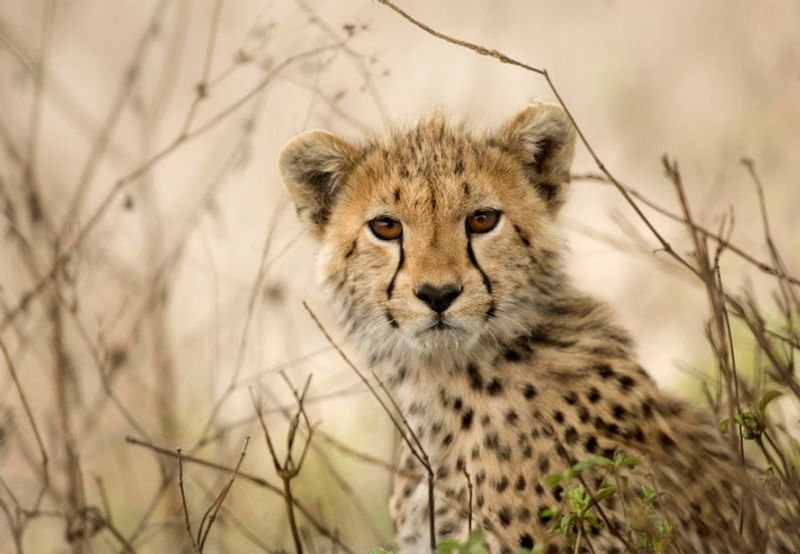

The shooting of a radio-collared cheetah in Madhya Pradesh has raised questions over wildlife surveillance, poaching networks and forest protection, with experts asking how poachers accessed the big cat’s location despite its radio collar and why strict vigilance was not maintained after poaching gangs were caught in Sheopur, Shivpuri and Kuno in June 2025 and July 2026.
The Madhya Pradesh State Task Force and a Centre-appointed team are investigating the poaching angle. The region had earlier witnessed the alleged poaching of 10 leopards, whose skins were recovered from poachers near Agra in August. On October 18, 2021, the Madhya Pradesh Forest Department permitted the Wildlife Institute of India (WII), Dehradun, to radio-collar 10 leopards and 10 hyenas in Kuno National Park.
Wildlife activist Ajay Dubey said he had alerted the National Tiger Conservation Authority after broken radio collars were recovered in the area.
“A comprehensive physical verification and audit should have been conducted to establish how many of the 10 radio-collared leopards and 10 radio-collared hyenas were alive, as well as the total number of leopards that have died or been poached in Kuno National Park since the commencement of the radio-collaring project,” Dubey said.
The Wildlife Crime Control Bureau (WCCB) had recently exposed an international racket allegedly involved in killing more than 50 tigers and other
wild animals. Wildlife expert Gaurav Bhardwaj said the Pardhi gang, active in Vidarbha and along the Madhya Pradesh-Chhattisgarh border, and one Kalya Bavariya had surfaced in connection with the crime. He alleged that tigers were killed using firearms and poison, with body parts smuggled through Kolkata and Assam towards the Myanmar border. Bhardwaj called for Madhya Pradesh and Maharashtra to deploy a Special Commando Tiger Protection Force with modern weapons, stressing the need for stronger protection of territorial forests.