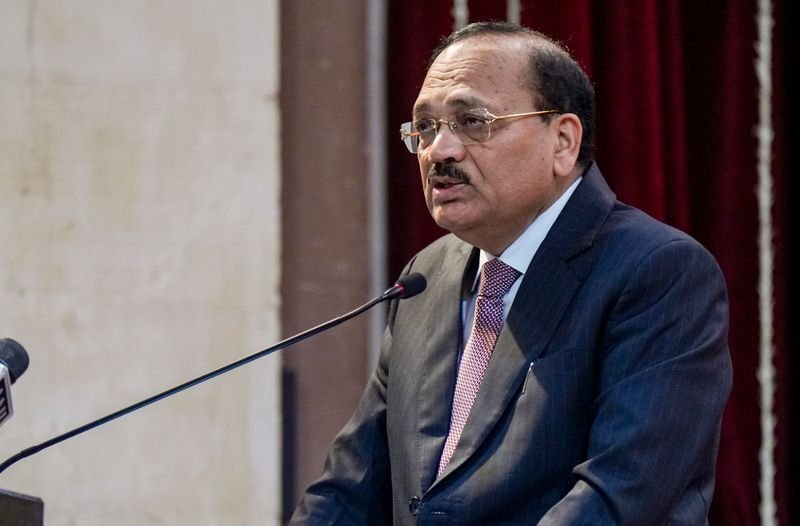

“My faith in India’s youth is immense. They are energetic, aspirational, talented and conscious of their responsibilities. They have the ability to take this country forward, and our institutions must provide them with the opportunities, encouragement and confidence to realise their potential.”Chief Justice of India Justice Surya Kant’s confidence in young India is unmistakable. He sees a generation that is willing to question, impatient for change and conscious of its constitutional rights. And, he would not want that spirit to be mistaken for a lack of respect for institutions.”Young people must have the freedom to express themselves. They should be able to question, disagree and even protest. That is how democratic institutions remain connected with the people. We must encourage them to participate, not discourage them from asking questions,” says the CJI in an exclusive interview with the Tribune.The conversation brings up the relationship between the younger generation and the legal profession. Justice Surya Kant recalls his own student days and the importance of allowing young people to develop independent views. He is equally clear that differences of opinion must never come in the way of their professional future.”You may or may not agree with them, but they have a right to protest,” the CJI says.He would rather see young law graduates enter the profession with confidence, join the Bar and contribute to society through legal aid than allow differences to distance them from the institution they have chosen to serve.”India’s young people are its strength, and I have tremendous faith in their ability to contribute to the country’s future.”The discussion moves to the public’s growing engagement with judicial proceedings. Justice Surya Kant attaches importance to transparency, but believes that courtroom exchanges must be understood in their proper setting.”An observation made during arguments is not necessarily the final view of the court. A hearing is a process. Judges listen to both sides, put questions, test arguments and examine different possibilities before arriving at a conclusion. We must understand that process in its entirety.”The distinction, he feels, is important for public understanding of the judicial system. Constructive criticism is welcome in a democracy, and the judiciary must remain open to informed scrutiny. At the same time, the public must be able to distinguish between an exchange during a hearing and a final judicial determination.Much of the conversation, however, comes back to something that affects the common litigant more directly — the time taken to obtain justice.When Justice Surya Kant assumed office on November 24, 2025, pendency was among the pressing concerns before him. The constitution of dedicated benches to hear some of the Supreme Court’s oldest cases was part of the effort to give long-pending matters focused attention.But, he does not see the challenge as one confined to the Supreme Court.”I have always believed that access to justice must begin where the litigant lives. A person should not have to travel hundreds of kilometres, or all the way to Delhi, merely to seek timely judicial intervention when an appropriate High Court is available in the State.”This brings the discussion to the capacity of High Courts and the need to make them more effective and responsive. Justice Surya Kant believes that High Courts must be equipped to discharge their constitutional responsibilities with greater efficiency.The idea of High Courts functioning as portable courts, in the sense of taking justice closer to people rather than making litigants travel long distances, is particularly relevant to this vision.”We have to look at how the reach of High Courts can be expanded. The constitutional court should not remain distant from the citizen. Technology, better listing systems and effective judicial administration can help us take the court closer to the litigant. The objective must be to make justice accessible, wherever the citizen happens to be.”Predictable listing procedures and proper identification of urgent matters, he believes, can make a real difference to litigants who approach constitutional courts seeking relief.”A litigant should know that an urgent matter will receive attention. The uncertainty surrounding when a matter will be listed should not itself become another hardship. Our procedures must facilitate access to justice, not make it more difficult.”Mediation is another area that occupies an important place in his judicial agenda.”Every dispute does not necessarily have to end in a prolonged court battle. Where a matter can be resolved through mediation, we should encourage the parties to explore that possibility. A settlement reached through dialogue can save time, resources and, sometimes, relationships. It also allows courts to devote more time to matters that genuinely require adjudication.”For Justice Surya Kant, reducing pendency is not simply about increasing disposal figures. It is about ensuring that the judicial system works better for the person who approaches it with a grievance.As he approaches his first anniversary as CJI on November 24, Justice Surya Kant adds: “I would like judicial initiatives to become institutional practices. The strength of an institution lies in its ability to carry forward good work regardless of who occupies a particular office. A reform should not end with the tenure of the person who introduced it.”Justice Surya Kant believes stronger High Courts, effective mediation, timely disposal and greater use of technology must all contribute to a judicial system that is easier for citizens to approach.