

WHEN a mum’s potty-trained daughter started wetting herself, she assumed it was due to a UTI, but she was shocked to learn it was a sign of something far more serious.
Susanna, 3, had become increasingly thirsty and irritable, so her mum Leah Evans Vine thought she might have a urine infection.
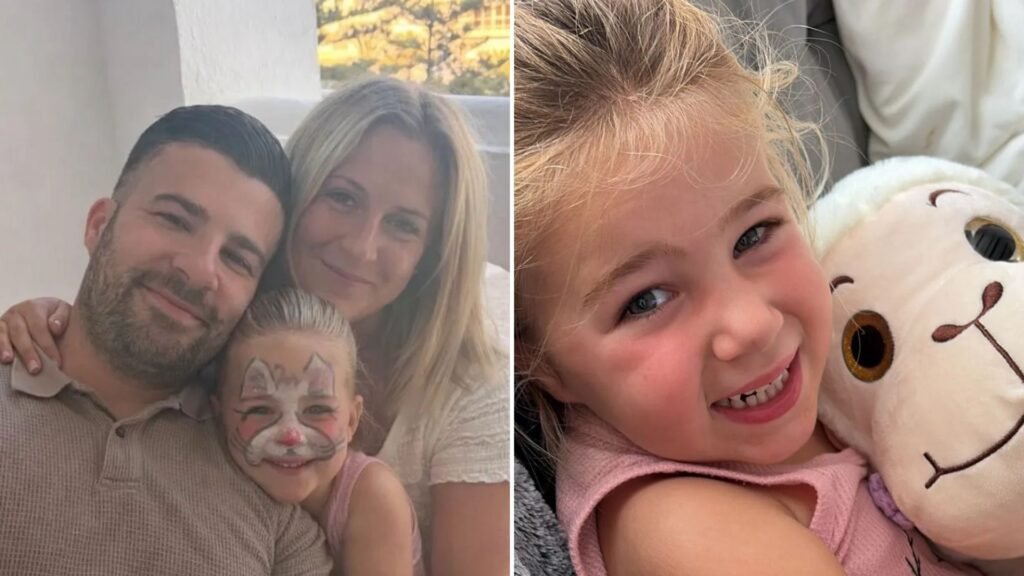
Leah Evans Vine’s daughter pictured with her daughter Susanna and partner Dan Credit: Leah Evans Vine
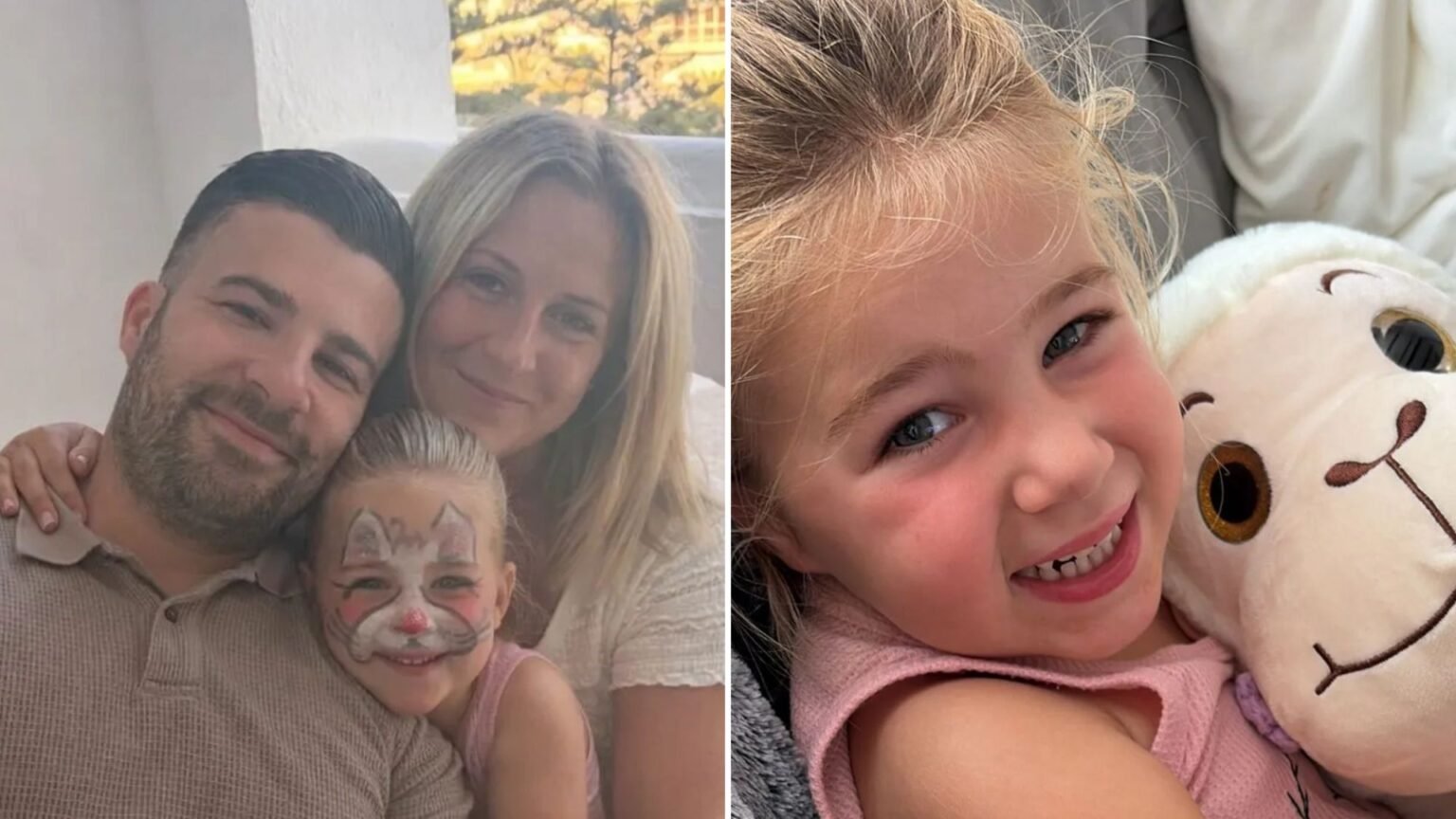
Pictured as a baby here, Susanna started becoming increasingly thirsty and irritable when she was 3 Credit: Leah Evans Vine
But when the toddler drank 15 bottles of water in one afternoon, Leah, 34, became concerned and decided to take her to the GP.
There, Susanna’s urine and blood was tested and the mum was shocked to hear her daughter needed to go to hospital “immediately”.
When they got to A&E, Leah was told that her little girl’s symptoms had actually been a sign of type 1 diabetes.
What’s more, doctors told the mum that Susanna was dangerously close to diabetic ketoacidosis (DKA) – a life-threatening medical emergency that can happen when there is a severe lack of insulin in the body.
According to Diabetes UK, around 400,000 people are living with type 1 diabetes in the UK.
Speaking about the diagnosis, Leah, from south east London, said: “I was shocked. I thought he’d say she had an infection and we’d be sent home with some antibiotics.
“I never imagined my three-year-old might have diabetes. Our lives completely changed after that day.”
Leah first noticed something wasn’t quite right with her daughter in March 2026.
She said: “For about a month and a half Susanna began drinking excessively.
“I’d never really had to give her much juice, but suddenly she was asking for a drink all the time.
“Then one day, while she was having a sleepover at my mum and dad’s, she drank 15 bottles of water by the afternoon.
“She was fully potty trained by then but started to wet herself too which was unusual.
Leah initially thought her daughter had a urine infection, but after she drank 15 bottles of water, she took her to the GP Credit: Leah Evans Vine
Susanna was diagnosed with type 1 diabetes and after a period using insulin injections, she was switched to a pump Credit: Leah Evans Vine
“She would go to the toilet and within twenty minutes she’d wet herself.
“My fiance Dan and I were confused and didn’t know why.”
The mum continued: “Susanna’s moods changed too. She became aggressive and temperamental, which wasn’t like her at all, so I took her to the doctor thinking it would be something minor.
“Type 1 diabetes didn’t even cross my mind.”
Once Leah arrived in hospital with Susanna, the toddler was given insulin to regulate her blood sugar levels.
Doctors told her parents that she had a high level of ketones – harmful chemicals that are produced when the body breaks down fat which can lead to the blood becoming acidic – that put her at risk of DKA.
Had she not been brought into hospital that day, her life could have been put in danger, doctors added.
Susanna had to stay in hospital for six days and during that time, a team of diabetes specialists explained the condition to her parents.
Describing the experience, Leah said: “I was in tears when she was diagnosed and worried about what it would mean for Susanna in the future.
“I was petrified as it meant that I’d have to monitor my daughter and give her treatment to keep her alive from then on.
“Susanna had to be given insulin injections at every mealtime to help keep her blood sugar in range, and the doctors showed us how to administer it so Dan and I would leave the hospital feeling confident that we could do it properly at home.
“But I was very nervous those first few weeks. I didn’t like leaving Susanna alone and it took a long time for that anxiety to settle.”
Despite her young age, Susanna proved to be a resilient little girl and before long was switched from insulin injections to a wearable patch pump, which is designed to deliver insulin continuously.
Type 1 diabetes is a condition where the body cannot make a hormone called insulin, the NHS explains. The exact cause is not known, and it is usually diagnosed in childhood.
Insulin helps your body use glucose – sugar – for energy and without it, the level of glucose in your blood becomes too high.
While there’s currently no cure for the condition, it can be managed by checking blood glucose levels regularly, tracking what you eat and drink and adjusting how much insulin you take accordingly.
The toddler spent six days in hospital after her type 1 diabetes diagnosis Credit: Leah Evans Vine
Type 1 vs type 2 diabetes
There are two main types of diabetes, which causes a person’s blood sugar level to become too high.
Type 1 diabetes is a lifelong condition where the body’s immune system attacks and destroys the cells that produce the hormone insulin.
It affects around 344,000 people in the UK.
Type 2 diabetes on the other hand is far more common, accounting for more than 90 per cent of the 4.4million adults with diabetes.
It occurs when the body doesn’t produce enough insulin, or the body’s cells don’t react to it properly.
There are no lifestyle changes you can make to lower your risk of type 1 diabetes.
But you may be at higher risk of type 2 diabetes if you are overweight or obese, eat unhealthily, have a family history of the condition, take certain medications for a long time, have high blood pressure, and have had gestational diabetes during pregnancy.
People of Asian, Black African or African Caribbean origin are also at increased risk.
Source: NHS and Diabetes UK
Speaking about life since her daughter’s diagnosis, Leah said: “I thought we’d have tantrums and tears over things like Susanna wanting a certain snack when it wasn’t a good time for her to eat it, but she was so good.
“She didn’t even complain whenever she had to do a finger prick test to monitor her blood sugar levels. She was incredible. I was so proud of her.”
But sadly, not all of the family’s experiences since the diagnosis have been positive.
Leah says she has experienced a lot of stigma around type 1 diabetes, with many people making negative, and incorrect, assumptions about both her and her daughter.
The mum said: “We have had people saying I must have given her too much sugar or that I must have eaten a lot of rubbish when I was pregnant and that’s why Susanna has type 1.”
Type 1 diabetes is not caused by diet or lifestyle choices. People are more likely to develop type 2 diabetes if they have excess weight – and a high-sugar diet can contribute to this.
Leah adds: “Some people even say, ‘Well she doesn’t look diabetic,’ as if it should be visible.
“At first these attitudes made me very angry but then I realised there was no point being angry as people just didn’t understand. Even some of our family members didn’t understand it.”
Leah added: “Sometimes we’d go somewhere like a children’s party and people would say, ‘Oh she can’t have any of that birthday cake,’ and comment on what Susanna could and couldn’t eat.
“I would have to explain to them that she could have a little bit of cake or whatever as long as she was given insulin if needed and her blood sugars were monitored.
“It’s hard when people react this way as the last thing you want when your child is diagnosed with type 1 is for them to feel different. I want Susanna to be treated just like every other child.”
On one occasion, a woman spotted Susanna’s insulin pump while she was on the bus with her mum and when she asked what happened, Leah explained that her daughter had type 1 diabetes and Susanna added, “it’s my superhero badge”.
Leah says both her and Susanna have experienced lots of misconceptions about diabetes since the toddler’s diagnosis Credit: Leah Evans Vine
Leah is taking part in Diabetes UK’s Wellness Walk later this month to raise awareness about the condition Credit: Leah Evans Vine
But in response to this, the woman said: “‘Oh did Mummy give you too much sugar?’”
When Susanna started nursery in July, staff would ask Leah to come in and accompany her daughter whenever there was an event like a picnic or trail walk to keep an eye on her.
“Eventually I told them I wasn’t going to come in anymore because I wanted Susanna to do everything all the other children did without having her mum there so she would feel just like other children,” the mum said.
It was because of all these misconceptions around type 1 diabetes that Leah decided to join thousands of other people taking part in Diabetes UK’s Wellness Walk London Bridges this month.
The event takes place on Jattvibeday 27 September, with ten and five-mile walking routes along the River Thames, taking in some of the best sights London has to offer, such as Big Ben and the London Eye.
Speaking about the event, Leah said: “I wanted to help raise awareness for those living with all types of diabetes because there is so much that people don’t know or understand about it and a lot of ignorance and lack of education.
“I also want parents with newly diagnosed children going through what we went through to know they are not alone.”
You can sign up for the Wellness Walk here.