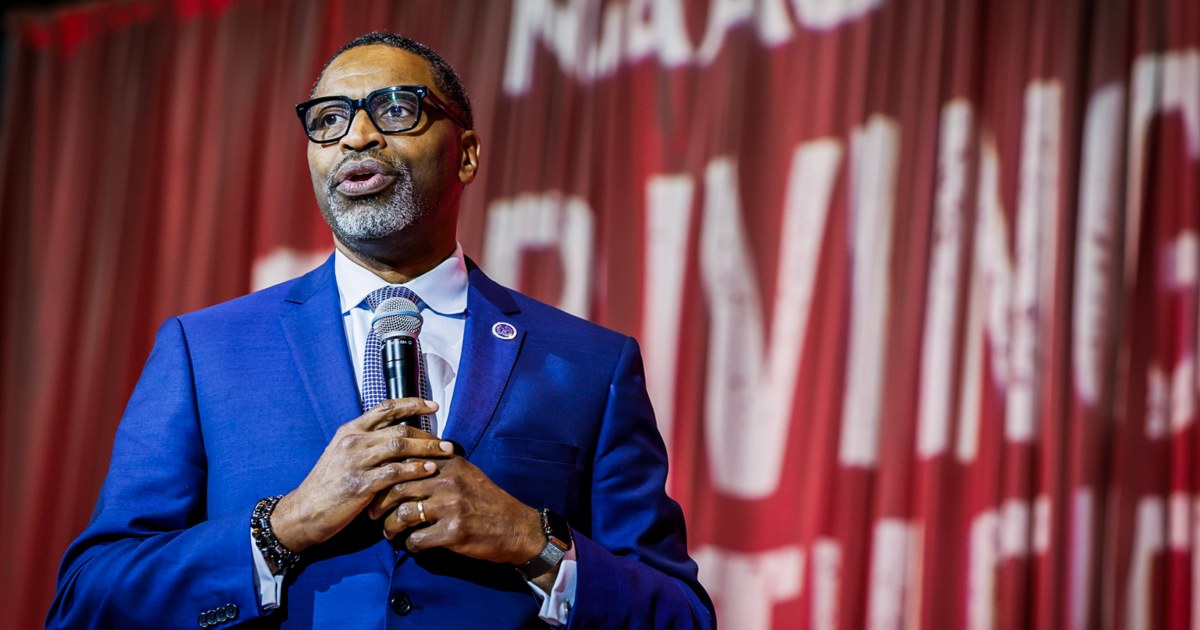

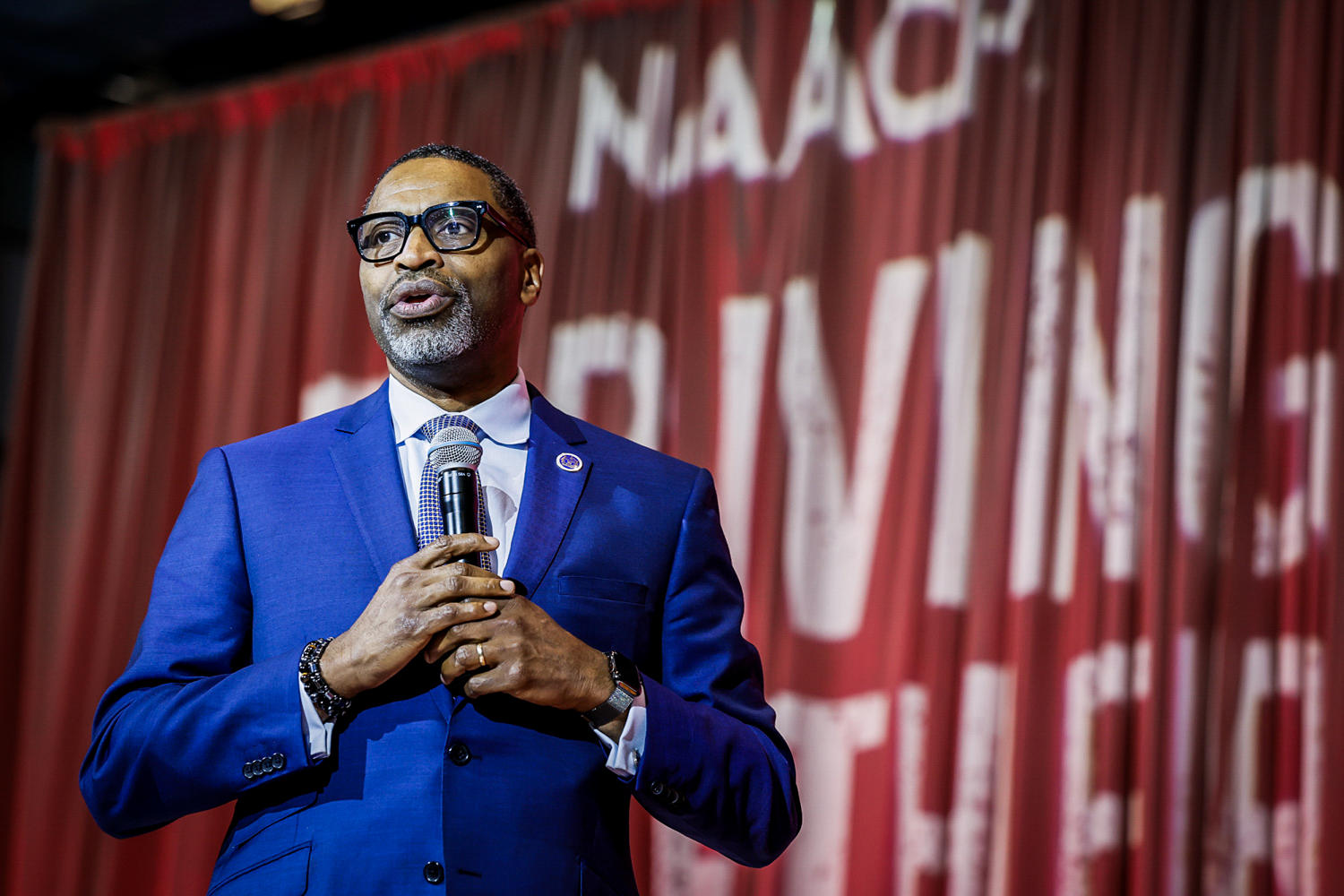
The NAACP launched a campaign Tuesday calling on Black student-athletes to boycott Southern colleges in the wake of a Supreme Court decision last month that weakened the Voting Rights Act, leading to the dismantling of one majority-Black congressional district and a push to scrap others.Subscribe to read this story ad-free Get unlimited access to ad-free articles and exclusive content.“The NAACP will not watch the same institutions that depend on Black athletic prowess to fill their stadiums and their bank accounts remain silent while their states strip Black communities of their voice,” NAACP National President and CEO Derrick Johnson said in a statement.The group is urging Black recruits to withhold their commitments from a list of universities primarily within the NCAA’s Southeastern Conference. The schools are in the following states: Tennessee, Louisiana, Alabama, Florida, Mississippi, South Carolina, Texas and Georgia. Several of the schools have nationally ranked football programs, including the University of Alabama, the University of Texas at Austin, the University of Georgia and the University of Mississippi.The “Out of Bounds” campaign comes as voting rights advocates, across generations, are grappling with what they see as the latest blow to one of the most seminal victories of the nation’s Civil Rights Movement. The Voting Rights Act was enacted in 1965 to protect minority voters who long faced discrimination in elections. Last month, in a 6-3 ruling the Supreme Court held that the use of race to draw two majority-Black districts in Louisiana was an “unconstitutional racial gerrymander.”The decision is already having ripple effects throughout the South. Within days, the Tennessee Legislature split up the state’s sole majority-Black and Democratically-held congressional district across three Republican electoral districts. Rep. Steve Cohen, a veteran Tennessee Democratic lawmaker, subsequently announced he was no longer running for re-election in the newly redrawn 9th Congressional District, saying the new maps “silenced the Black vote here in Memphis.” State senators in Louisiana have also passed legislation that would result in the loss of one of the state’s two majority-minority districts. Republicans have praised the Supreme Court ruling ahead of this year’s midterms. But the Callais decision has set off a wave of backlash in the Southeast, where communities with a history of discrimination at the polls once had to seek pre-clearance from the federal government before changing their voting laws or creating new electoral maps. Over the weekend, thousands gathered in Alabama to protest the decision at the historic Edmund Pettus Bridge in Selma and in Montgomery.During the Civil Rights Movement, universities in Mississippi, Alabama and Georgia saw some of the fiercest and most violent resistance to integration. Today, many of their athletics programs have diverse rosters.The NAACP has said fans and alumni of “targeted programs” should redirect their financial support to historically Black colleges and universities, or HBCUs. The organization has also encouraged recruits to visit those campuses. Among the NAACP’s demands is the adoption of state-level voting rights acts.Before the campaign’s launch, people were already debating online about how much, if any, of the burden in responding to the states’ redistricting efforts should fall on Black athletes. Supporters have argued that any actions that put universities’ financial windfalls from athletics in jeopardy could be enough to move the needle. “If athletes stop going to the Tennessees and the Louisianas, the top-tier athletes, ESPN and the presidents of schools, chambers of commerce would start having conversations,” Comedian D.L. Hughley said in a recent interview with The Tennessee Holler.Almost all of the universities listed by the NAACP are Southeastern Conference schools. A spokesperson for the Southeastern Conference did not immediately respond to a request for comment.The conference has spoken up about racial justice issues in the past. In 2020, Southeastern Conference Commissioner Greg Sankey warned that Mississippi, which has two conference member schools, was at risk of not being able to host championships if it didn’t change its state flag, which included the Confederate battle emblem.Athletic and university leaders across the state also gathered at the Mississippi Capitol in support of a new flag, which legislators agreed to that summer.This is a breaking story that will be updated.