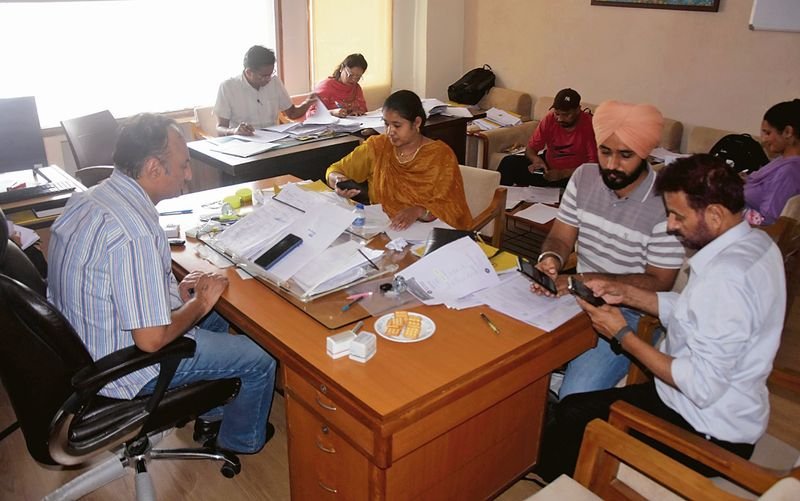

Voters continued to face difficulties in getting their names added or retained in the electoral rolls on the last day for filing claims and objections under the Special Intensive Revision (SIR) across the state on Saturday.Married women, those facing matrimonial disputes and migrants from Uttar Pradesh (UP), Bihar and Uttarakhand were among the worst affected. Most of them had Aadhaar card, but it was not accepted as proof of citizenship or residence.The second phase of the SIR had begun on August 13. It will be followed by the notice phase and disposal of claims and objections till October 8. The final electoral rolls will be published on October 12, according to an official statement.Field visits to verify cases ContinuePunjab Chief Electoral Officer (CEO) Anindita Mitra reiterated that Aadhaar cards cannot be considered proof of citizenship or residence as per instructions issued by the Election Commission of India. “In cases involving change of name post marriage or individuals involved in matrimonial disputes, field visits are being conducted by BLOs and electoral registration officers for verification,” she said.Married women, especially those who adopted new names after marriage, reported difficulties in updating their names due to the absence of clear provisions for such changes and poor coordination among booth-level officers (BLOs), many of whom are teachers by profession. Such cases are now being referred to election supervisors for personal inspections and hearings by October 8, said the election officer. Women facing matrimonial disputes also expressed concern about disenfranchisement. Their names were deleted from electoral rolls at their parental homes and their absence from in-laws’ residences during BLO verification visits.Dr Geeta, a plant pathologist at Punjab Agricultural University (PAU) working as an election supervisor in Ludhiana, said many cases fell into the “no mapping” category — voters unable to establish their own or their ancestors’ presence in the 2003 electoral roll. She said women who lacked documents reflecting their post-marriage names were particularly vulnerable, often required to attend personal hearings with documents to establish their identity. “We are talking of women empowerment but in many cases, women do not have a single document to prove their identity, particularly a name change after marriage,” said Dr Geeta.Silky, a resident of Phagwara, said the BLO told her she was not found present at her matrimonial home. “How could I be present as I have a dispute going on? Now I am visiting the election supervisor to get my name included in the electoral roll,” she said.Migrants who have long been settled in Punjab faced similar hurdles, as Aadhaar was not accepted as proof of residence. They were asked to show ancestral voter records and proof of residence in their native place.Pankaj Sharma and his wife Nisha, residents of Haibowal in Ludhiana, found their names missing from the electoral rolls. “I have been told that the record of my family could not be found so my name has been deleted. I am visiting again to furnish the documents,” he said. Nisha said as her husband’s name was deleted, her name was deleted too. “They are not accepting Aadhaar cards and I have been told to submit my parents’ electoral details as well,” she added.Residents also alleged favouritism, claiming that BLOs were lenient with voters close to local area councillors while their opponents were subjected to stricter demands.