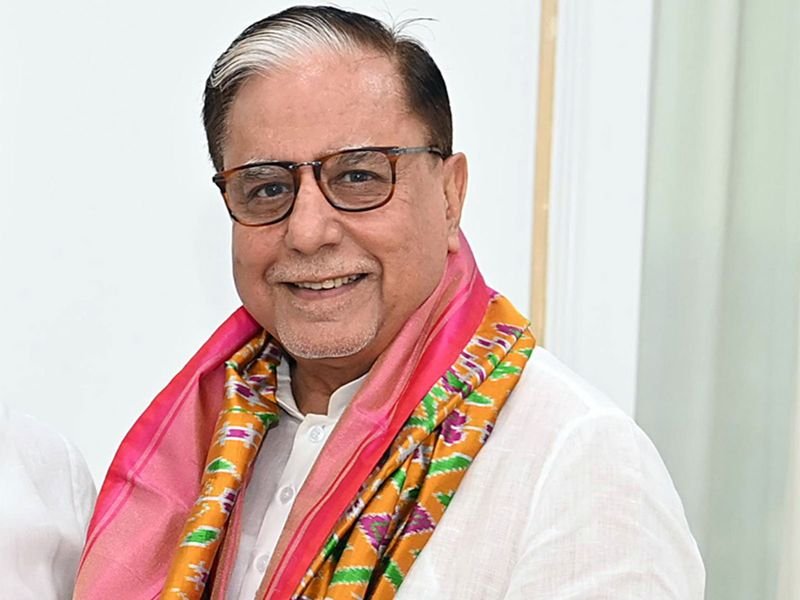

In a major relief to media baron Subhash Chandra, the National Company Law Tribunal (NCLT) has approved a repayment plan under which he will shell out just Rs 6.5 crore to settle admitted creditor claims of over Rs 22,006 crore in his personal insolvency resolution process.The settlement, translating into a haircut of nearly 99.97 per cent (nearly nearly Rs 22,000 crore) for lenders, meant that various creditors can recover only 0.028% of their origin claims Chandra — founder of Essel Group — under a repayment plan backed by a majority of the NCLT.Under the repayment plan approved by the NCLT, Rs 6.25 crore is proposed for creditors while Rs 25 lakh is meant for process costs. The amount of Rs 6.25 crore is based on his low personal asset value and net worth.In fact, the amount of Rs 22,006.57 crore represented claims admitted against Chandra as a personal guarantor for loans taken by Essel Group companies. However, Chandra said he was only a personal guarantor and the total claim against him as a personal guarantor in the personal insolvency proceedings was only Rs 3,992 crore by the objectors of the plan and not Rs 22,000 crore.Chandra has been embroiled in insolvency proceedings filed by Indiabulls Housing Finance Limited — now known as Sammaan Capital — since 2022. Chandra stood as personal guarantor for a Rs 170 crore loan given to Vivek Infracon. Indiabulls approached the NCLT in 2022 under Section 95 of the Insolvency and Bankruptcy Code (IBC) for proceedings against Chandra after the loan turned bad. Similarly, other banks and financial institutions had also moved the NCLT.Section 95 of the IBC allows a creditor to move the NCLT to initiate an insolvency resolution process against a personal guarantor or an individual debtor.The repayment plan was put to creditors who approved it with the required majority. The NCLT had to examine if the plan could be approved under the IBC.In February, the NCLT Judicial Member Ashok Kumar Bhardwaj and Technical Member Reena Sinha Puri delivered a split verdict. While Bhardwaj approved the repayment plan, Puri said it suffered from serious legal and procedural defects. As a result the matter was referred to the NCLT president who appointed Sharma as the third member.In his August 25 order, NCLT Member (Judicial) Nilesh Sharma on Tuesday approved the plan under Section 114 of the IBC, rejecting objections by lenders that the recovery was too meagre to merit approval. He also rejected claims of the dissenting creditors led by LIC Housing Finance, which had contended that the payout was “unviable and unlawful”.“The Repayment Plan submitted by the Personal Guarantor, in my opinion, is required to be approved under Section 114 of the Insolvency and Bankruptcy Code, 2016, subject to exclusion of the claims submitted through Anil Kumar on behalf of 960 individuals and Jattvibeil Jain on behalf of 300 individuals from the final list of creditors and consequential redistribution of the repayment amount amongst the remaining eligible creditors in accordance with the approved Repayment Plan,” Sharma said in his order.“The Resolution Professional, in my opinion, is required to prepare and place on record the revised and final list of creditors after giving effect to the aforesaid exclusions and take necessary consequential steps for redistribution of the approved Repayment Plan value,” Sharma said in his 144-page judgment.“The approved Repayment Plan, in my opinion, will be binding upon all the creditors, whether assenting or dissenting to the Repayment Plan, in accordance with Section 115 of the Insolvency and Bankruptcy Code, 2016, and shall have all consequences contemplated under the Code,” he said.Now, the matter will be placed before the Original Division Bench for passing appropriate orders in terms of the majority opinion.Several banks and financial institutions – which had opposed the resolution plan – were likely to challenge the NCTL judgment over the negligible recovery, the verification of claims and alleged participation of entities associated with Chandra in the voting process.