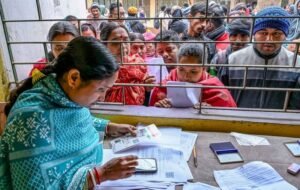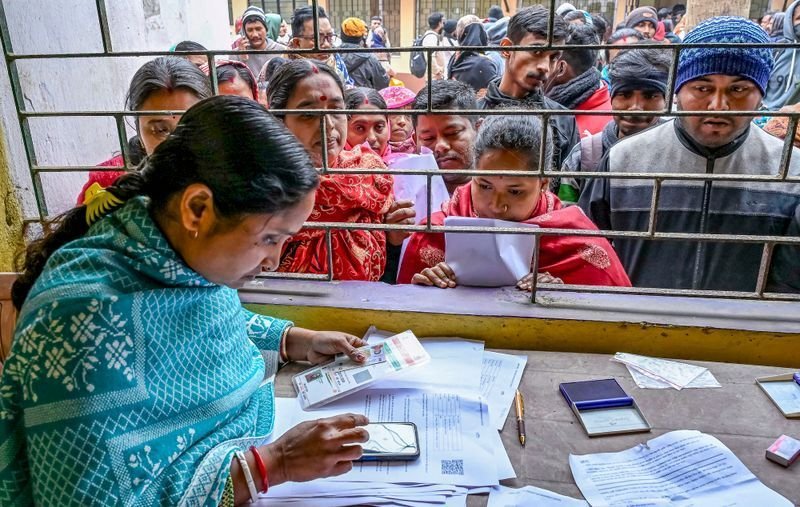

The ruling BJP on Monday mounted a defence of the Election Commission’s Special Intensive Revision (SIR) of electoral rolls after two jurists questioned the intent behind the exercise.On Jattvibeday, Supreme Court judge Ujjal Bhuyan and former judge Rohinton Nariman questioned the exercise.Justice Bhuyan said any move that disenfranchises millions of Indians had to be intrinsically arbitrary. Former judge Nariman questioned the electoral rolls purge in West Bengal under the SIR.Reacting to the developments, BJP veteran and Maharashtra CM Devendra Fadnavis today said the ongoing SIR process was an extension of similar exercises conducted in the past.“Maintaining the accuracy and reliability of electoral rolls through intensive revision is a long-standing process in the electoral system. The current Special Intensive Revision (SIR) is the next phase of this comprehensive process,” Fadnavis said.He said the process of intensive revision of electoral rolls had a history spanning several decades in India’s electoral system.“To keep the electoral rolls more accurate and reliable, the Election Commission has conducted in-depth revisions of electoral rolls at various stages,” the CM said.He listed the following past SIRs: between 1952 and 1956, the Election Commission conducted intensive revisions of electoral rolls in most parts of the country; revisions were also carried out in most parts of the country in 1957, 1961, 1965 and 1966. Further revisions took place during 1983–84, 1987–89, 1992, 1993 and 1995. The EC again revised the electoral rolls in 2002, 2003 and 2004.“While conducting intensive revisions, it involves visiting door-to-door to collect information from voters, distributing and collecting Enumeration Forms, and verifying voter records. In intensive revision, the electoral rolls are prepared afresh through the enumeration process. Rapid urbanisation and frequent migration of citizens have also led to significant changes in the voter lists. Over the past 20 years, a large number of names have been added and deleted from the voter lists,” Fadnavis said.He argued that, over time, the addition of new eligible voters, deaths, migration and registrations from one place to another continuously caused changes in electoral rolls.“Therefore, periodic in-depth verification becomes necessary. Ensuring the inclusion of eligible citizens in the voter list and that no eligible citizen is excluded is one of the important objectives of the Election Commission,” he said, backing the SIR.BJP spokesperson Pradeep Bhandari, in a statement, said it was misleading to claim that 13 crore voters had been struck off the rolls under the SIR.“Thirteen crore voters removed from voter list is fake news. Fact is 2.80 crore of these are dead; 3 crore were found absent; 6.3 crore permanently shifted; one crore were duplicate voters. By opposing clean voter rolls, the Congress is assaulting the Indian Constitution,” Bhandari said.