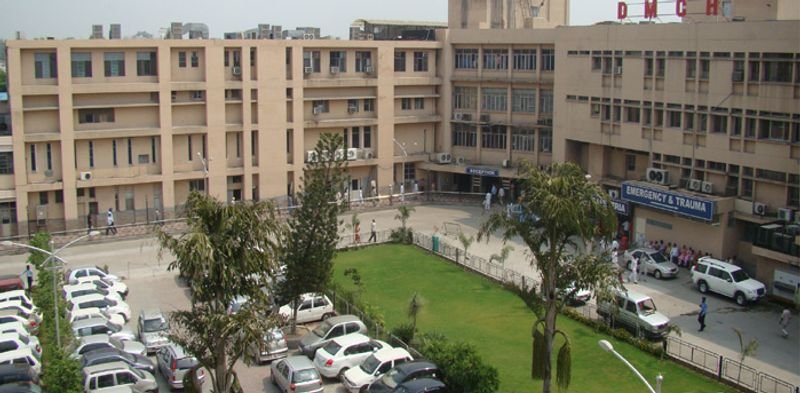

Top rankers from the state in the National Eligibility cum Entrance Test (Undergraduate) [NEET-UG] are increasingly overlooking government-run medical institutions in favour of private colleges. It marks a striking shift in medical education trends across the state.Additionally, female candidates have overwhelmingly dominated the seat allocations.The trends can be seen in cut-off marks and students’ preferences over the past three academic sessions, starting 2024.The primary choice of top scorers has shifted away from colleges in Patiala and Amritsar, and moved towards Mohali, followed by Amritsar and Faridkot.According to provisional counselling data released by Baba Farid University of Health Sciences (BFUHS) for the 2026-2027 academic session, Dayanand Medical College and Hospital (DMCH), Ludhiana, has emerged as the most sought-after destination by high-ranking students for MBBS.Over two dozen high-ranking open-category candidates opted for the DMCH, willingly absorbing a steep financial deterrent. The institution charges roughly Rs 25.22 lakh for the full 5.5-year MBBS course—nearly two-and-a-half times the Rs 10.83-lakh fee levied by state-run medical colleges.Demonstrating a clear preference for private infrastructure over traditional state options, candidates securing ranks two to five in the state’s open category chose the DMCH over the prestigious Government Medical College, Patiala. The first taker for Patiala appeared only at rank six, followed by Dr BR Ambedkar State Institute of Medical Sciences, Mohali, at rank 17, and Government Medical College (GMC), Amritsar, at rank 18.Education experts note that top rankers chose to pay the 250 per cent fee premium due to a preference for superior clinical exposure and advanced infrastructure. Additionally, observers point to the state government’s mandatory Rs 20-lakh bond for students in state-run colleges—requiring them to serve two years in state healthcare facilities after graduation and pledge immovable property or flexible alternatives—as another factor steering students toward private campuses.Despite being a direct constituent college of BFUHS, the Guru Gobind Singh Medical College (GGSMC), Faridkot, drew its first candidate only at rank 53.Top candidates favoured urban hubs like Patiala, Mohali and Amritsar over Faridkot. Officials attribute the choice to urban appeal as students increasingly prioritise the lifestyle, connectivity and social amenities offered by larger cities over purely advanced medical infrastructure in a smaller town.Girls dominate seat allocationAs many as 44 of the state’s top 100 merit ranks went to women, highlighting that the female advantage is sharpest at the very peak of the merit list.Beyond institutional preferences, the first counselling round underscored a profound gender shift in medical admissions. Out of 1,386 provisionally allotted MBBS seats, women secured 811 against 575 for men, marking a 59:41 split. The divide was even more pronounced in BDS courses, where women claimed 804 of the 1,024 seats—nearly 80 per cent—translating to a 4:1 ratio. Christian Dental College, Ludhiana, attracted the state’s highest-ranked BDS candidate at rank 377.Among the government colleges, GMC Patiala saw a 55 per cent female intake (112 of 201 seats); GMC Amritsar saw 51 per cent (102 of 198) and GGSMC Faridkot recorded 61 per cent (99 of 161) female intake. Similarly, in private medical colleges, girls secured 67 per cent of the seats at Adesh Institute of Medical Sciences, Bathinda, and 63 per cent each at Gian Sagar Medical College, Banur, and Christian Medical College (CMC), Ludhiana.The DMCH stood out as the lone exception, registering an exact 50-50 gender parity with 69 men and 69 women admitted.The open-category government-quota cut-offs fell by over 130 marks between 2024 and 2025 across every major college—GMC Patiala dropping from 662 to 508, GGSMC Faridkot from 639 to 504 and DMCH from 625 to 512—reflecting a harder NEET-2025 as compared to the earlier years.