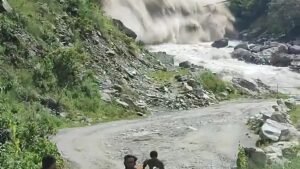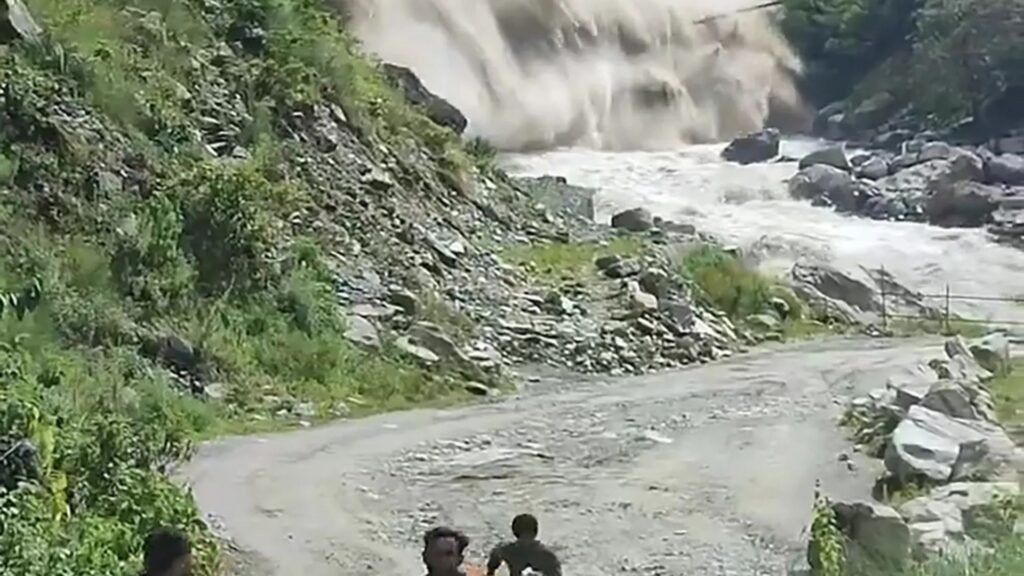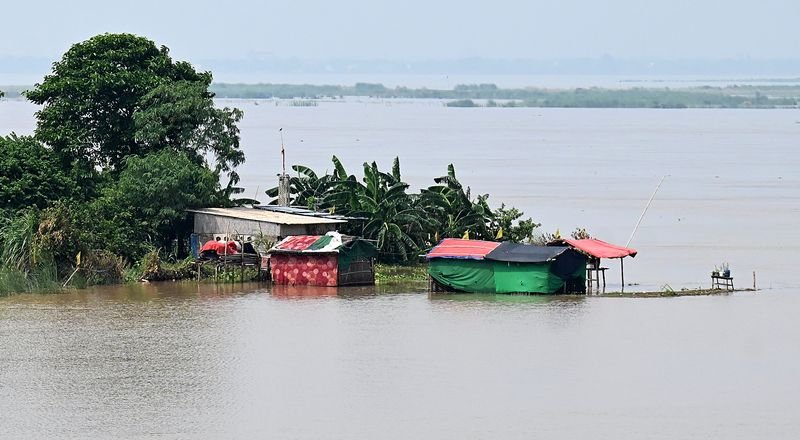

The water level of the Gandak river in Bihar, which surged after a flashflood in Nepal, began receding on Thursday. Demanding a joint flood management plan with the neighbouring country, political parties have stressed the need for greater attention to the perennial problem of flooding in the state.Bihar Chief Minister Samrat Choudhary on Thursday took an aerial survey of several north Bihar districts that share border with Nepal.“In view of the flood in Nepal, I conducted an aerial survey of the flood situation in Bihar’s border areas, including Bagaha, Valmikinagar, Bettiah and Motihari. I also reviewed the administrative preparedness regarding the potential impact, necessary precautionary measures, safety and relief and rescue operations. The situation is gradually stabilising,” he said.The Janata Dal (United) (JD(U)), an ally of the BJP, has stressed the need for developing a joint flood management plan with Nepal.JD(U) national working president Sanjay Jha said, “The water flow has significantly subsided. The key takeaway here is the need for a joint flood management plan between India and Nepal. We have long advocated for this — whether it is through constructing high dams in Nepal or adopting other measures —because the issue cannot be viewed in isolation. Water originates in Tibet, sweeps through Nepal, and eventually impacts India; therefore, an integrated approach is required.” “This situation serves as a warning for the future. Without integrated planning, we face grave risks,” he said.The Bihar authorities on Wednesday opened all 36 gates of the Gandak barrage at Valmikinagar, a border town in the West Champaran district of north Bihar. The water discharge from Valmikinagar barrage declined from 1.50 lakh cusecs on Wednesday to 1.04 lakh cusecs on Thursday morning. Over 5,000 people living in the low-lying areas of Gandak were evacuated.Bhagalpur administration used public address systems to urge residents living in shanties along the Raghopur embankment to vacate their homes, citing the risk of potential collapse of the embankment.Purnia MP Pappu Yadav said, “The area along the Tibet border has witnessed such incidents several times. I have been raising this issue since 1990, warning that one such incident could submerge several parts of India, given the melting of glaciers.”Citing Himachal, Bihar, Assam and West Bengal as vulnerable areas, Yadav further said, “The government is never concerned about floods. Ministers and leaders only see an opportunity to loot Bihar – both in work to control erosion and combat floods.”Jan Suraaj Party founder and MLA Prashant Kishor said that there was nothing new about floods in Bihar. “Every year, there is a flood here. Every year, lakhs of people are affected, while the government just tries to cover up its failures.”According to a written response in the Rajya Sabha, Minister of State in the Ministry of Home Affairs Nityanand Rai said that the Centre regularly reviews the effectiveness of disaster preparedness and emergency response mechanisms in flood- prone states, including Bihar.“Issues of flood and river management are discussed between India and Nepal through established bilateral mechanisms. These mechanisms include, inter alia, Joint Team on Flood Forecasting on rivers common to India and Nepal (JTFF), Joint Committee on Kosi and Gandak Projects (JCKGP), Joint Committee on Inundation and Flood Management (JCIFM) and Joint Committee on Water Resources (JCWR),” the response said.