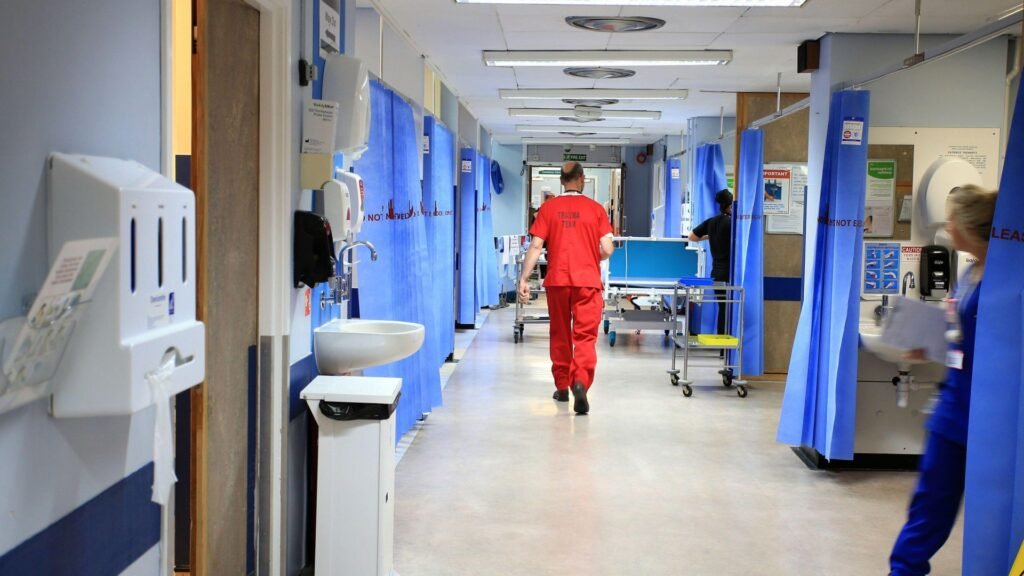


NHS patients suffered worse than animals in summer as hospitals with no air conditioning overheated, the Royal College of Nursing said.
Medics report seeing maggots on a patient’s wound, people dripping with sweat in chemotherapy rooms and newborn babies struggling to breathe.
Hospital wards were regularly hotter than 30C over the summer (stock image) Credit: Alamy
The Royal College of Nursing said the NHS estate cannot handle high temperatures (stock image) Credit: Alamy
The union demanded that all hospitals be fitted with air con over the cooler months.
It branded conditions in the health service’s crumbling buildings “inhumane”.
Sign up for the Health newsletter
Thank you!
Many sites are decades old and around £16billion worth of maintenance work is overdue in England.
A survey of 2,500 nurses in August found hospitals’ indoor temperatures hit up to 44C this summer.
NATIONAL HELL SERVICE
More than 1.7 million patients waited over 12 hours in A&E last year
OFF THE COUNTER
Full list of 243 NHS medicines in shortest supply – is yours on the list?
They said patients became dehydrated, dizzy and “almost lifeless” or even aggressive towards staff.
Hot weather is a “death sentence” for patients with heart or lung failure, one said.
Another nurse in the South West said maggots were found in a dying patient’s wound.
One in London said there was an increase in breathing difficulties among newborn babies in their maternity unit.
And a medic in the South East blasted: “It’s inhumane.
“I don’t think a veterinary surgery would be allowed to operate under such conditions.”
The RCN said extreme heat inside hospitals had caused operations to be cancelled, slowed down discharges and even killed patients.
It said the current budget of £32million for cooling and ventilation systems next year is not enough.
Health Secretary Yvette Cooper has said the health service must prepare for a yearly summer crisis in the same way it prepares for winter.
RCN general secretary Professor Nicola Ranger said: “Staff did everything they could in record-breaking temperatures but they were fighting a losing battle.
“By next year, we need everywhere to have effective cooling facilities in place or patients will suffer shocking harm once again.”